State Duma: Loss of Voting Rights in CSTO Unlikely to Pose a Problem for Armenia
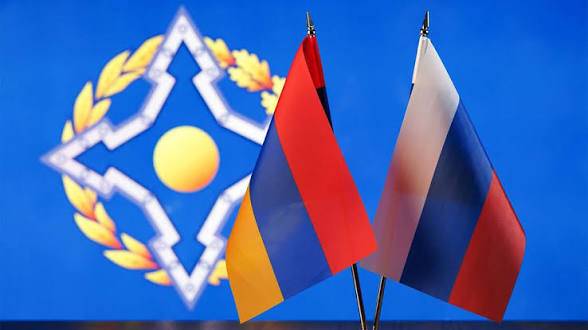
The potential loss of voting rights within the Collective Security Treaty Organization (CSTO) is unlikely to become a major issue for Armenia. This view was expressed on November 6 by Leonid Kalashnikov, head of the State Duma Committee on CIS Affairs, in an interview with RTVI, amid discussions regarding possible restrictive measures against Yerevan.
"The Armenian authorities are behaving in a provocative manner, especially toward the CSTO," the lawmaker stated.
At the same time, he noted that Yerevan is attempting to retain the economic benefits of its participation in the Eurasian Economic Union (EAEU), as withdrawing from that bloc could lead to serious economic consequences for the country.
"As for the CSTO, it makes no real difference to them one way or the other right now," Kalashnikov added.
Meanwhile, Russian presidential press secretary Dmitry Peskov stated today that Moscow and Yerevan effectively maintain no relations in the sphere of security. When asked by journalists about the state of these relations, he replied: "There aren't any, really."
Commenting on the potential revocation of Armenia’s voting rights, Peskov noted that Yerevan is already, in practice, not participating in the organization's activities.
"Indeed, there are specific procedures outlined in the statutory documents; how things proceed will depend on the nature of the discussions that take place within the organization," the Kremlin representative said.
The question of potentially restricting Armenia’s rights within the organization has been raised due to outstanding membership dues. On November 6, Russian Deputy Foreign Minister Alexander Pankin told TASS that the CSTO Collective Security Council might consider stripping the republic of its voting rights during a meeting in Moscow on November 11. According to the diplomat, Armenia has failed to pay its membership dues for more than two years. "This is an entirely technical matter, provided for by the charter," Pankin explained.
He clarified that the restriction could remain in effect until the outstanding debt is settled, with the final decision depending on the stance taken by the leaders of the organization's member states.
Earlier, CSTO Deputy Secretary General Taalatbek Masadykov also suggested the potential application of Article 25 of the charter to Armenia. This article allows for a state with two years of unpaid dues to be stripped of its voting rights and its ability to nominate its citizens for positions allocated under the organization's quota system. Russia has already submitted a draft decision to this effect for consideration by the bloc’s Collective Security Council.
While Armenia remains a formal member of the CSTO, it has frozen its participation in the organization's activities since February 2024 and ceased paying membership dues. Yerevan has justified this move by arguing that the organization failed to respond appropriately to security threats facing the republic and did not fulfill its obligations.
On November 5, Prime Minister Nikol Pashinyan stated that Armenia’s interest in the organization had been exhausted. "I want to state once and for all: our interests regarding the CSTO have run out. We no longer have any interests connected to the CSTO," he told reporters.
In comments to URA.RU, political analyst Vladimir Kireev described the potential restriction of Armenia’s rights as confirmation that the country has effectively shifted into the category of states unfriendly to the CSTO. In his view, further distancing itself from the organization could weaken the republic’s security, given the persistent risk of a new conflict with Azerbaijan.
"From the CSTO’s perspective, Armenia is playing a destructive role. While attending meetings and having access to the organization’s internal agenda, it simultaneously acts in a hostile manner toward it," Kireev stated. He believes that if ties with the CSTO are severed further, Yerevan will have to seek alternative security cooperation frameworks. Among potential partners, the political analyst mentioned Iran and the United States, and also noted the prospect of normalizing relations with Turkey.
Kireev further argues that, for the Armenian leadership, distancing the country from the CSTO has become part of a political agenda aimed at breaking with the post-Soviet legacy and Russian-led integration projects.