Justice in the Bin’: ECHR Drops Nearly 1,000 Cases Against Russia, Most Filed by North Caucasus Residents
The European Court of Human Rights (ECHR) in Strasbourg has struck out 879 remaining applications against Russia involving more than 1,500 individuals and organisations. The Memorial Human Rights Centre described the decision as “unprecedented in the practice of the [ECHR], and indeed in the history of international justice as a whole”.
A significant number of the cases that will now go unheard concerned the North Caucasus and serious human rights violations allegedly committed by Russian authorities and security forces.
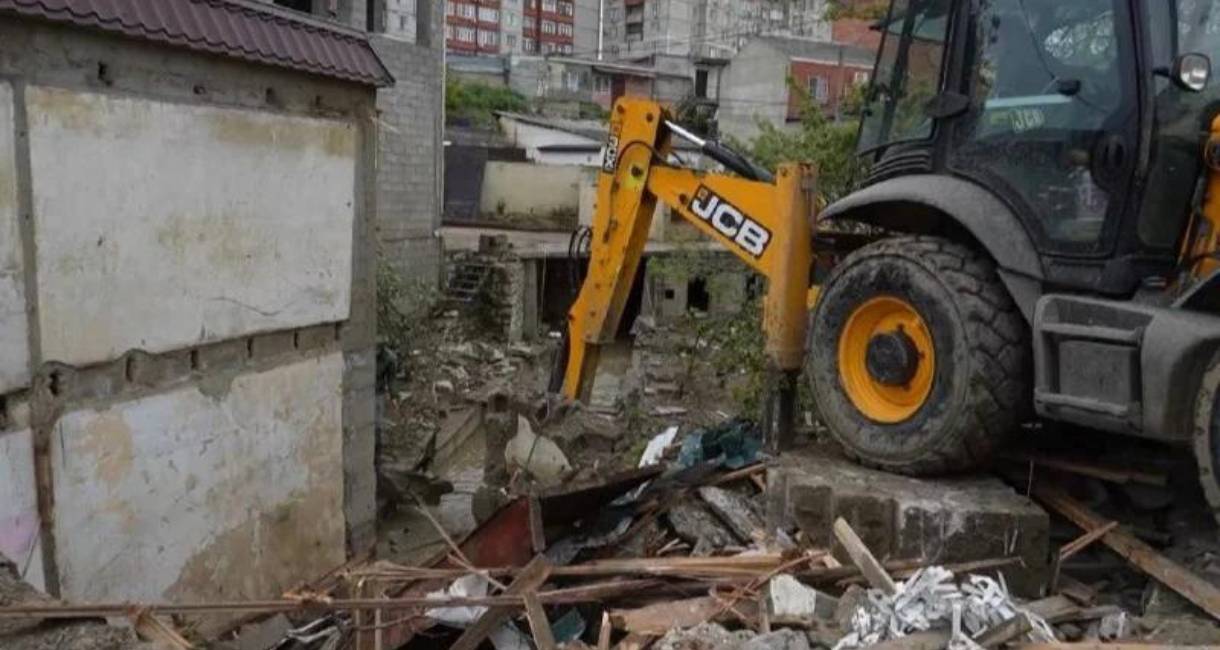
The applicants included victims of Russian bombardments during the Second Chechen War; nearly 400 residents of North Ossetia who were affected by the Beslan school siege and filed two collective applications; residents of the Dagestani village of Vremenny, whose homes were destroyed during a counterterrorism operation in 2014; and a man whom Memorial says was abducted and tortured by members of Chechen security forces. The court had also yet to hear the case concerning Timur Kuashev, a human rights activist and the Kabardino-Balkaria correspondent for Dosh magazine, who was killed on 31 August 2014. Many of these cases, Memorial said, had “waited decades for a court ruling”. “Today, that wait has come to an end: they have been left one-on-one with the Russian state,” the rights group said.
Beyond the cases involving the Caucasus, the court also struck out applications filed by relatives of people who died in the sinking of the Kolskaya drilling rig in 2011, as well as relatives of a Syrian national, El-Ismail, who was tortured and killed by mercenaries from the Wagner private military company in 2017. In its decision in the case of Lebedeva and Others v. Russia, the ECHR said it would continue to examine only interstate and individual applications connected to the armed conflicts in Ukraine and Georgia.
“Everything else has been thrown into the bin,” Memorial said, describing the Strasbourg court’s decision. Russia was expelled from the Council of Europe on 16 March 2022, shortly after launching its full-scale invasion of Ukraine. Russian authorities subsequently stopped cooperating with the Strasbourg court, ceased responding to its requests and stopped submitting their positions in cases under consideration.
The last official letter the ECHR received from the Russian authorities was dated 28 March 2022. In it, Russia informed the court that it did not intend to comply with judgments that became final after 16 March. The refusal was later enshrined in Russian legislation.
Initially, however, the ECHR had confirmed that it would continue to examine all applications against Russia concerning events that occurred before 16 September 2022, when the European Convention on Human Rights ceased to apply to Russia. After the start of the war, the court continued to deal with a vast backlog of Russian cases. According to Memorial, this involved more than 15,000 applications. The ECHR issued simplified judgments in thousands of them and conducted detailed examinations of more than 600 of the most significant cases.
“Now, four years later, when fewer than a thousand Russian cases remain and all of them are sufficiently important and complex that they cannot be dealt with under the simplified procedure, the supporters of the shredder have nevertheless prevailed within the court,” Memorial said.
According to the rights group, the decision was driven solely by bureaucratic considerations. The court concluded that, given Russia’s withdrawal from the Council of Europe, there was little point in continuing to devote “significant judicial resources” to the remaining cases.
Memorial argues that such an approach contradicts the very purpose of an international court. “There is no doubt that today’s mass destruction of applications will go down in history as one of the most shameful decisions the ECHR has made throughout its existence,” the organisation said. The significance of the decision, Memorial argued, lies not so much in the number of applicants affected as in the principle on which it is based.
The European Convention allows proceedings to be discontinued if the continued examination of an application is no longer justified. At the same time, however, it requires a case to continue “if respect for human rights as defined in the Convention and the Protocols thereto so requires”. “Convenience or the saving of resources alone cannot justify a refusal to administer justice, particularly when the case concerns a state that has been expelled from the Council of Europe, refuses to cooperate with the ECHR and refuses to comply with its judgments,” Memorial said.
The organisation argues that the ECHR has effectively accepted the possibility of discontinuing cases when a respondent state fails to appear before the court while simultaneously ignoring its other rulings. “Frankly, it will not be easy for us to explain this logic to our clients. Even Russian judges have not thought of anything like this yet,” Memorial said. The rights group also believes the approach places some applicants at a disadvantage compared with others. In its view, the decision will deal a serious blow not only to the individual applicants but also to the authority of the international human rights protection system as a whole.
Applicants are now effectively being told to seek other international avenues of redress. But, Memorial warned, that option may no longer be available to many of them because the deadlines for applying have expired. “Many applicants will discover that access to such bodies, including the United Nations, is already closed to them because the time limits have expired,” the organisation said.
Memorial also described the decision as “a gift to both the Kremlin and other states that violate human rights”. For years, Russian authorities sought to free themselves from the scrutiny of the Strasbourg court, Memorial said: challenging its findings, restricting the implementation of its judgments and eventually refusing to comply with them altogether.
“Now the ECHR has done the remaining ‘work’ for the Russian state: an enormous number of human rights violations will receive no judicial assessment at all. No violations — no problems,” Memorial said. Other governments that violate human rights could interpret the decision as a signal that systematically ignoring an international court can ultimately allow them to escape its scrutiny, the rights group warned. “If you ignore the court for long enough, you may live to see it stop examining applications against you,” Memorial said.
“Refusing to cooperate becomes a way of weakening judicial oversight, while failing to comply with judgments becomes an argument against issuing new ones.”
The decision appears particularly contradictory in light of comments previously made by the ECHR’s president, Mattias Guyomar, who said the court’s role was to demonstrate that “human rights matter at all times, even during war, when lawlessness appears to prevail”.
“The court could have proved that these were not empty words,” Memorial said.
The organisation has proposed that, rather than abandoning the remaining Russian cases, the Council of Europe should explore mechanisms for ensuring the payment of compensation already awarded to applicants. Memorial has repeatedly proposed creating a special fund within the Council of Europe system and developing mechanisms to recover compensation from Russian state assets held abroad. “It is an unusual decision requiring political will, but there are ample legal grounds for it,” the rights group said.
Abandoning the remaining applications, however, was considerably easier, Memorial argued. “Stopping the examination of applications is easier. It requires no legal courage, no search for new solutions and no willingness to confront a state accustomed to getting its way through force and blackmail,” the organisation said. Memorial noted that Europe is simultaneously creating new mechanisms to hold Russia accountable for its war against Ukraine, including a compensation mechanism and a special tribunal for the crime of aggression.
But, the rights group argued, “promises to hold Russia accountable are worth nothing if the ECHR simultaneously denies hundreds of its victims judicial protection”. “It is difficult to credibly promise justice in the future while refusing to provide it today,” Memorial concluded.
Olga Sadovskaya, deputy head of the Committee Against Torture, described the ECHR’s decision as the final collapse of many Russian applicants’ hopes for international justice. “For Russians, the ECHR has always been the last hope for justice, and today that fragile hope has finally collapsed,” the human rights advocate wrote on Facebook.
According to Sadovskaya, people whose rights had been violated and who had been unable to obtain redress in Russia had hoped that their cases would eventually receive an independent assessment before an international court. “Even in recent years, without compensation. But an independent court would say: we believe you,” Sadovskaya wrote.
By discontinuing hundreds of applications, however, the ECHR had effectively denied thousands of people access to international justice, she argued. “Today, through its unprecedented decision, the court denied more than a thousand people access to international justice, thereby failing to uphold the principle of human rights and acting in a discriminatory manner. Some victims of human rights violations have become more important to the court than others,” she said.
Sadovskaya also singled out residents of the North Caucasus who had waited years for ECHR decisions. “Victims of torture did not deserve justice. Those killed and abducted in Chechnya did not deserve justice. People who were held in slavery did not deserve justice,” she said emotionally.
She also drew a parallel with the Beslan tragedy and suggested that the date should be remembered as another symbol of justice denied. “Somehow we should remember this date, because now it is not only about Beslan but also about other shattered lives. And if the Beslan application had still been lying in the court’s storerooms, it would have thrown those children into the rubbish bin as well,” Sadovskaya wrote.
The decision, she said, was also a deeply personal disappointment. “It is sad, comrades, to become disillusioned with something you have believed in since your third year at university, and for which you have devoted your entire life to defending human rights,” Olga Sadovskaya concluded.