Turkish President Visits Azerbaijan as Leaders Reaffirm ‘Unbreakable’ Brotherhood
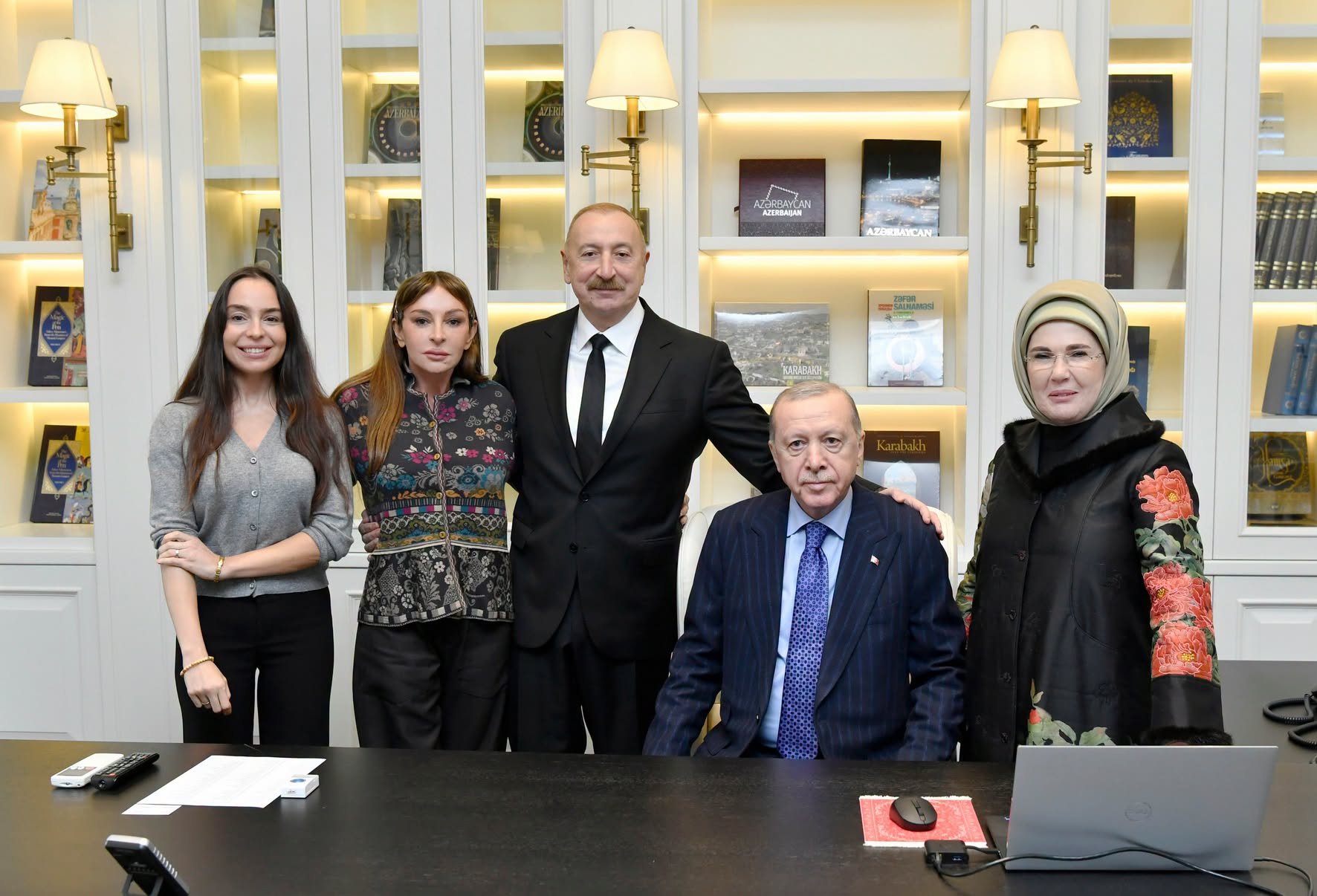
Turkish President Recep Tayyip Erdoğan arrived in Azerbaijan on 8 November to take part in events marking Victory Day. His plane landed at Fuzuli International Airport, where he was welcomed by Azerbaijani President Ilham Aliyev and his wife, Mehriban Aliyeva. Turkey’s First Lady, Emine Erdoğan, accompanied the Turkish president.
An official welcoming ceremony was held in Shusha, followed by talks between the two presidents and a joint press conference. The programme also included visits to the memorial dedicated to the victims of the Khojaly tragedy and the Victory Monument in Khankendi.
The visit marks the sixth anniversary of the end of the 44-day war in 2020, which resulted in Azerbaijan re-establishing control over Nagorno-Karabakh.
Most experts believe that Turkey’s support played a decisive role in the Azerbaijani army’s victory. It included supplies of modern Turkish-made weapons, notably Bayraktar TB2 drones, as well as substantial assistance from Turkish military advisers and instructors.
Turkey has also been involved in demining the territories regained by Azerbaijan and in implementing infrastructure projects, including the construction of roads, schools and residential buildings.
Azerbaijani President Ilham Aliyev has repeatedly stressed the importance of solidarity with Turkey. Relations between the two countries are often summed up by the phrase “one nation, two states”.
At a joint press conference following Sunday’s talks, Aliyev emphasised that the relationship had been formally established as a strategic alliance through the signing of the Shusha Declaration.
“The people of Turkey and the people of Azerbaijan are brotherly peoples. I have said many times that there are no peoples or countries in the world as closely attached to each other as we are,” the Azerbaijani president said.
Aliyev also noted that Turkey had supported Baku throughout all 44 days of the war. According to him, Erdoğan’s statement in the first hours of the conflict and the subsequent telephone conversation between the two leaders had demonstrated Ankara’s position to the world.
“We were together in the past, stood together during the war, remain together today and will be together in the future,” Aliyev said.
He described the unity between the two countries as “eternal and unbreakable”.
Erdoğan, for his part, assured that attempts to drive the two countries apart would fail.
“Those who try to undermine the brotherhood between Azerbaijan and Turkey will never achieve their goal,” he said.
The Turkish president added: “The joy of Baku is the joy of Ankara. The pride of Shusha is the pride of our entire nation.”
The visit comes amid recent disagreements between the two countries. Tensions emerged after Turkish politicians and religious figures criticised new school uniform requirements in Azerbaijan that affected the wearing of hijabs. Baku regarded such statements as interference in the country’s internal affairs.
Relations between Ankara and Baku deteriorated in the autumn amid disagreements over Israel and Azerbaijan’s domestic policies.
The first significant public incident occurred on 24 September, during an address by Israeli Prime Minister Benjamin Netanyahu to the UN General Assembly. Around 70 delegations walked out or left their seats empty in protest against Israel’s actions in the Gaza Strip. The Turkish delegation was among them. Azerbaijan’s representative, however, remained in the chamber to listen to Netanyahu’s speech, reflecting Baku’s close relations with Israel. This triggered a wave of criticism in Turkish media and on social media, where Azerbaijan was accused of showing insufficient solidarity with Muslim countries and the Palestinians.
In early October, the disagreements intensified over restrictions on religious clothing in Azerbaijani schools. New school uniform rules, adopted on 21 September, prohibited additional items of clothing deemed incompatible with the principles of secular education. Although the document did not explicitly ban the hijab, in practice girls wearing headscarves were prevented from attending classes.
On 3 October, a protest against the restrictions took place outside the Azerbaijani Consulate General in Istanbul. Demonstrators later gathered outside the Azerbaijani embassy in Ankara. Both protests called for the school uniform rules to be reconsidered.
Azerbaijani President Ilham Aliyev responded indirectly to the protests and criticism from Turkey. Speaking at a congress of the ruling New Azerbaijan Party (YAP), he urged others not to interfere in the country’s way of life, without explicitly naming Turkey.
On 12 October, Turkish presidential adviser Oktay Saral joined the criticism of Azerbaijan’s policies. He said that preventing girls wearing hijabs from attending classes violated their right to education.
“It is unacceptable to prevent female students wearing hijabs in Azerbaijan from exercising their right to education! From what standpoint of conscience and justice is it acceptable to leave a female student who covers her head for religious reasons outside the school gates? The hijab is not an obstacle, but a requirement of faith! The right to education must not be sacrificed to ideological pressure!” Saral wrote.
He also called on Baku to abandon the restrictions, saying that the state should open up opportunities for young people rather than create obstacles for them.
The following day, Azerbaijan’s ruling New Azerbaijan Party issued a strongly worded statement in response to Saral’s remarks and those of other representatives of Turkey’s ruling Justice and Development Party (AKP). It accused the politicians who had criticised Baku of making irresponsible and populist statements and of using religious issues as a means of political pressure.
“The principle of ‘One nation, two states’ does not, under any circumstances, give one state the right to interfere in the internal affairs of another or impose its own political and ideological approaches on it,” the party said.
The Azerbaijani side also rejected attempts to portray Baku’s relations with Israel as exceptional and reiterated its support for resolving the Palestinian question on the basis of the two-state solution. The statement called on the Turkish authorities to respect Azerbaijan’s sovereignty and refrain from actions that could damage bilateral relations.
On 15 October, Erdoğan did not attend the seventh summit of the Conference on Interaction and Confidence-Building Measures in Asia (CICA), held in Baku. Turkey was represented by Foreign Minister Hakan Fidan. According to Turkish media reports, the president may have decided not to attend because his Israeli counterpart, Isaac Herzog, was taking part in the meeting. Azerbaijani media, meanwhile, highlighted Erdoğan’s absence as an example of a breach of diplomatic reciprocity.
On 21 October, Erdoğan called Aliyev and invited him to attend the summit of the Organisation of Turkic States (OTS) in the Turkish capital.
Meanwhile, Oktay Saral left his post as presidential adviser, which he had held since 2016. On 26 October, he said he had stepped down on the president’s instructions. Asked by journalists whether his departure was connected to his remarks about Azerbaijan, Saral answered in the affirmative. Some observers had earlier suggested that his dismissal might be part of Ankara’s efforts to resolve its disagreements with Baku.
Despite Erdoğan’s personal invitation, Aliyev did not attend the OTS summit in Ankara on 30 October, sending Foreign Minister Jeyhun Bayramov in his place. The official explanation, published by the Azerbaijani news agency APA, cited the president’s busy schedule and previously planned engagements in Baku, including the closing ceremony of the FIFA U-15 World Cup.
However, Turkish journalist Deniz Zeyrek, citing sources close to the Azerbaijani leadership, reported that Aliyev’s absence may have been a response to Erdoğan’s decision not to attend the CICA summit in Baku on 15 October. According to Zeyrek, Baku was also expecting Ankara to take action against seven Turkish citizens accused of making public attacks on Azerbaijan and its leadership.
In addition, Azerbaijan’s Foreign Ministry declared 31 Turkish citizens persona non grata over publications and statements related to the disagreements between the two countries.