Reporters Without Borders: "Not a Single Independent Media Source Left in Azerbaijan"
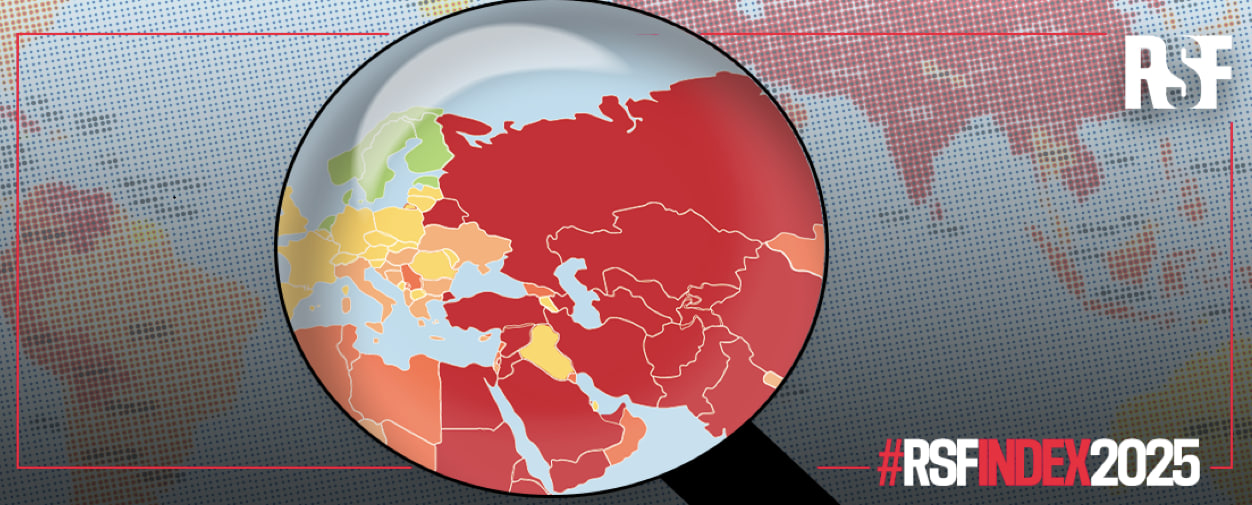
On May 2, Reporters Without Borders (RSF) published its annual report on global press freedom. For the first time since 2002, when the annual ranking began, the press freedom situation was rated as difficult worldwide. The report's authors believe economic pressure is the main factor behind the global decline in the Press Freedom Index.
The RSF ranking takes into account five indicators: political context, legislative framework, economic restrictions, sociocultural context, and journalist safety.
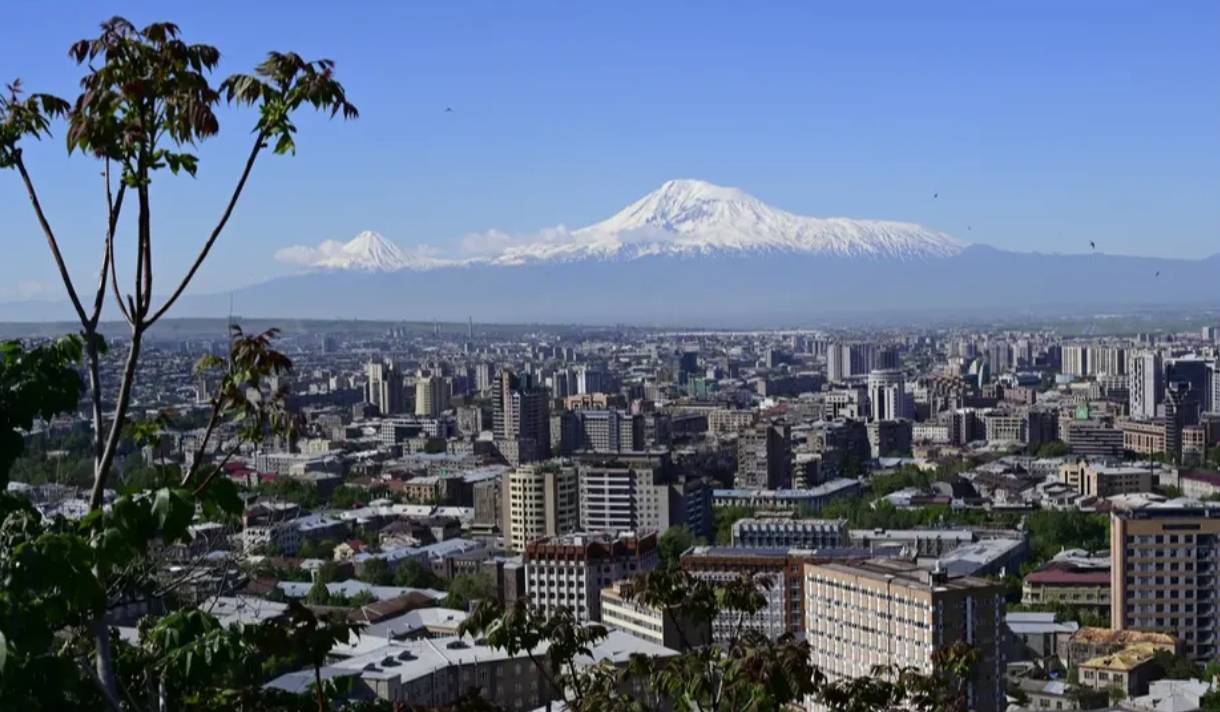
Norway remains at the top of the ranking for the ninth year running. The top ten countries with favorable press climates also include Estonia, the Netherlands, Sweden, Finland, Denmark, Ireland, Portugal, Switzerland, and the Czech Republic. In the post-Soviet space, the Baltic states (Estonia, Lithuania, and Latvia) and Armenia, which moved up 9 spots to 34th place, maintained positive momentum. Georgia is in a worrying position, falling 11 spots to 114th place. According to the ranking's compilers, this is because the Georgian advertising market is controlled by the founder of the ruling party, oligarch Bidzina Ivanishvili. Meanwhile, the recently adopted "foreign influence" law, despite protests, blocks other sources of funding.
A similar situation exists in Azerbaijan, where independent media outlets have closed or gone into exile without access to funding. Azerbaijan dropped 3 spots to 166th place, tied with Belarus. Jeanne Cavelier, head of RSF's Eastern Europe and Central Asia desk, stated that "not a single independent media outlet remains" in Azerbaijan, as the government has complete control over media outlets. Around 30 journalists have been arrested in the country, including the management and journalists of AbzasMedia, Toplum TV, Meydan TV, and Argument.az. All are accused of smuggling and other similar crimes, but they attribute the criminal prosecution to their professional activities.
However, the situation is even worse in Russia, which is among the top ten worst performers – 171st place (-9), on par with Nicaragua, Vietnam, Turkmenistan, Afghanistan, Iran, Syria, China, North Korea, and Eritrea.
"Russia has seen the sharpest decline in press freedom scores among Eastern European and Central Asian countries, particularly in legal and political indicators. This sharp decline reflects the regime's increasingly repressive use of judicial instruments to suppress independent journalism. "There is a growing trend toward judicial persecution, including in absentia convictions of journalists in exile and decisions resulting in outright bans on journalistic activity," notes Jeanne Cavelier.
The media economy, already suffering from the rise of social media, which siphons off advertising revenue, has found itself in an even more dire situation due to the policies of the new US administration. President Donald Trump has suspended funding for Radio Free Europe/Radio Liberty, the US Agency for International Development (USAID), and the US Agency for Global Media (USAGM), which supported journalists in countries with authoritarian regimes, corruption, and war. For example, in Ukraine (62nd place, -1), most editorial offices survived on US subsidies; many have now closed.
The average score for all countries included in the index fell below 55 points, which the Index categorizes as a "difficult situation." In 160 out of 180 countries, media outlets achieve financial stability "with difficulty" or "not at all." In a third of countries, news outlets closed in 2024 due to economic hardship. For the first time in the history of the Press Freedom Index, conditions for journalistic work have become poor in half of the countries and satisfactory in only one in four.