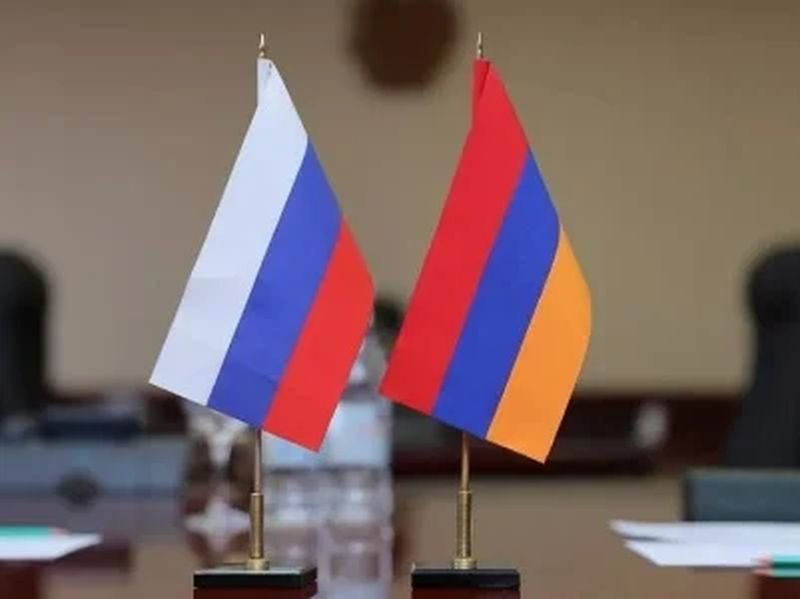
Russia may impose economic and personal sanctions against Armenia
The Armenian newspaper Hraparak reported that Russia is developing new sanctions against Armenia in response to Yerevan's "anti-Russian actions." These actions include Ukrainian President Volodymyr Zelenskyy's possible visit to the Yerevan summit on May 4-5.
The planned restrictions, according to Hraparak, affect the import of Armenian agricultural products, flowers, and certain mining products. Of particular concern is the possible termination of the agreement with Russia on the disposal of nuclear waste from the Metsamor Nuclear Power Plant, which, according to the newspaper, threatens an environmental disaster for Armenia.
Individual sanctions against Armenian businessmen and officials, including asset freezes and entry bans, are also being considered.
Earlier, Russia blocked shipments of Armenian mineral water "Jermuk." Rospotrebnadzor reported that samples found in violation of mandatory requirements.
As a reminder, on April 20, Armenian Prime Minister Nikol Pashinyan confirmed the freezing of the country's membership in the pro-Russian military-political bloc, the Collective Security Treaty Organization (CSTO), calling the decision final.
"The Republic of Armenia's membership in the CSTO is frozen, and no steps will be taken to resume its activities," Pashinyan stated.
Furthermore, activists of the "Strong Armenia" party, considered pro-Russian, have been detained in Armenia. They are accused of vote-buying ahead of the June 7 parliamentary elections. The party's leader, Russian oligarch Samvel Karapetyan, is under house arrest in Yerevan on charges of calling for a coup d'état.