Armenian leaders honored the memory of the victims of the genocide, and Pashinyan called for the tragedy not to be politicized
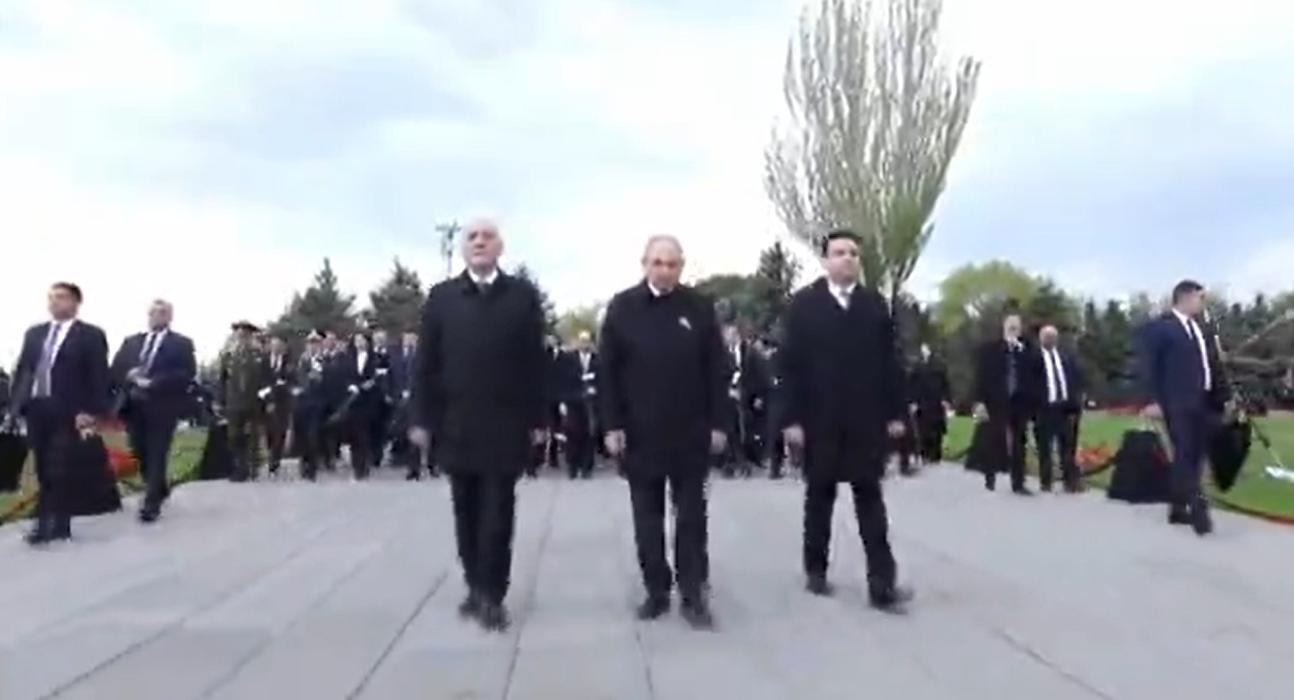
Armenian Prime Minister Nikol Pashinyan, along with President Vahagn Khachaturyan and Parliament Speaker Alen Simonyan, honored the memory of the victims of the Armenian Genocide in the Ottoman Empire by visiting the Tsitsernakaberd memorial.
In his speech marking the 111th anniversary of the tragedy, Nikol Pashinyan called for the Armenian Genocide not to be used as a tool in geopolitical struggle. He emphasized that this date is an opportunity to reflect on history and strengthen resolve to prevent the recurrence of such tragedies, noting that the government's current policy is aimed precisely at this.
The prime minister also stated that the involvement of the Armenian people in international intrigues since the mid-19th century was one of the causes of the genocide, which culminated in 1915.
He emphasized that the existence of one's own state and peace is the main guarantee for preventing new tragedies, calling for a rejection of the illusion of searching for a "historical homeland" beyond internationally recognized borders. Furthermore, Pashinyan emphasized the need to focus efforts on developing Armenia's territory, which, according to his estimates, can accommodate up to 5-10 million residents.
According to the Agos newspaper, Turkish President Recep Tayyip Erdoğan sent a message to the Armenian Patriarchate of Constantinople and the country's Armenian community, honoring "the memory of the Ottoman Armenians who perished in the difficult circumstances of World War I" and offering condolences to their descendants. He also recalled that during the collapse of the Ottoman Empire, "all peoples endured great suffering" due to wars, uprisings, and disease. According to the Turkish leader, Armenians, as citizens of the Ottoman Empire, also suffered severe trials, and he "shares the pain of the Armenian community."
Earlier, the traditional torchlight procession in memory of the victims of the genocide took place in Yerevan. Nikol Pashinyan condemned the burning of the Turkish flag by participants in the procession, organized by the Armenian Revolutionary Federation (ARF) Dashnaktsutyun party, calling these actions provocative, unacceptable, and aimed at destabilizing the region, especially in the context of current Armenian-Turkish relations.