Storm Paralyses Russia's Rostov Region: One Dead, Dozens Injured, 102 Settlements Without Power
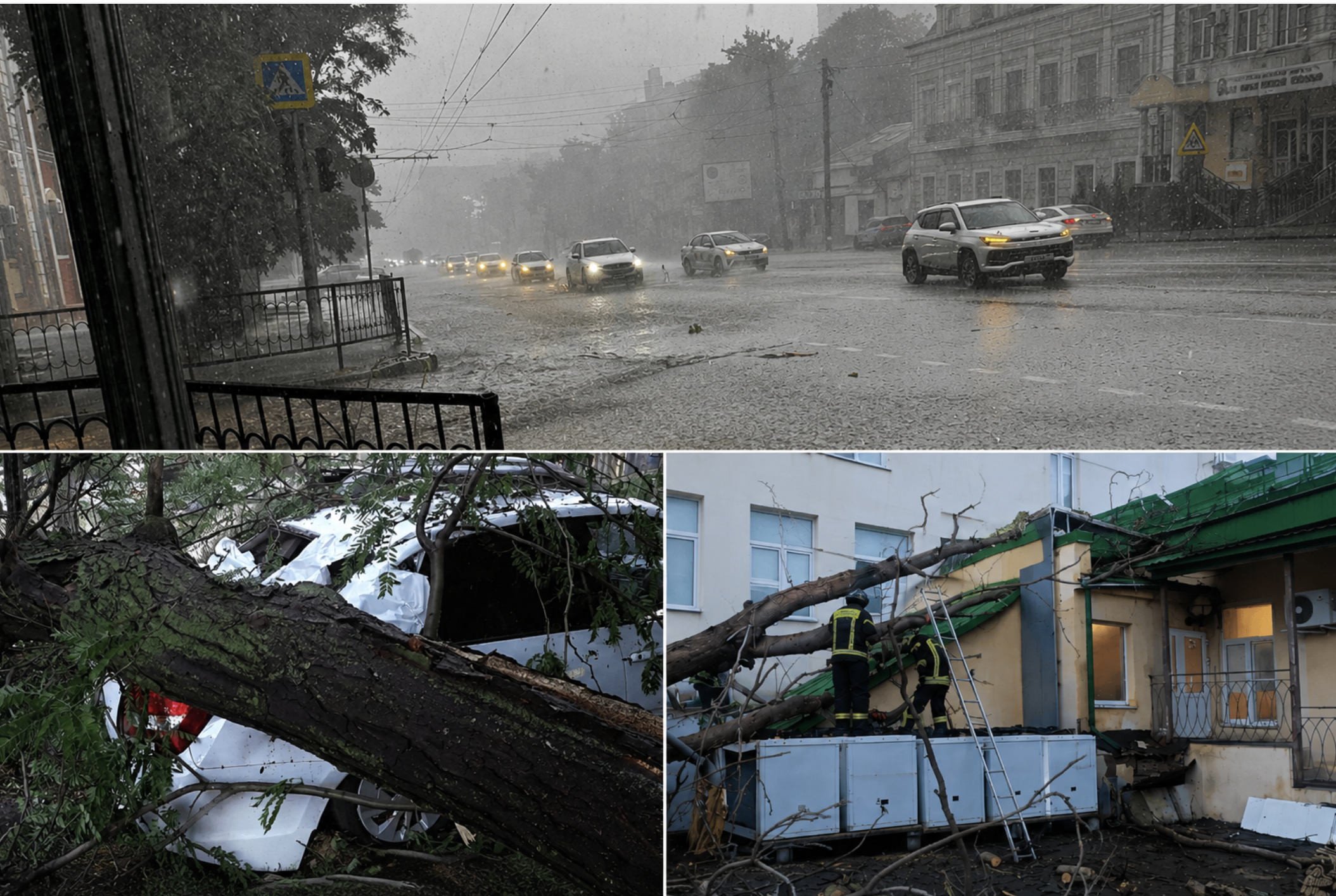
A destructive storm that swept through Russia's Rostov region has left one person dead, dozens injured and caused widespread disruption to utilities, transport and power infrastructure. A state of emergency has been declared in the regional capital, Rostov-on-Don, where residents have reported being unable to get through to emergency services.
According to regional governor Yuri Slyusar, 51 people, including one child, sought medical treatment in the storm's aftermath. Eleven remain in hospital. One person was killed — reportedly a security guard at the construction site of the "Donskiye Legendy" residential complex, who was struck by a heavy metal structure brought down by gale-force winds, according to local media.
State of emergency declared in Rostov-on-Don
A state of emergency remains in effect in Rostov-on-Don. Mayor Alexander Skryabin said the storm felled more than a thousand trees, of which utility crews had managed to clear only 132 by evening. City services received roughly 35,000 calls for assistance.
102 settlements without power
The storm affected at least 15 towns and districts across the region. A total of 102 settlements remain without electricity. Additional emergency repair crews have been dispatched to the region from the Astrakhan and Volgograd regions, Kalmykia and Krasnodar Krai to help restore power.
Water supply problems have also persisted. More than 42,000 residents remain without water across the Azov, Aksai, Volgodonsk, Veselovsky, Oktyabrsky, Semikarakorsk and Tselinsky districts, as well as in the towns of Azov, Shakhty and Krasny Sulin and the village of Zadonye.
Transport disrupted
The storm severely disrupted public transport in Rostov-on-Don. All tram services have been suspended. Of the city's trolleybus routes, only route No. 2 remains in operation, running just two vehicles on battery power.
Rail services were also affected. According to the North Caucasus Railway, 89 passenger trains have been delayed, with disruptions to traction substations and power supply facilities cited as the cause. Maximum delays have reached eight hours.
Residents report being unable to reach emergency services
Amid the storm clean-up, residents of Rostov-on-Don and surrounding areas have reported widespread difficulty reaching emergency services. Commenting on posts by Governor Slyusar and Mayor Skryabin on Telegram, users said they had spent hours unable to get through to the 112 emergency line, as well as to gas, utility and repair services.
One Rostov resident said she had been trapped in her car after a tree fell on it but was unable to reach rescuers. Others reported ruptured gas pipes, flooded electrical substations, downed power lines and prolonged outages, saying dispatch operators either failed to answer or hung up.
Similar complaints came from the towns of Bataysk, Aksai, Shakhty, Novoshakhtinsk, Gukovo and elsewhere, with many residents saying they had been without electricity for more than a day and that calls to emergency services had gone unanswered.
Authorities and emergency services have continued to issue regular updates on repair work, but had not, at the time of publication, publicly addressed the numerous complaints about the unavailability of the 112 line and other emergency services.
According to the Rostov-on-Don city administration, 253 personnel and 47 pieces of equipment — including city and regional rescue teams and district emergency crews — have been deployed to deal with the storm's aftermath.
Governor Slyusar urged residents to avoid going outside unless absolutely necessary until repair work is complete.
A new test for southern Russia
Rostov region is the latest area of southern Russia to be hit hard by extreme weather this summer. Heavy rain and flooding earlier disrupted transport links across parts of the North Caucasus and caused power and water outages.
The situation was particularly severe in Dagestan, where some residents said after spring flooding that they had not received compensation for lost property, despite regional authorities' statements that payments were continuing.
The latest storm has again raised questions about the readiness of utility and emergency infrastructure to withstand extreme weather. Mass power outages, water supply disruptions, transport failures and widespread complaints about inaccessible emergency lines have shown that even a brief spell of severe weather can trigger major breakdowns in the region's essential services.