Leak, Elections, and an "Armenian Ivanishvili": Moscow's Alleged Plan for a Change of Power in Armenia
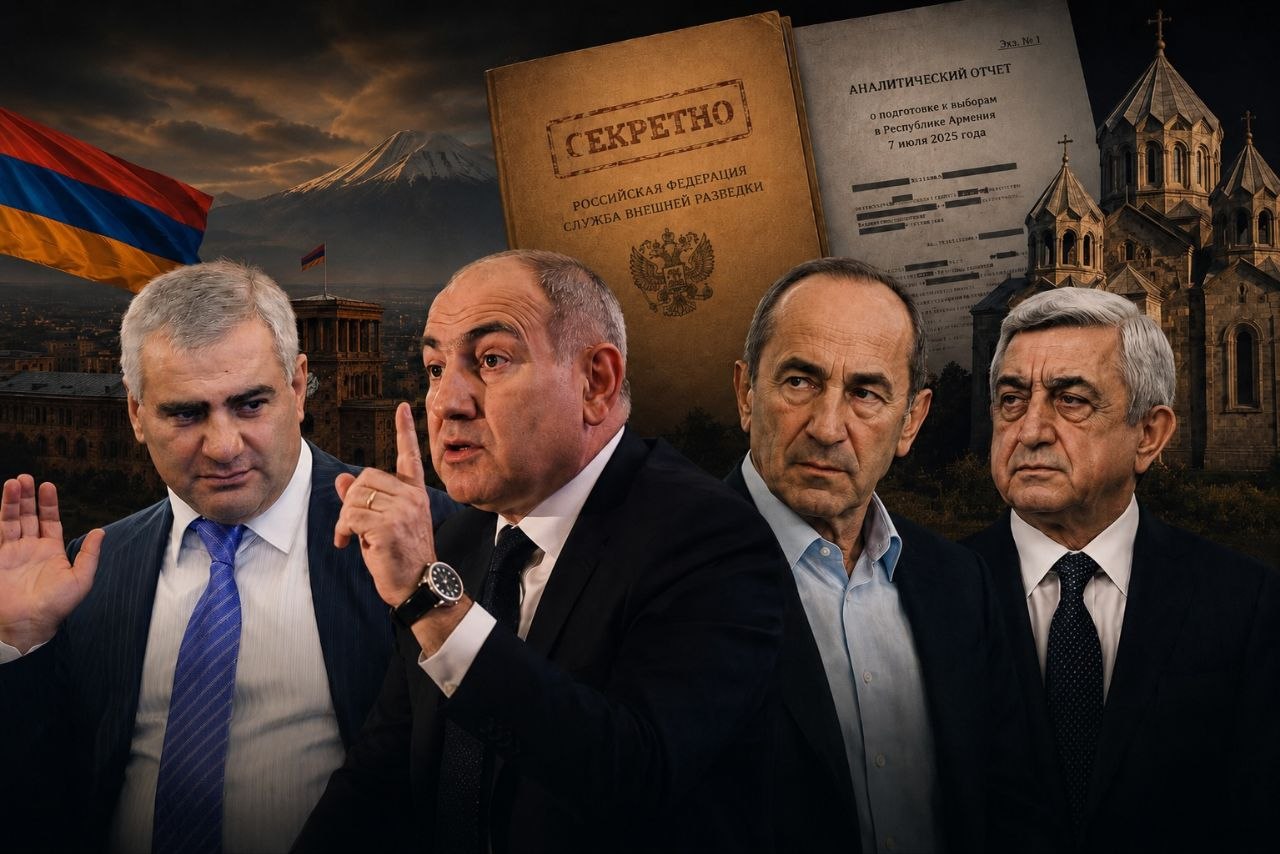
The Armenian publication ZARTNIR.MEDIA reported today on alleged documents from Russian intelligence agencies regarding the upcoming June 7 elections in Armenia and a possible change of power in the country. The authors of the publication claim that the documents were obtained after hacking the phone of a Russian intelligence officer. There is currently no independent confirmation of the authenticity of the materials.
Judging by the publication, Moscow is skeptical about the possibility of a military coup in Armenia. The documents describe the likelihood of a military coup as "minimal," and protest mobilization as capable of leading only to "short-term destabilization." The authors of the alleged report believe that the current government maintains control over state institutions, and "there are no signs of a split" among the security forces.
Parliamentary Elections: The Main Stake
According to the publication, the main stake in the proposed plan is parliamentary elections, not street protests or attempts at force.
The authors of the proposed report specifically emphasize that, judging by the documents, Moscow no longer views the old Armenian opposition as an independent resource for returning to power.
Supporters of former presidents Robert Kocharyan and Serzh Sargsyan are classified in the materials as part of the so-called "black segment." This electorate, the documents claim, has a stable core of support, but "cause a high level of public rejection" and is unable to attract a significant portion of undecided voters.
On the opposite side, the authors of the report place the "white segment"—supporters of Nikol Pashinyan and pro-Western forces.
However, the documents identify the "red segment"—voters who are dissatisfied with the current government but simultaneously do not want a return to the previous political system—as the key target of the political struggle.
It is this group, as one passage states, that possesses "the greatest potential for political mobilization." Another document calls outreach to this electorate "a key focus of the future campaign."
Samvel Karapetyan as the "Armenian Ivanishvili"
The publication names Russian-Armenian businessman Samvel Karapetyan as the main figure in the potential political project.
The authors of the documents directly compare him to Bidzina Ivanishvili, founder of the Georgian Dream party. According to the publication, Karapetyan is seen as a figure capable of uniting various opposition forces without directly returning the former elites to power.
The materials describe Karapetyan as someone who "does not provoke strong rejection in the majority of society" and could become a "compromise figure" for various political groups.
At the same time, judging by the documents, the future project should not appear openly pro-Russian. The authors of the proposed strategy propose focusing on social and economic issues, avoiding harsh ideological rhetoric, and promoting the idea of "national reconciliation."
One fragment states that the new political force should be perceived "not as revenge, but as an alternative."
Focusing on the Church and Coalitions
The publication devotes special attention to the Armenian Apostolic Church.
The authors of the proposed plan call the church one of the few institutions that maintains a high level of trust within the country and speak of the need for "coordination with spiritual structures."
Furthermore, the documents mention the idea of creating a broad coalition involving public and political organizations. Among these are the Prosperous Armenia Party, the Mother Armenia movement, and several civic platforms.
According to ZARTNIR.MEDIA, the authors of the strategy propose focusing not on radical mobilization, but on "calm and systematic work with society."