Voting has begun in Armenia's parliamentary elections: 18 political forces are vying for the seats
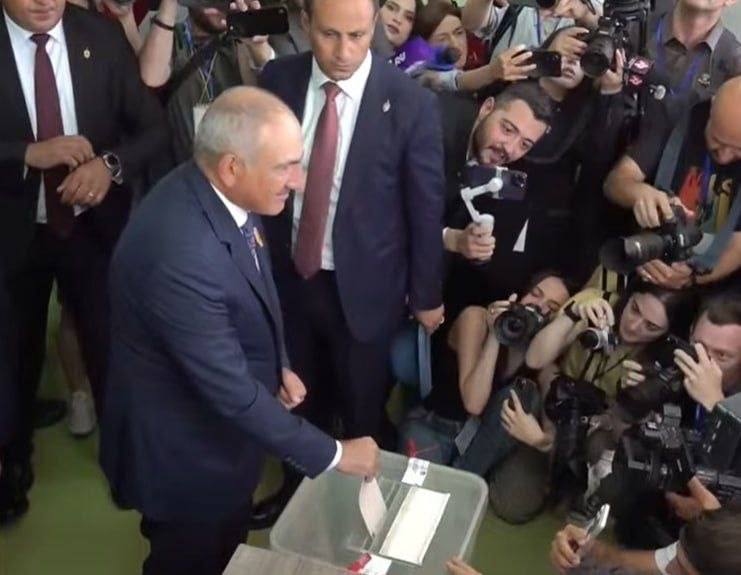
Voting is underway in Armenia's parliamentary elections. The Central Election Commission (CEC) announced that 2,485,851 people have been added to the electoral rolls. On election day, from 8:00 a.m. to 8:00 p.m., 2,005 polling stations will be open across the country.
This year, 18 political parties and blocs are vying for parliamentary seats. Due to the specifics of the legislation, there is no minimum turnout threshold—the elections are considered valid regardless of the number of voters.
The threshold for parties is 4%. Blocs consisting of two or three parties must clear the 8% threshold. For coalitions uniting four or more political forces, this threshold is set at 10%.
Prime Minister Nikol Pashinyan, leader of the Civil Contract Party, cast his ballot and announced his intention to travel to Moscow, Washington, and Brussels. According to a survey conducted by the Armenian branch of GALLUP International Association, incumbent Prime Minister Nikol Pashinyan, who leads the Civil Contract Party, enjoys the support of 32.4% of respondents.
Businessman Samvel Karapetyan's Strong Armenia Party is supported by 16.4% of respondents. Former President Robert Kocharyan's Armenia Bloc garners 15.2%. Gagik Tsarukyan's Prosperous Armenia Party has 8.8%, and former Ombudsman Arman Tatoyan's Wings of Unity has 6.2%. All four of these latter parties are opposition parties, with the first three considered pro-Russian.
Following the recent EU summit in Yerevan in early May, Armenia has faced increased criticism from Russia over its growing rapprochement with the EU. During the election campaign, Nikol Pashinyan floated the possibility of introducing visa-free travel for Armenian citizens to EU countries by 2028, and also stated that Armenia would withdraw from the CSTO "if necessary."
Shortly before the election, Russian authorities took steps to impose restrictions on Armenian exports. Rosselkhoznadzor (the Federal Service for Veterinary and Phytosanitary Surveillance) banned the import and transit of many fruits and vegetables, cognac, fish, mineral water, and flowers to the EAEU.