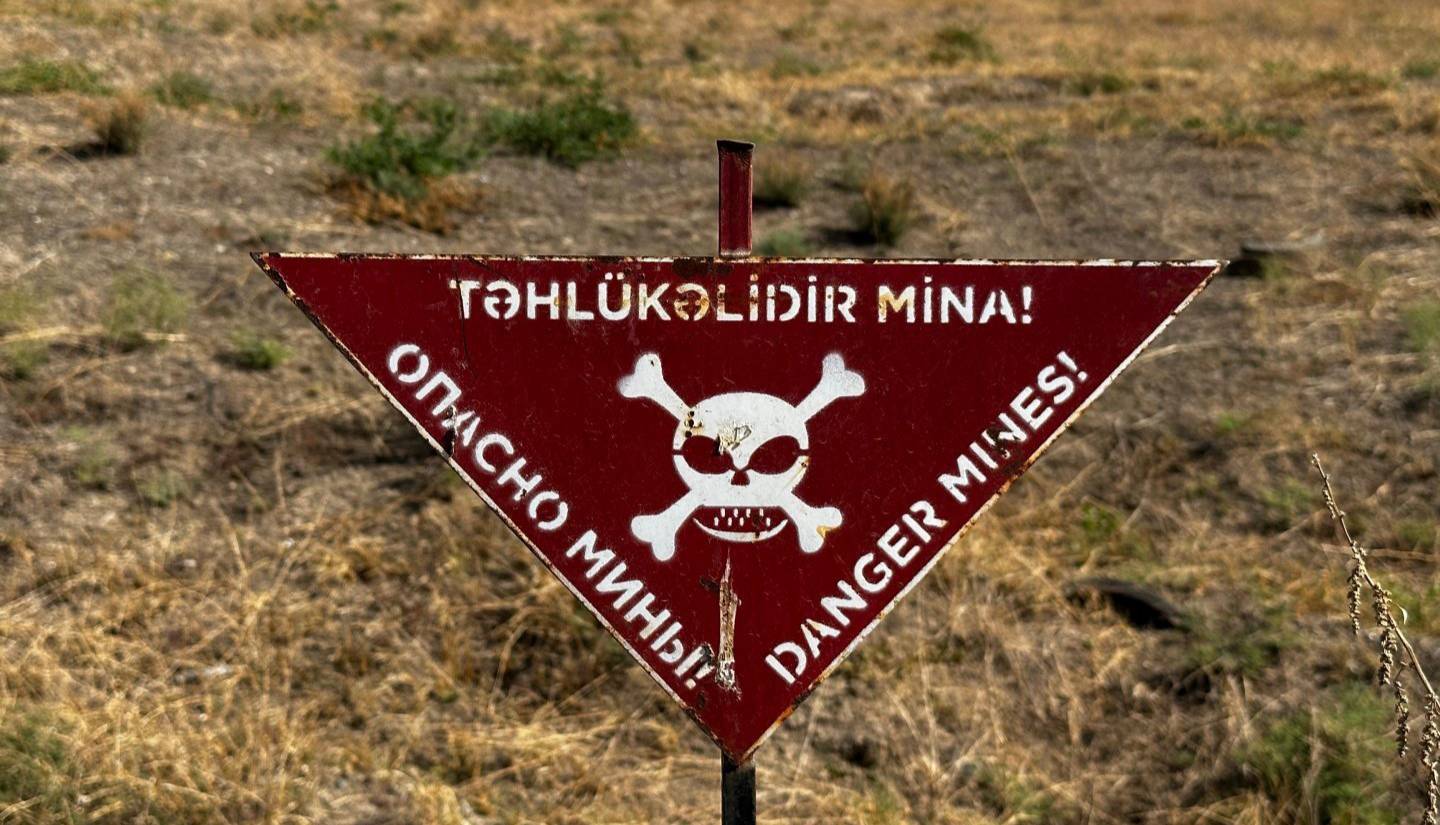
361 mines and over 600 pieces of unexploded ordnance discovered in Azerbaijan in one week
Between October 5 and 11, 361 mines and 624 pieces of unexploded ordnance were discovered in territories that have come under Azerbaijan's control. Local media reported this, citing the Azerbaijan National Agency for Mine Action (ANAMA).
The discovered mines included 327 anti-personnel mines and 34 anti-tank mines.
During the week in question, specialists cleared 1,239.1 hectares of territory of mines and unexploded ordnance.
Despite ongoing demining efforts, mines remain a threat to residents and workers, and they complicate the reconstruction of settlements and the return of formerly displaced persons. On October 8, in the Jabrayil district, 26-year-old Orkhan Gahramanov stepped on an anti-personnel mine while herding livestock. When his father, Ashraf Gahramanov, arrived at the scene, he also stepped on a mine.
Both men were taken to a hospital in Baku and underwent surgery. Orkhan had his right hand (including part of the forearm) and left lower leg amputated, while his father’s right leg was amputated at the ankle. According to Azerbaijani medical authorities, as of October 10, both victims were in stable condition. Ashraf Gahramanov remained in the intensive care unit.
The issue of the mine threat is attracting attention beyond the region as well. In August, the Azerbaijani short documentary *Step*—which tells the story of Hasanali Alizade, who was severely injured in a mine explosion—was selected for the official program of the Dreamz Catcher International Film Festival in India. The film recounts Alizade’s story and shows how the tragedy he endured transformed his life.