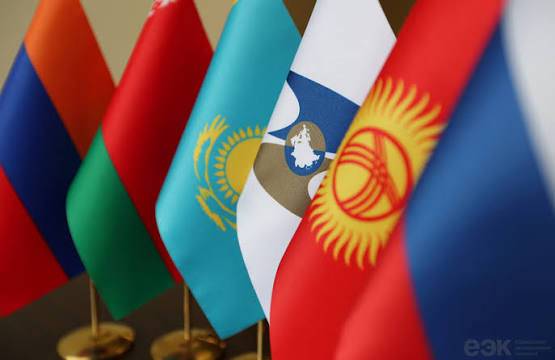
EAEU Considers Suspending Armenia’s Participation Due to Its Pivot Toward the EU
Russia, Belarus, Kazakhstan, and Kyrgyzstan believe that the member states of the Eurasian Economic Union (EAEU) have the right to collectively suspend the application of the union’s founding treaty with regard to Armenia. This possibility is outlined in a report by members of the Eurasian Intergovernmental Council representing these four nations, as cited by RIA Novosti.
The authors of the document argue that the legislation adopted in Armenia to initiate the process of joining the European Union poses risks to the functioning of the EAEU. In their assessment, this move runs counter to the objectives of the union as set forth in its founding treaty.
While the EAEU treaty itself does not contain an explicit mechanism for suspending its application to an individual member state, the authors of the report point to norms of international law—including the 1969 Vienna Convention on the Law of Treaties—which they believe provide a legal basis for such a decision.
"Under these circumstances, the other parties to the Treaty on the Eurasian Economic Union... have the right to reach a joint decision to temporarily suspend the application of the Treaty on the Eurasian Economic Union of May 29, 2014, with respect to the Republic of Armenia," the report states.
In late August, Armenian Prime Minister Nikol Pashinyan announced that his country might soon begin the process of applying for European Union membership. In September, during a meeting in Bishkek on the sidelines of a Shanghai Cooperation Organization (SCO) summit, Pashinyan and Russian President Vladimir Putin engaged in a public disagreement regarding Yerevan’s future foreign economic policy. The Russian president stated that the adoption of legislation to begin the process of joining the EU effectively amounts to Armenia’s withdrawal from the EAEU, "because being in both is incompatible." Pashinyan disagreed with this interpretation, stating that Armenia had not informed its partners of any intention to withdraw from the EAEU, and noting that the procedure for such a withdrawal is explicitly set out in the treaty on the union. According to him, a country must notify the other members of the bloc of such a decision six months in advance.