Karachay-Cherkessia celebrated the Day of Revival of the Karachay People
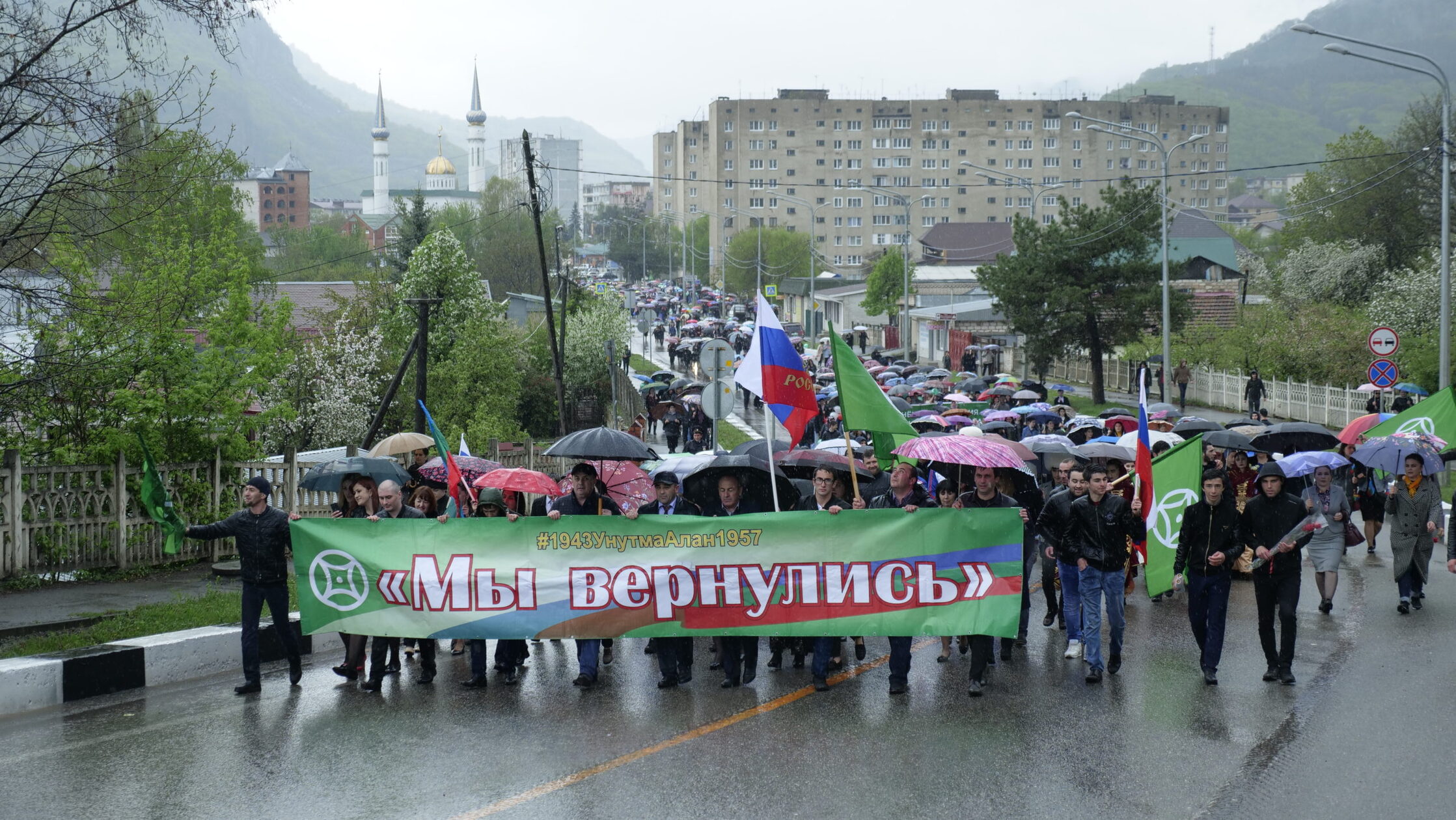
On May 3, Karachay-Cherkessia celebrated the Day of Revival of the Karachay People – the 68th anniversary of the return of the Karachays to their homeland, exiled during the mass deportation of November 1943. This year, the holiday was combined with celebrations marking Victory Day.
The Karachays were the first of the Caucasian peoples to be subjected to total deportation. Later, in February and March 1944, Chechens, Ingush, and Balkars were also exiled. Koreans, Germans, Ingrian Finns, Kalmyks, Crimean Tatars, and Meskhetian Turks also fell victim to Stalin's deportation in Russia.
The official reasons for the Karachays' exile were accusations of collaboration with the German authorities, their reluctance to join partisan detachments during the occupation, and incidents of banditry. Meanwhile, the overwhelming majority of the male population was fighting at the front in the Red Army at the time. The decree of the Presidium of the Supreme Soviet of the USSR "On the Liquidation of the Karachay Autonomous Region and the Administrative Structure of Its Territory" stated that "many Karachays behaved treasonously," as well as "joined detachments organized by the Germans to fight Soviet power," and that they "opposed the measures carried out by the Soviet government, concealed bandits and agents displaced by the Germans from the authorities, and actively assisted them."
Researchers believe the true reason for the deportation was that the Caucasian peoples, who had preserved traditional relationships, were difficult to succumb to communist propaganda. As Stalin himself said, these peoples "were disloyal to Soviet power." In addition to ideological reasons, historians cite political ones (the authorities' desire to prevent and suppress protest movements) and economic ones (the benefits associated with the development of deserted territories using free labor forcibly transferred to needed locations).
The deportation of the Karachays took place from November 2-5, 1943. More than 69,000 people were resettled to Kazakhstan and Kyrgyzstan. The Karachay Autonomous Region was liquidated, its lands were divided between Stavropol, Kuban, Georgia, and the Cherkessk Autonomous Region, and resettled with "trusted categories of workers."
More than 650 people died in freight cars during the resettlement. Thousands died in the first years of exile from cold, hunger, and disease. Only in 1949 did the birth rate among the Karachays exceed the death rate. In 1956, the restrictions that had made life difficult for the displaced people were partially lifted, and in 1957 they were allowed to return to their homeland. Their political rehabilitation occurred in 1991, when the law "On the Rehabilitation of Repressed Peoples" was passed, condemning the genocide and slander to which the Karachays, along with many other peoples of the USSR, were subjected.
In 1997, Vladimir Khubiev, the head of Karachay-Cherkessia, signed a decree establishing the Republic's holiday, Karachay Revival Day. It is celebrated on May 3rd—the day in 1957 that the first families of the deportees returned to their homeland. This day has been declared a non-working day in the republic, and the celebration includes concerts, car rallies, sports competitions, exhibitions, and meetings with writers.
This year, the main events took place in the central square of Karachayevsk, where 500 liters of traditional ayran (milk) were brewed. Commemorative rallies were also held in the village of Uchkeken and the stanitsas of Pregradnaya and Zelenchukskaya. A thematic exhibition was held in Cherkessk, the capital of the Karachay-Cherkess Republic.