To Moscow After the Crisis: Azerbaijani Foreign Minister’s Visit Signals Restoration of Ties with Russia
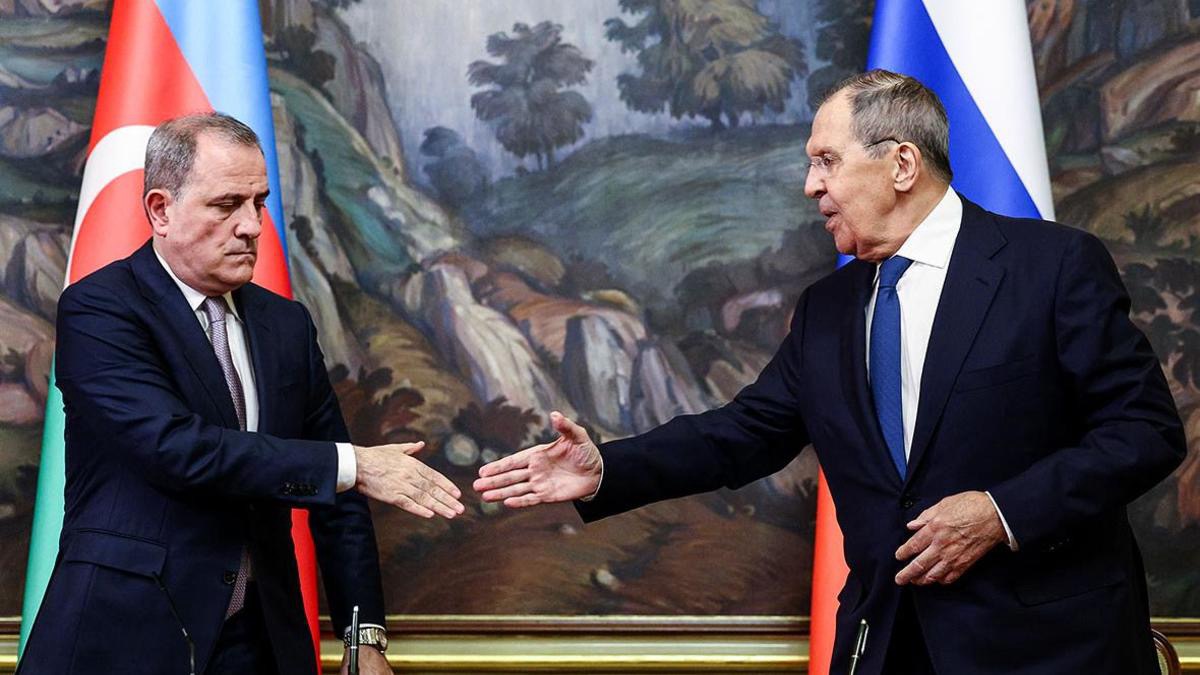
Azerbaijani Foreign Minister Jeyhun Bayramov arrived in Moscow for an official visit three months after Russia and Azerbaijan announced the resolution of issues stemming from the crash of an AZAL aircraft—an incident that had led to a sharp deterioration in relations between Moscow and Baku. Following talks with Russian Foreign Minister Sergey Lavrov, the two sides declared their intention to intensify political dialogue, expand bilateral contacts, and restore practical cooperation.
Lavrov described the talks as "productive and based on mutual trust," stating that Moscow aims to "bridge the gap" in relations with Baku. He noted that Russia had taken note of Azerbaijani President Ilham Aliyev’s statement regarding his readiness for the full normalization of bilateral ties.
For his part, Bayramov emphasized that Azerbaijan is prepared to discuss the entire spectrum of issues on the bilateral agenda.
"Mutual readiness to intensify political dialogue and bilateral contacts at various levels has been confirmed," he said.
According to Lavrov, the parties reaffirmed their commitment to the Declaration on Allied Interaction—signed in Moscow in February 2022—and agreed to develop cooperation in the political, economic, and humanitarian spheres.
The ministers also discussed the situation in the South Caucasus, the development of the "3+3" regional cooperation format, and interaction within international forums.
Russia’s war against Ukraine was another specific topic of discussion. Bayramov stated that Azerbaijan considers a peaceful resolution to the conflict important and welcomes the diplomatic efforts being made in this direction.
The ministers also paid specific attention to the AZAL plane crash. Lavrov stated that all issues related to the aftermath of the crash have been resolved.
"We reviewed the progress of the air crash investigation in detail." "All issues related to it have been fully resolved," said the Russian Foreign Minister.
According to Bayramov, Russia and Azerbaijan will also soon resume direct air travel on several routes—services that had been suspended following the crash of an AZAL aircraft in December 2024. He stated that the necessary decisions have already been agreed upon and that flights will be restored shortly.
Bayramov also noted the positive momentum in economic cooperation and reaffirmed Baku’s interest in further developing relations with Moscow.
Following the talks, the ministers signed a plan for consultations between the foreign ministries of Russia and Azerbaijan for 2026–2027.
"I am convinced that the traditions of friendship and good-neighborliness between our countries, the regular political dialogue, and our joint efforts to implement the agreements reached will continue to strengthen Russian-Azerbaijani relations," Lavrov declared.
Thus, the outcome of the talks between the two countries' foreign ministers demonstrates a shared desire by Moscow and Baku to finally overcome the aftermath of the diplomatic crisis triggered by the AZAL plane crash and to return to full-scale political and practical cooperation. This is evidenced both by the signed plan for inter-ministerial consultations and by statements from both sides regarding the expansion of political dialogue, the resumption of air travel, and a readiness to develop bilateral ties.
As early as the autumn of 2025, analysts at Carnegie Politika noted that during the crisis, Azerbaijani authorities sought to avoid crossing the Kremlin's "red lines," recognizing the country's continued economic dependence on Russia. According to the project's authors, both sides ultimately managed to resolve the conflict on terms acceptable to them: Ilham Aliyev gained reputational benefits, while Vladimir Putin relatively quickly put the issue of the AZAL plane crash to rest. At the same time, analysts point out that the primary consequence of the crisis was not diplomatic discord, but the fates of individuals. "The only losers were the citizens of the two countries who were taken hostage during the conflict—those beaten, killed, or still languishing in prison. Yet their fate was never a priority for either Moscow or Baku," noted a piece by Carnegie Politika.