Washington Pushes to Fast-Track 'Trump Route' Through Armenia
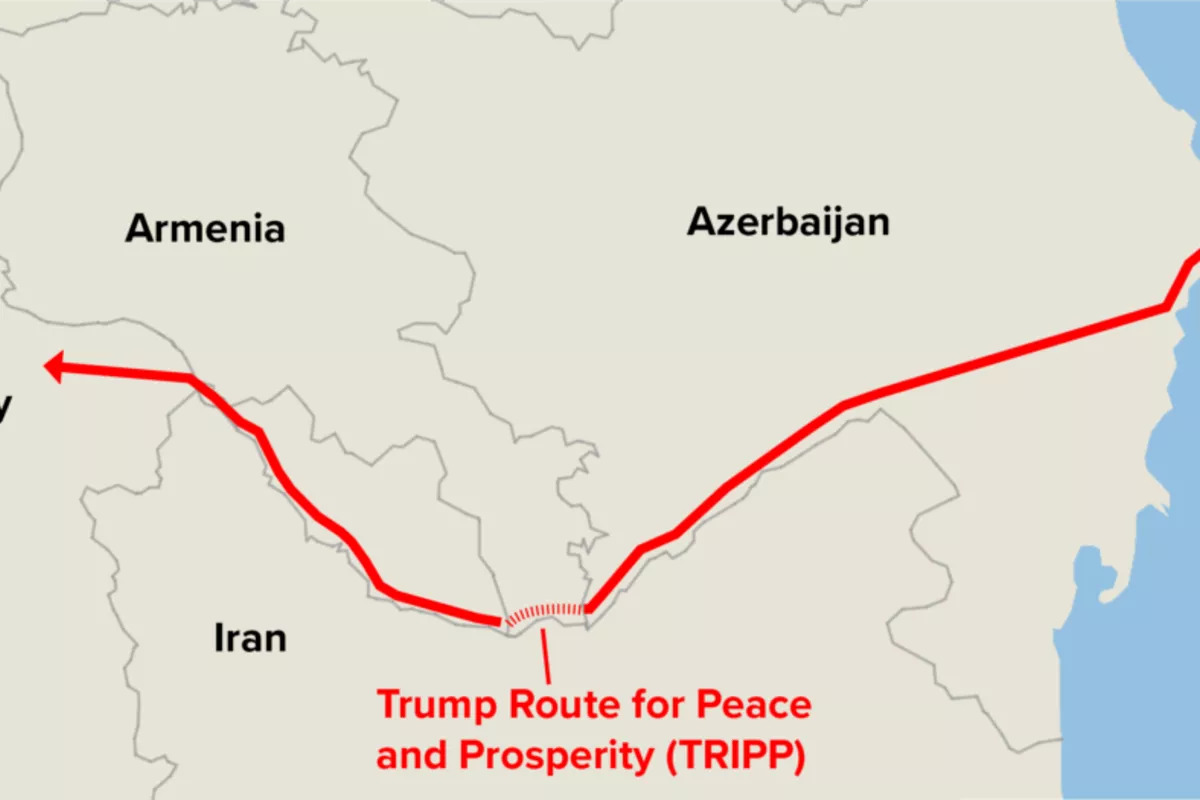
Washington and Yerevan have agreed to accelerate implementation of the Trump Route for International Peace and Prosperity (TRIPP)—also known as the Zangezur Corridor—a transport project that would connect Azerbaijan with its Nakhchivan exclave through Armenian territory. Construction of the railway alone is expected to cost between $250 million and $400 million, while the route is ultimately intended to become part of the Trans-Caspian, or Middle Corridor, linking Asia and Europe.
The project's implementation was discussed during a visit to Yerevan by Aryeh Lightstone, senior adviser to the U.S. special envoy for peace missions. During the visit, he held talks with Armenian Prime Minister Nikol Pashinyan and Foreign Minister Ararat Mirzoyan.
According to Armenia's Foreign Ministry, the two sides agreed to move ahead with the project as quickly as possible and discussed how TRIPP could integrate Armenia into the international transport network.
"The parties emphasized their interest in implementing the program on the ground within the shortest possible timeframe and exchanged views on the most effective ways to integrate Armenia into the international transport infrastructure system," the ministry said in a statement.
The route will pass through Armenia's Syunik Province, providing a direct overland connection between mainland Azerbaijan and Nakhchivan. Under the agreements reached between Yerevan and Washington, however, the corridor will remain fully under Armenia's sovereignty and jurisdiction.
For Azerbaijan, the project would provide a shorter route to Nakhchivan and onward to the Turkish border. At present, access to the exclave relies in part on routes through Iran, while rail transport follows a longer route via Georgia and Turkey. The new corridor is expected to reduce transport costs and improve access to the Turkish market.
The significance of the project extends well beyond Armenian-Azerbaijani relations. Washington views TRIPP as the missing link in the Trans-Caspian, or Middle Corridor, connecting Central Asia, the Caspian region, the South Caucasus, Turkey and Europe. For Armenia, it represents the country's first opportunity in decades to become part of one of the main East-West transport routes after years of effective isolation caused by closed borders with Azerbaijan and Turkey.
The U.S. concept extends beyond road and rail infrastructure. It also envisages the construction of power transmission lines, oil and gas pipelines, fiber-optic networks, logistics terminals and other commercial infrastructure along the route.
The project will be managed by a joint venture, TRIPP Development Company. Under the ownership model approved by Washington and Yerevan, the U.S. side will initially hold a 74% stake, while Armenia will own the remaining 26%. The company will operate the project for 49 years. If the agreement is extended for another 50 years, Armenia's share would increase to 49%. Legislative, judicial, customs and border authority over the territory, however, will remain entirely under Armenian control.
The project's final cost has yet to be determined. According to the Carnegie Endowment, the United States had secured approximately $400 million in initial financing by the end of 2025, although this is viewed only as the first stage. Plans call for the creation of a multi-billion-dollar investment fund backed by both public and private capital.
Experts estimate that construction of the 43-kilometer railway section through Armenia alone will require $250–400 million. Funding for the parallel highway has not yet been secured.
The United States has also established the TRIPP+ Fund, capitalized at $200 million, to support transport, energy and infrastructure projects across the South Caucasus and Central Asia, including initiatives in Armenia and Azerbaijan.
For Armenia, the project is expected to generate benefits beyond transit revenues. The joint venture would be able to earn income from infrastructure operations, commercial activities along the route, property leasing and related services. As a shareholder in the company, Armenia would receive a share of those revenues. The concept also envisages job creation, participation by local businesses in joint ventures, technology transfer and increased foreign investment.
Neither Armenia nor Azerbaijan has published estimates of the project's expected annual revenues. Official documents refer only to the creation of "sustainable sources of income."
For Azerbaijan, the principal economic benefit lies not in ownership of the project but in securing a direct land connection with Nakhchivan and Turkey, reducing transportation costs and strengthening the Middle Corridor.
The project's political significance is at least as important as its economic value. TRIPP stems from agreements brokered by the United States in August 2025. For Washington, it represents an opportunity to expand its economic presence in the South Caucasus; for Armenia, a chance to end decades of transport isolation; and for Azerbaijan, a direct land route to Nakhchivan without altering Armenia's sovereignty over the territory.
During his meeting with Lightstone, Prime Minister Nikol Pashinyan said the August 2025 agreements had created a "stable and positive atmosphere" in the region and expressed satisfaction with the progress made in implementing the accords.