UK to Allow Duty-Free Imports of a Range of Armenian Goods
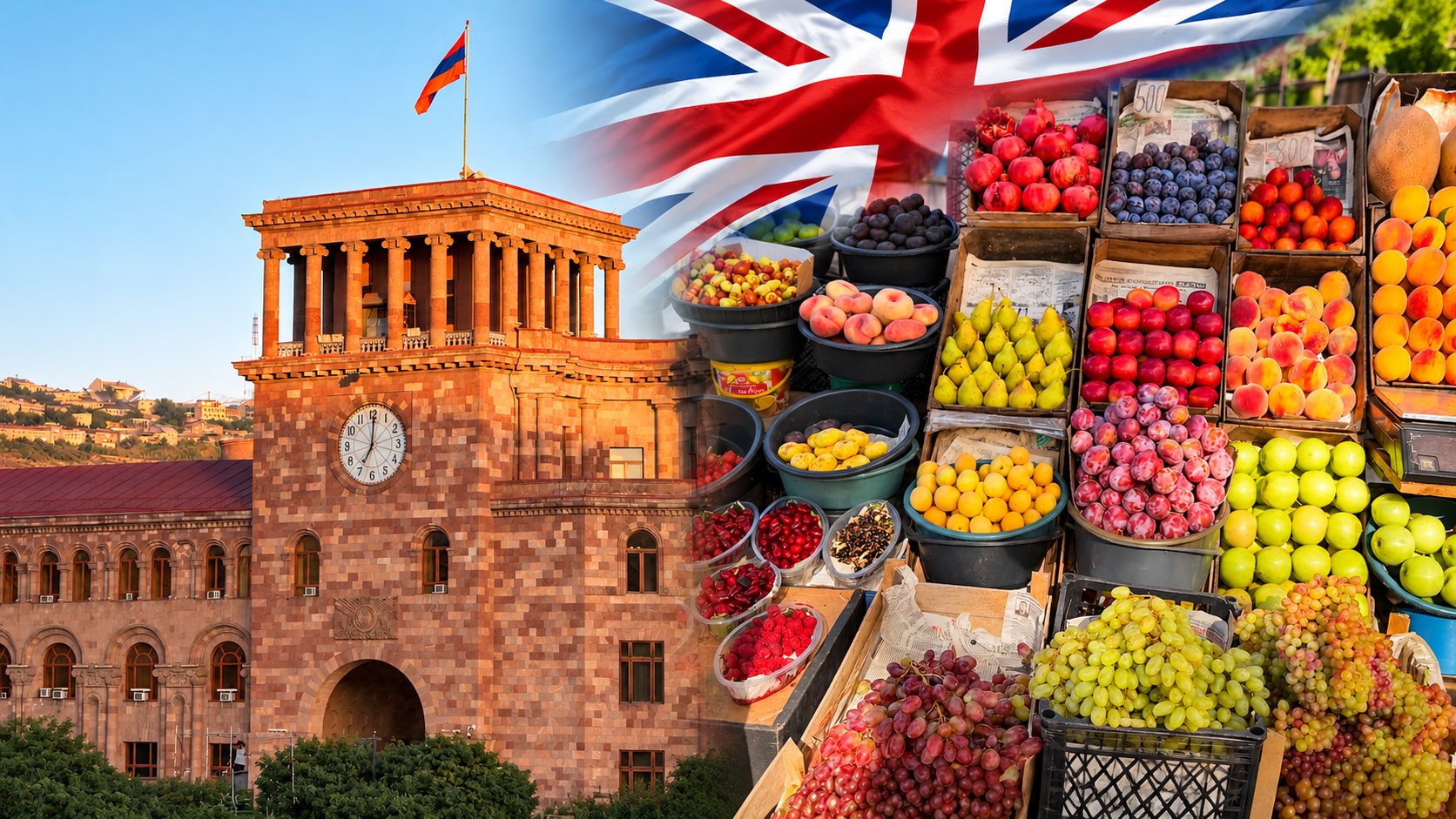
The United Kingdom has granted duty-free access to a range of goods originating in Armenia. The preferential trade arrangements cover agricultural produce, spices and alcoholic beverages and are intended to make it easier for Armenian producers to enter the British market.
The new trading terms were announced by Ani Badalyan, spokesperson for Armenia’s Ministry of Foreign Affairs and International Trade. She said the UK had introduced autonomous trade preferences for goods of Armenian origin.
The list of products eligible for zero tariffs includes apricots, grapes, peaches, nectarines, apples and pears. Dried fruit and raisins will also be eligible, as will basil, mint, oregano, rosemary, sage, thyme, bay leaves, saffron and ginger. The preferential arrangements also cover alcoholic beverages, including beer, cognac and brandy.
The preferences will remain in place until December 2028.
Badalyan linked London’s decision to the strategic partnership between the two countries. “The decision is in line with the Armenian-British strategic partnership and is intended to help expand export opportunities for Armenian products,” she said.
For Yerevan, finding new export markets has become particularly important amid trade restrictions imposed by Russia, which remains one of Armenia’s main export destinations. In 2026, Moscow restricted imports of certain Armenian products and their transit through Russian territory. These measures came amid growing political disagreements between the two countries ahead of Armenia’s parliamentary elections. Moscow has increasingly pressed Yerevan to clarify its foreign policy direction, arguing that Armenia cannot cooperate simultaneously with the Eurasian Economic Union and the European Union.
In June, the Armenian government approved a programme to support exports of agricultural products and flowers. Its objectives include diversifying export markets and reducing producers’ dependence on individual trading destinations.
Armenian suppliers are also set to benefit from additional opportunities under the European Union’s trade policy. The EU’s temporary autonomous trade measures are due to enter into force on 10 October 2026. They provide for reduced or zero tariffs on certain categories of Armenian goods for a period of two years.
However, the Armenian authorities have yet to clarify when the new UK trade arrangements will take effect. Nor has any information been provided on when the first shipments of Armenian products might reach the British market.