Council of Europe Commissioner's Visit to Tbilisi: Focus on Protests and New Restrictions
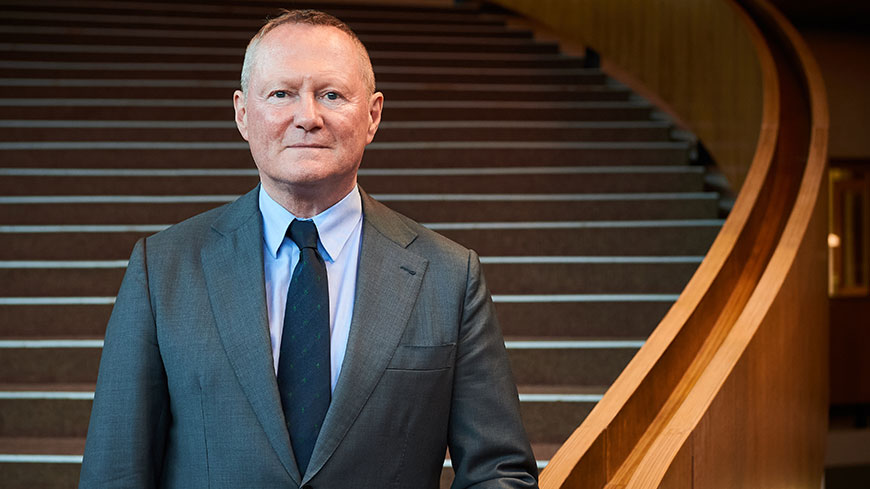
During his visit to the Georgian capital, Council of Europe Commissioner for Human Rights Michael O'Flaherty held meetings with representatives of the non-governmental sector and then with the country's Public Defender.
One of the first meetings was with Tamar Oniani, head of the Georgian Young Lawyers' Association. According to her, the discussion focused on the current human rights situation, including legislative changes and developments surrounding the protests.
"We discussed the current human rights situation in the country. This included restrictive legislation aimed at narrowing the space for civil society, limiting the work of journalists, and the situation surrounding the protests. We also discussed the effectiveness of investigations into cases of systematic torture and the use of unknown chemical substances against demonstrators," Oniani said.
Later, the European guest met with Ombudsman Levan Ioseliani. During the conversation, issues related to the detention of protesters and legislative changes were raised.
"The meeting focused on the human rights situation in Georgia in general. He was interested, among other things, in what processes I am involved as the Public Defender... Several topics were highlighted, including the situation of our citizens living along the occupation line and the condition of those detained during the protests who are currently in custody. The question of whether anyone has been held accountable for the beatings of people during that period was also raised. The situation with organizations in Georgia, recent changes, the legislative package adopted by parliament, and so on were also discussed," Ioseliani summarized the meeting.
The Council of Europe's new report on the human rights situation in Georgia is expected to be published next week.