Chechen authorities report sending another group of troops to Ukraine
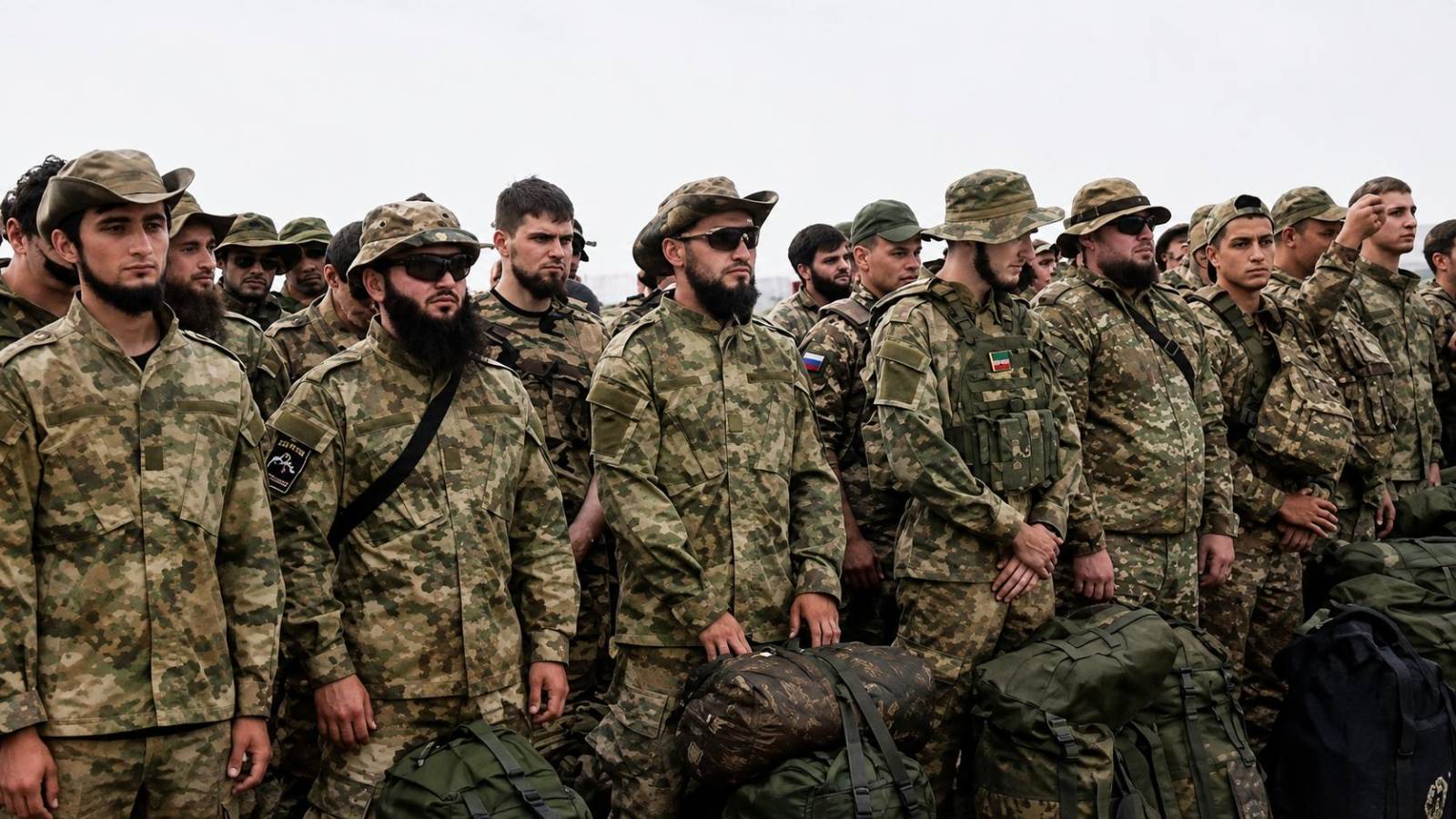
Another group of fighters has left Grozny for the war in Ukraine after training at Russia's University of Special Forces, Chechen authorities said. The announcement came shortly after The Economist reported that Chechen leader Ramzan Kadyrov has sought to avoid large-scale deployment of residents from the republic to the front.
The group departed from Grozny airport, the state-run Grozny television channel reported on Aug. 13. Chechen Prime Minister Magomed Daudov addressed the fighters before their departure. The number of people in the group was not disclosed.
Chechen authorities regularly report sending fighters trained in the republic to the war zone. The previous such deployment was announced on July 26.
According to Daudov, 70,520 fighters have been sent from Chechnya to Ukraine since the start of Russia's full-scale invasion, including 24,500 whom he described as volunteers. He said about 14,000 more Chechen fighters are currently in the war zone.
The authorities' figure does not mean that all 70,520 people have been fighting simultaneously or continuously. It may include servicemen who have since left the war zone, are on leave, stationed at bases or have taken part in troop rotations.
The latest report came days after The Economist published an article saying that Kadyrov, despite his public support for the war, has sought to prevent the mass deployment of people from Chechnya to the front.
"Whatever Moscow's interests in Ukraine may be, we are infinitely far from them," a source close to the Chechen leadership told the magazine. According to the source, Kadyrov does not want to sacrifice the republic's population for the sake of the "Russian world".
The Economist also questioned official figures on the scale of Chechnya's involvement in the war. Kadyrov has previously claimed that more than 70,000 servicemen had been trained in the republic for possible deployment to the front. The magazine calculated that this would amount to about 9% of Chechnya's entire male population.
At the same time, confirmed losses among people from Chechnya are significantly lower than the republic's share of Russia's population. According to Mediazona, the deaths of 539 Chechens had been confirmed as of July 10 since the start of Russia's full-scale invasion. The Economist noted that this represented about 0.2% of confirmed Russian military losses, while Chechnya accounts for roughly 1.1% of Russia's population.
The magazine attributed part of the discrepancy to Kadyrov's ability to limit the participation of people from the republic in the war. According to The Economist, people from Chechnya make up only about a quarter of the personnel in the Akhmat unit, while most of its fighters are recruited from other Russian regions.
At the same time, human rights groups and Chechen residents have repeatedly reported cases in which people were pressured into signing military contracts.
In January 2025, volunteers who had travelled to Chechnya to sign contracts said they had been held in confinement for weeks before being sent to the war zone. Human rights defenders have also said that deployment to the war can be used as a means of coercion against residents of the republic.
The Economist likewise reported that people considered undesirable by the Chechen authorities may have been forcibly sent to the front, including relatives of opposition figures and others who had come under official pressure.
At the same time, the magazine said some Chechens were fighting on Russia's side voluntarily, although their numbers were likely to be relatively small.