Dagestan Mufti’s Wife Sends Putin an Epistolary Complaint About Regional Authorities and Suleiman Kerimov
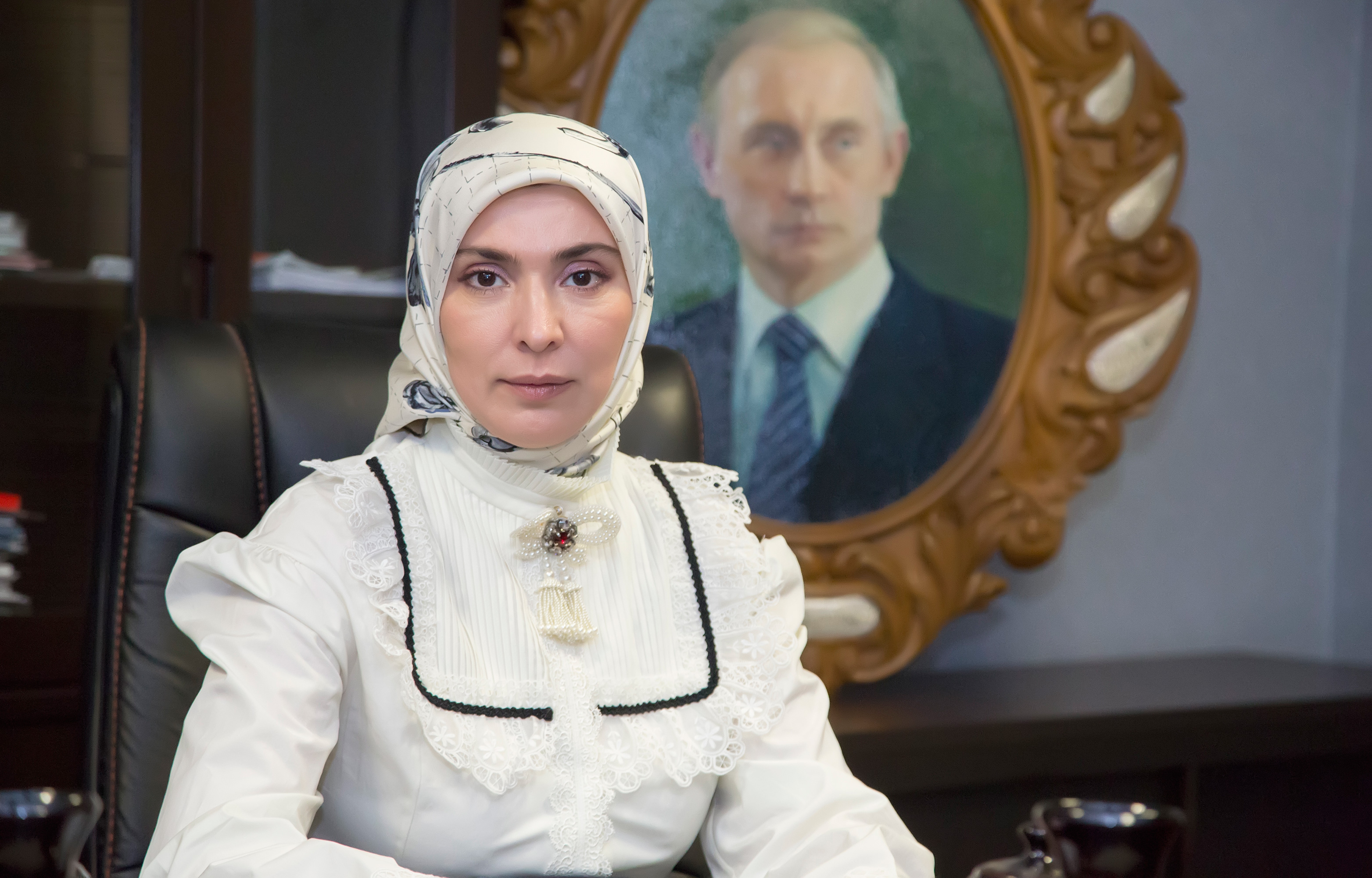
Ayna Gamzatova, adviser to the Mufti of Dagestan and his wife, has complained to Vladimir Putin about the republic’s authorities and unnamed supporters of billionaire senator Suleiman Kerimov. She claims that both have been waging a “war” for years against the republic’s Muftiate, headed by her husband, Akhmed Abdulaev. Gamzatova does not name any specific officials or individuals from the senator’s circle.
In her letter to the president, she recounts her own achievements and those of her husband, while also describing a number of problems: power cuts, difficulties with medical equipment during the pandemic, concerns about the jobs of Muftiate employees, and the educational work associated with the organisation in schools and colleges. She also writes about the arrest of a hotel director.
The Mufti’s adviser is confident that her appeal will reach Putin and that he will pay attention to it because, as she puts it, he is a “fair and wise man”.
“There are many regions like Dagestan in the country under your leadership. Nevertheless, you pay special attention to Russia’s southern outpost as a strategically important region.
“For us, the people of Dagestan, this is very important and valuable,” she writes.
Gamzatova also decided to remind the president of a “service” she had performed for him during the presidential election. She goes into considerable detail about something that, judging by her letter, continues to trouble her: either someone used the Muftiate’s first lady, or someone deceived her. Nine years later, she is making a tentative attempt, if not to establish the truth, then at least to explain to Putin how things really happened:
“In 2018, people close to you approached me and asked me to take part in the presidential election. This came as a great shock to me,” she recalls, describing her feelings at the time. She also stresses how sincerely she threw herself into the process:
“How could a Muslim woman take part in such an important event for the country? I sent you a message through them, asking that, if my participation was important, I be given a small role in bringing Muslims in Russia together during the presidential election. I was ready to travel with a team to regions across Russia where Muslims live. But they told me that, although the proposal was a good one, my personal participation was more important to you. At the time, I had no way of checking this information, and it somehow seemed undignified to doubt their words, so I agreed. Two weeks later, when I was also told that the documents were not in order and that I had the opportunity to withdraw from the election, I thanked them for the opportunity and told the lawyers to retrieve the documents.”
As a reminder, on 30 December 2017, Ayna Gamzatova announced her intention to run in Russia’s presidential election scheduled for 18 March 2018. However, on 5 January, the Central Election Commission refused to register her, citing a failure to meet the deadline for notifying it of the meeting, missing declarations of family expenditure and errors in the list of members of the initiative group.
Having described in detail the story of her unsuccessful presidential bid, the Mufti’s wife says that “all this is no longer as important as what has been happening in Dagestan all these years”.
She says she owns “no flats in the capital or abroad” and that she “lives only in Dagestan”. “My husband and I have been working for three decades, through the most difficult times, to preserve peace in Dagestan,” she writes. She quotes her husband, the Mufti, as saying that they serve “the Motherland as a ‘spare wheel’”.
“If necessary, take us out and use us for the benefit of the vehicle called the State; if not, pay no attention to us,” she offers, with a mixture of hope and deference.
Gamzatova emphasises her own and the Mufti’s patriotism, their “commitment to the state” and their contribution to the “special military operation”:
“During these difficult years for the country, we have sent the best sons of Dagestan to defend the Motherland. We have sent hundreds of tonnes of humanitarian aid to the special military operation zone. We have not ignored a single request from soldiers at the front during this time.”
Yet, she complains, their achievements “arouse hatred and anger towards us among Russia’s enemies. And there are also enough ‘well-wishers’ inside Dagestan who failed to profit from religion and were left out in the cold”.
According to Gamzatova, she and her husband had put up with all this from the republic’s successive administrations. But “every new administration arrives in Dagestan practically to wage war on the Muftiate of Dagestan” — something that appears to have finally exhausted the Mufti’s wife’s patience.
Suleiman Kerimov occupies a central place in Gamzatova’s letter. She describes him as “a native of Dagestan who has no equal in terms of importance and wealth”.
Gamzatova complains that “everyone associated with his name pursues their own ‘policy’ in Dagestan, one aimed not at building anything or serving the people’s interests, but at fighting for the throne”.
She says they tried to find common ground with Kerimov’s supporters and “ignore all attempts to destroy the Muftiate”. However, they “could not get through to any of them that the Muftiate of Dagestan is nobody’s rival and is not seeking power. Could the President and the Patriarch really be rivals?” she asks Putin, answering her own question: “Never!”
Gamzatova cites the charitable Hajj programme as an example of how, she says, the Muftiate had supported projects associated with Kerimov’s circle. When those behind the programme decided to place its organisation under the leadership of Ravil Gainutdin, chairman of the Spiritual Administration of Muslims of Russia, the initiative nearly fell apart, she writes.
“We sent there people experienced in organising pilgrimages. They provided support and prevented the campaign from collapsing,” the Dagestani Mufti’s adviser recalls.
Gamzatova also recalls the pandemic, when it was reported that Kerimov had sent medical equipment worth 1.5 billion roubles to Dagestan to treat COVID-19 patients. According to her, some of this equipment was left out in the rain in Derbent.
“The Muftiate’s charitable foundation, Insan, used its modest fundraising efforts to buy oxygen and medicines and distribute them throughout Dagestan and beyond.”
“This is how things are everywhere,” Gamzatova concludes, before giving another example: the deteriorating electricity networks. According to her, the republic’s officials promise to replace and repair them, but residents continue to suffer power cuts:
“People still freeze in winter because there is no electricity, and in summer they faint because it is impossible to switch on air conditioners and fans.”
Official reports about improvements, she writes, bear little resemblance to what people see around them: “They report that everything is going well, that roads are being built, that wires are being replaced… Nothing changes.” The only consistent trend, in Gamzatova’s view, is “the covert campaign against the Muftiate”.
She explains why she believes pressure on the Muftiate threatens both its employees and its educational activities. The organisation receives no government funding but, she says, provides jobs for thousands of people. Sermons in mosques focus on morality and patriotism, while radicalism and terrorism, she insists, are alien to Dagestan’s traditional Muslims.
She also expresses concern for the future of teachers, imams and educational workers who, together with the Anti-Terrorism Commission, conduct classes in schools and colleges. Their salaries, Gamzatova says, depend on income generated by the Muftiate’s businesses:
“We will not be able to provide even a meagre salary for our teachers, imams and educational workers who, together with the Anti-Terrorism Commission, visit schools and colleges to give lectures on countering terrorism.”
One of these businesses is a hotel at the Isa Spiritual Centre. Gamzatova describes the centre as a large complex requiring hundreds of employees. The hotel director, she writes, has been held in a pre-trial detention centre for six months in connection with a case involving the replacement of an electricity meter by employees of Dagenergo and alleged damage to the state.
For the first time, the Muftiate asked the republican authorities to release the 60-year-old director to house arrest pending an expert examination and the issuing of an invoice for the alleged damage. But following an appeal, he remained in custody:
“His detention was extended after the appeal, and the man remains behind bars.”
Gamzatova adds that the Muftiate and the Insan foundation also run several restaurants, whose income helps pay employees’ salaries. Given this treatment of the organisation, she writes, people fear that new persecutions will begin once the special military operation ends:
“The special military operation is nearing its end,” the Mufti’s adviser says, for reasons she does not explain, before informing Putin with regret that “the year 1937 is beginning in Dagestan”.
In conclusion, Gamzatova acknowledges that her letter may delight her detractors, but believes there is no other way to change the situation. She expresses hope, citing Putin’s remarks about the need to establish cooperation with traditional religious communities, which she says he made at a meeting with F. Shchukin:
“Your words… about the need to establish cooperation with traditional religious communities give me hope that I will find understanding and support from you personally.”