The BBC will handle Georgian Dream's complaint in accordance with established procedures
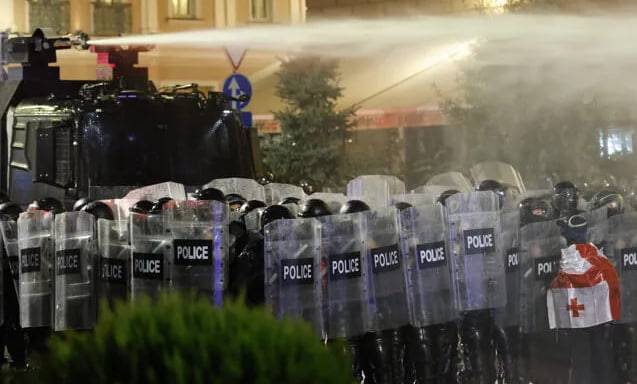
The British Broadcasting Corporation (BBC) announced it had received a formal complaint from the Georgian Dream party and stated that it would handle it in accordance with its internal rules. The complaint concerns a story published on December 1 that discussed the Georgian authorities' possible role in using a chemical agent from World War I to disperse anti-government protests.
"Our documentary, 'When the Water Burns: The Fight for Georgia,' produced by the award-winning BBC Eye team, is an investigation into the Georgian government's actions against protesters in Tbilisi last year. The film draws on evidence from multiple sources, both within and outside the country. This includes testimony from protesters themselves, several whistleblowers, UN experts and specialists working in Georgia, as well as medical studies, written documents, and reports. This reporting serves an important public interest, and the evidence gathered was clearly presented to the audience. "We stand by our journalistic work and thank the courageous participants who took part in this investigation," the BBC said in a statement.
Earlier, Georgian Parliament Speaker Shalva Papuashvili announced that British law provides for a step-by-step procedure for filing complaints against media reports. He noted that if the editorial board fails to rectify the identified violations, the next step would be to contact the British Communications Bureau.
As a reminder, the British Broadcasting Corporation (BBC) published a report alleging that the Georgian authorities used the chemical weapon "Kamit" during the suppression of pro-European protests in Tbilisi in 2024. The investigation is based on testimonies from demonstrators protesting the government's decision to suspend the country's European integration process: they complained of "scalding water," as well as shortness of breath, coughing, and vomiting that lasted for weeks. After speaking with chemical weapons experts, Georgian special forces, and medical professionals, journalists concluded that the aforementioned substance was used.
Commenting on the article, former Georgian Interior Minister Vakhtang Gomelauri stated that the chemical weapon known as "kamit" and other substances mentioned in the BBC investigation "were indeed purchased by the Ministry of Internal Affairs and used, but before 2012," that is, during the rule of the National Movement party. This assertion was denied by Georgian Prime Minister Irakli Kobakhidze and then by the current minister, Geka Geladze. According to the latter, his predecessor implied that various substances were purchased in 2009, but not "kamit."
In response to the politicians' contradictory statements, 25 Georgian non-governmental organizations issued a joint statement demanding the publication of a list of the chemicals used by police against pro-European protesters. On December 6, the State Security Service officially identified the substance used by the Ministry of Internal Affairs to disperse protests. The agency stated that it was a chemical compound of CS gas—chlorobenzylidene malononitrile—dissolved in propylene glycol. These substances are not prohibited, the State Security Service noted.