Rapid melting of glaciers in the North Caucasus Mountains threatens new natural disasters
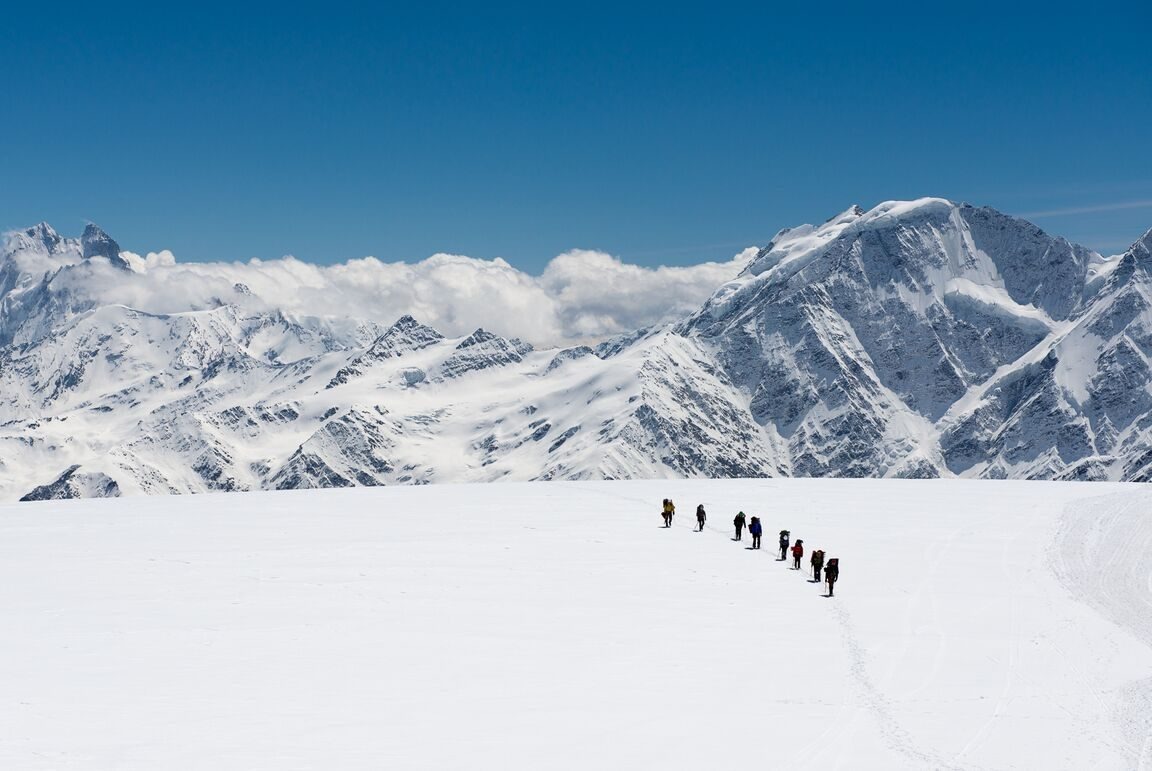
Over the past half-century, the ice cover on Mount Elbrus has noticeably shrunk, retreating by approximately 300 meters. Natalia Kondratieva, Doctor of Geographical Sciences and head of the Glaciology Laboratory at the High Mountain Geophysical Institute, attributed this to a rise in air temperature of almost one degree Celsius and increased precipitation.
According to research conducted on the Elbrus glacier massif from 2022 to 2025, the Azau, Maly Azau, and Garabashi glaciers have retreated by approximately 300 meters over the past five decades.
"We found that in the high-mountain zone of Kabardino-Balkaria, the average temperature during the warm season has increased by 0.9 degrees Celsius over the past 50 years, while the total average monthly precipitation over the same period has increased by 138 millimeters," Kondratieva told the RIA news agency.
She emphasized that a similar reduction in glaciation is also observed on other glaciers in the North Caucasus. This climate change accelerates ice melt, increases river runoff, and increases the risk of flooding. This, in turn, activates exogenous geological processes, such as mudflows and landslides, which can cause significant damage.
The trend toward the complete disappearance of small glaciers is particularly noticeable in the eastern part of the North Caucasus.
"In Ingushetia and Chechnya, there are practically none left, but in Dagestan, small glaciers still remain, whereas these territories were previously covered by vast ice masses," the specialist explained.
The decline of glaciers caused by climate change threatens the well-being of regions in the North Caucasus Federal District, which have been identified as particularly vulnerable by the Russian Ministry of Natural Resources. Researchers, including Afanasy Gubanov, a geography lecturer at the Higher School of Economics, note that although the overall share of glacier-fed rivers nationwide is insignificant, meltwater from glaciers can account for up to 50% of river runoff in the summer months in the Caucasus and Altai. Observed changes in long-term runoff trends in the basins of key Caucasian rivers, such as the Kuban and Terek, confirm this trend.
According to the Institute of Geography of the Russian Academy of Sciences, there were previously more than two thousand glaciers in the North Caucasus, and they are subject to significant degradation. Elbrus, for example, is an example: its ice cap shrank by 23% between 1997 and 2017.
Experts unanimously agree that melting glaciers will have a serious impact on life in the Caucasus region. The reduction in their area will lead to a reduction in the water supply of the Kuban, Baksan, and Malka rivers, which are sources for irrigation systems. Over the next 80–100 years, the regions will face a shortage of water, necessary both for supporting the livelihoods of settlements and for agricultural irrigation. Furthermore, the hydroelectric sector will suffer, as hydroelectric plants and cascades dependent on glacial runoff will be unable to operate as before when water levels decline.