Two pro-Kremlin figures from Georgia living in Russia aim to unite the peoples of the two countries
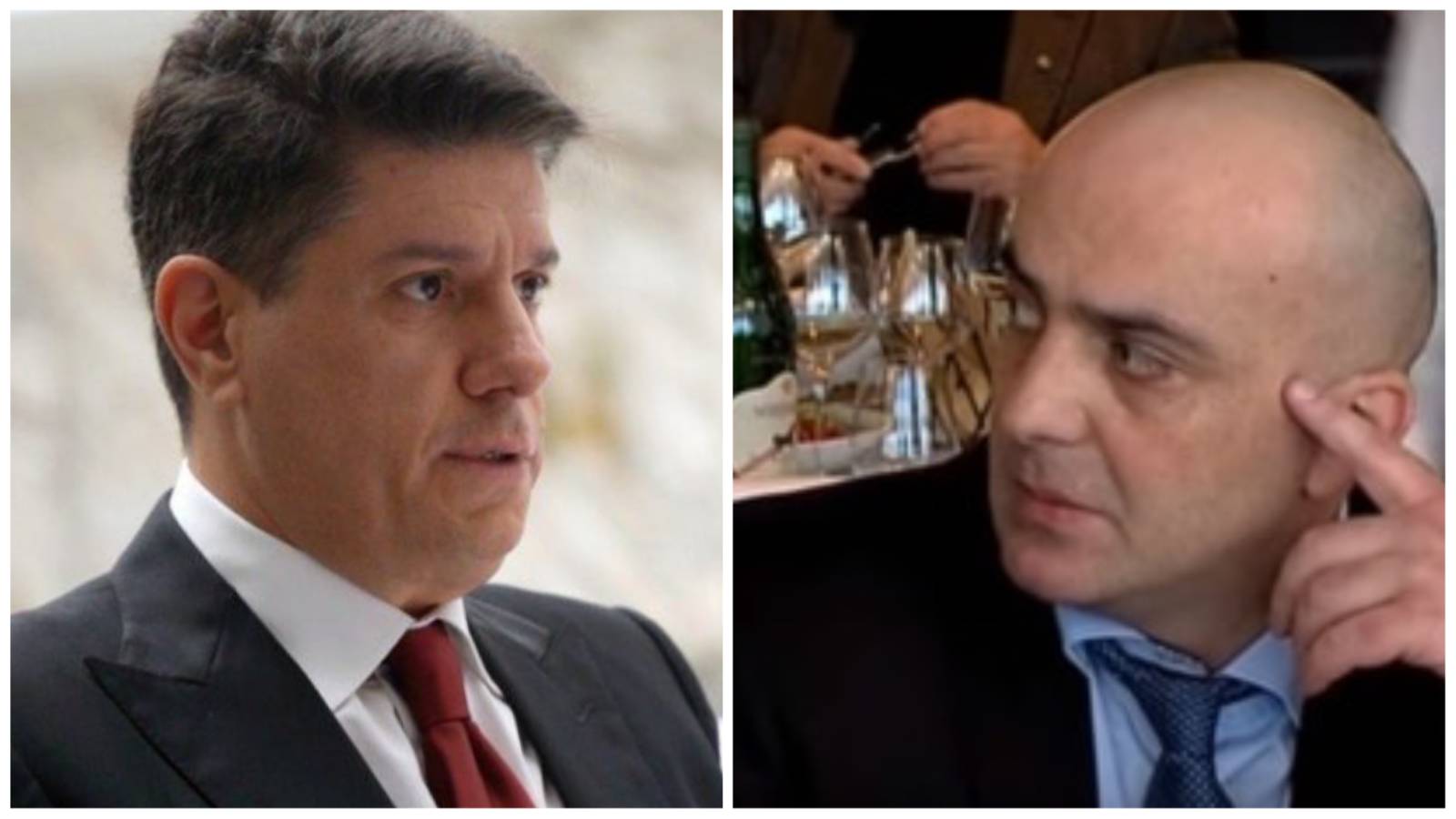
On October 28, the "Unity of Russians and Georgians" foundation will be unveiled in Moscow. Its founders include former Georgian Prosecutor General Otar Romanov-Partskhaladze and Nikolai Kartozia, while Mamuka Pipia—leader of the pro-Kremlin movement "Solidarity for the Sake of Peace"—has been appointed as its chairman. Pipia discussed the creation of the organization in an interview with the outlet "MIR-info."
According to Pipia, the foundation will focus on joint trade and economic projects, attracting investment, facilitating youth and student exchanges, and organizing cultural and humanitarian forums. There are also plans to develop the foundation’s own media resources.
"The three of us decided to establish it, and we will continue this work together. Our actions over the past few years have been aimed at bringing our peoples closer and restoring trust between them. The foundation, which we will present on October 28, is a continuation of this effort," Pipia stated.
He claims that representatives from the business sector, diplomatic and expert circles, as well as government institutions in both Russia and Georgia, are prepared to join the initiative. Pipia himself attributes the need for closer ties to the historical and religious bonds shared by the two nations.
"Thank God for that—we share the same faith; we are brothers in Christ. I believe that God did not place a vast Russia alongside Georgia so that we might quarrel, let alone go to war," Pipia said.
In the same interview, he also commented on the appointment of Giorgi Zurabashvili as the Georgian Prime Minister’s special representative for relations with Russia—a position that had remained vacant since December of last year. Pipia believes this appointment paves the way for direct negotiations between Tbilisi and Moscow, without the involvement of Western intermediaries. According to the politician, it is particularly significant that Zurabashvili retains his position as First Deputy Minister of Foreign Affairs of Georgia. Pipia believes this will enable him to hold high-level meetings with Russian officials, including Deputy Foreign Minister Mikhail Galuzin and Foreign Minister Sergey Lavrov.
"That is why I attach such importance to this appointment. It represents a move to a new level—effectively a restoration of diplomatic relations. We hope that there will now be visits to both Moscow and Tbilisi. It is a positive step that Tbilisi has taken this initiative," Pipia stated.
He further asserts that the Russian side is prepared for negotiations and urges the Georgian authorities to take Moscow’s interests in the South Caucasus into account. Pipia advocates for direct engagement on issues concerning not only Russian-Georgian relations but also the situations in Abkhazia and South Ossetia.
"We advocate for direct negotiations—in Moscow, Tbilisi, Sukhumi, and Tskhinvali—to resolve outstanding issues, bring our peoples together, and live under one roof, within a single union state," the movement's leader said.
In October 2026, the United Kingdom imposed sanctions on Mamuka Pipia. In justifying the decision, British authorities cited his involvement in activities that undermine the territorial integrity, sovereignty, and independence of Ukraine. According to London, Pipia led a delegation of Georgian politicians that met with the leader of the self-proclaimed "DPR" (Donetsk People's Republic) and subsequently gave public accounts of the trip. The British side also accused him of disseminating Russian disinformation. The sanctions include the freezing of assets, a ban on entry into the United Kingdom, and restrictions on holding leadership positions within companies. Otar Romanov-Partskhaladze, founder of the "Unity of Russians and Georgians" foundation and former Prosecutor General of Georgia, led the agency for less than two months—from November to December 2013. In 2023, the United States imposed sanctions on him, alleging that he had collaborated with the Russian Federal Security Service (FSB) and leveraged his connections to influence Georgian politics in Moscow’s interests. According to U.S. authorities, he obtained Russian citizenship with the assistance of an FSB officer. In September 2025, the United Kingdom also added him to its sanctions list due to his support for Russia’s war against Ukraine. In September 2026, Russian media reported that Romanov-Partskhaladze had taken command of the "Georgievsk" volunteer unit, which is fighting on the Russian side against Ukraine.
Otar Romanov-Partskhaladze, a former Prosecutor General of Georgia, headed the agency for less than two months—from November to December 2013. In 2023, the United States imposed sanctions on him, alleging that he had collaborated with the Russian Federal Security Service (FSB) and leveraged his connections to influence Georgian politics in Moscow’s interests. According to U.S. authorities, he obtained Russian citizenship with the assistance of an FSB officer. In September 2025, the United Kingdom also added him to its sanctions list due to his support for Russia’s war against Ukraine. In September 2026, Russian media reported that Romanov-Partskhaladze had taken command of the "Georgievsk" volunteer unit, which is fighting on the Russian side against Ukraine.
Georgia severed diplomatic relations with Russia in September 2008, following the war that took place in August of that year. Tbilisi’s decision was prompted by Moscow’s recognition of the independence of Abkhazia and South Ossetia, and the subsequent deployment of Russian forces in those regions. Diplomatic relations between the two countries have not been restored since, although they continue to maintain trade and other forms of contact.
Meanwhile, in September, the Speaker of the Georgian Parliament, Shalva Papuashvili, stated that Tbilisi does not recognize the presidential elections taking place in South Ossetia.
"There are no elections in any 'South Ossetia,' just as there is no such thing as an independent Abkhazia," Papuashvili said.
According to the Speaker, a ruling by the Strasbourg-based European Court of Human Rights established that Russia "exercises effective control over South Ossetia and Abkhazia." Papuashvili cited this decision to support the position of the Georgian authorities, who consider these territories to be under Russian occupation.
"This means that Russia has occupied both of these territories; consequently, it is the Russian Federation that exercises authority over them—nothing else has any meaning or significance here," the head of the Georgian Parliament declared.
Papuashvili further stated that the ruling "Georgian Dream" party has set the end of the Russian occupation as its objective. Regarding relations with Moscow, he noted that Tbilisi is seeking Russia’s recognition of Georgia’s territorial integrity. "Our key policy regarding Russia is that Russia must recognize Georgia’s territorial integrity. This is, among other things, the primary barrier in Russian-Georgian relations; once our territorial integrity is recognized, all such barriers will be removed,"
concluded Papuashvili.
In August, Russian Foreign Ministry spokesperson Maria Zakharova addressed Tbilisi’s relations with Abkhazia and South Ossetia during a briefing. She noted that Moscow has long proposed that Georgia conclude non-use-of-force agreements with these territories.
"As for Tbilisi concluding non-use-of-force agreements with Abkhazia and South Ossetia, we have long urged Georgia to do so. We expect the Georgian side to recognize the new geopolitical realities in the South Caucasus and, in the near future, to begin practical work on drafting and signing these documents. Such legal obligations would serve as a reliable guarantee against a recurrence of the tragic events of August 2008," Zakharova stated at the time.
Shortly before this, Georgian Prime Minister Irakli Kobakhidze declared that Tbilisi would not restore diplomatic relations with Moscow as long as the latter recognizes the independence of Abkhazia and South Ossetia. He added that a peaceful resolution to the conflict involving these self-proclaimed republics remains one of Tbilisi’s top foreign policy priorities. According to him, the Georgian authorities anticipate that a resolution may become possible following "political changes" on the part of Moscow.