Mirzoyan Rejects EAEU Countries' Arguments for Excluding Armenia from the Organization
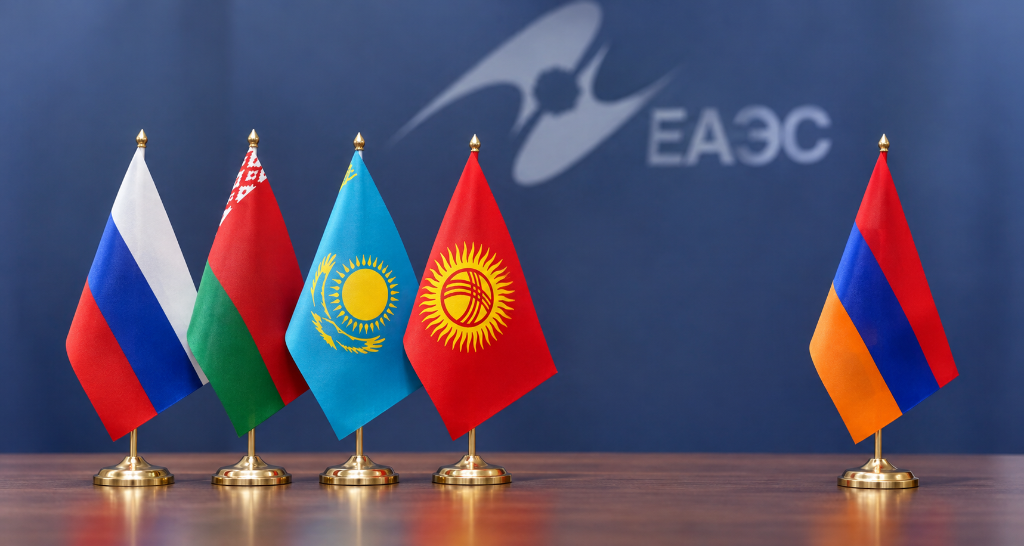
Armenia has not violated its obligations to the Eurasian Economic Union (EAEU), and therefore there are no grounds for its exclusion from the bloc. This was stated by Ararat Mirzoyan, Armenia’s Minister of Foreign Affairs, while commenting on a report by the EAEU Intergovernmental Council regarding the risks associated with Yerevan’s pursuit of European Union membership.
The report was presented on October 20 by Russia, Belarus, Kazakhstan, and Kyrgyzstan. The document suggests that the member states could collectively suspend the application of the EAEU treaty with respect to Armenia. The authors argue that Yerevan’s move toward the EU creates risks for the functioning of the union and the achievement of its objectives.
Mirzoyan maintains that for a country to be removed from the organization, it would first have to be proven that it has breached its contractual obligations.
"It is possible, but only from a very specific perspective. For such a step to be taken, the partner in question would have to violate agreements or obligations within the framework of the organization—prompting the others to say, 'You have committed a violation; thank you, and goodbye.' As you can see, Armenia has not violated anything, nor does it intend to," the minister stated in an interview with Public Radio of Armenia.
The treaty establishing the EAEU, signed on May 29, 2014, provides for a country’s withdrawal from the union only upon its own decision. However, in their report, Russia, Kazakhstan, Belarus, and Kyrgyzstan cite norms and principles of international law, including the 1969 Vienna Convention. Mirzoyan questioned these legal arguments, suggesting that they may be driven by political motives.
"I do not agree with the justifications presented in this legal form." <...> "We all understand that the law is the law, but there is a political motive here—and perhaps even a political directive given to the lawyers to come up with some sort of legal justification," the Armenian Foreign Minister suggested.
According to the minister, Yerevan will continue to independently determine its foreign policy course, based on the country’s interests, its statehood, and its sovereignty. Mirzoyan also expressed hope that other EAEU member states would fulfill their obligations in good faith, while noting with regret that, in recent months, Armenia has observed the opposite.
In September, Russian President Vladimir Putin urged Armenian Prime Minister Nikol Pashinyan to make a choice between the EU and the EAEU. The Russian leader stated that Yerevan’s shift toward the European Union complicates its continued membership in the economic union and could lead to the loss of benefits within the common market, as well as the disruption of established trade ties.
In response, Pashinyan emphasized that Armenia is not violating its obligations to its EAEU partners and cannot simply be expelled from the bloc. He further stated that the time for a definitive choice between the two integration paths has not yet arrived, as a viable, full-fledged alternative has not yet been presented to the country’s citizens.
Putin agreed that Armenian society should have a choice and suggested putting the question directly to the citizens: "Well, go ahead and make that choice, and then we can close the subject. The simplest thing to do is to ask the people: 'What do you want—this path or that one?' And that’s it."