Kavkaz.Realii: Chechnya Compiling Lists of Drug Rehab Patients for Deployment to the War
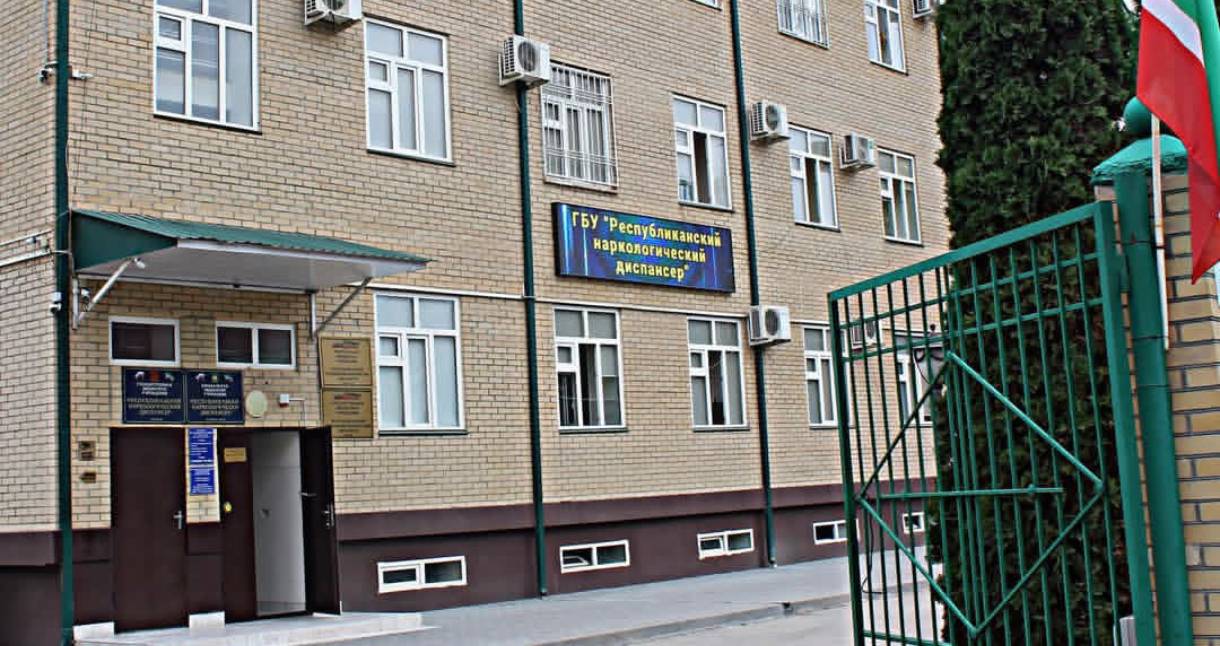
The Chechen Interior Ministry has requested lists from drug rehabilitation centers detailing residents who have been registered there over the past year. These patients’ names are being collected with the intent of sending them to fight in the war against Ukraine. This is reported by the outlet Kavkaz.Realii, citing two sources—one based in the region and another within regional law enforcement.
According to the report, a formal request—signed by Deni Aidamirov, the First Deputy Minister of Internal Affairs for Chechnya—was delivered to the head of a drug rehabilitation center under the republic’s Ministry of Health, who was required to sign for its receipt. It remains unknown whether similar directives were issued to medical facilities in other cities and districts of the republic.
Information regarding medical diagnoses and consultations is protected by doctor-patient confidentiality. Under Russian law, such data may only be disclosed without the patient’s consent in specific cases explicitly provided for by statute.
Aidamirov is the nephew of the wife of Chechen leader Ramzan Kadyrov. He became the First Deputy Minister of Internal Affairs for the republic in 2023 and was promoted to the rank of Major General of the Police in June 2026.
Aidamirov has previously been accused of involvement in abductions and torture. Specifically, Rizvan Dadaev—a Chechen native who managed to flee the republic—recounted being held in a so-called "prison for gays," where, according to him, Aidamirov personally participated in acts of torture.
The practice of sending residents of the republic to the front lines as punishment for various offenses—including the use of illicit substances—has been occurring in Chechnya for several years. In October 2024, Kadyrov threatened to send individuals who violate public order—including those who drive under the influence of drugs—to the war.
In July 2026, *Novaya Gazeta Europe* reported that heads of district police departments in Chechnya had been assigned a monthly quota for sending residents to the war, ranging from 25 to 50 people per department. Previously, media outlets had reported instances where people who consumed alcohol or drugs were forcibly sent to the front.
Specifically, in April 2024, *Radio Liberty* published accounts from human rights activist Abubakar Yangulbayev regarding two men: one, according to him, was sent to fight for using marijuana, while the other ended up at the front after being detained for driving under the influence. Yangulbayev stated that both men had died.
In September 2025, *The Insider* released an investigation into the coercion of Chechens into signing military contracts. A former member of the Russian National Guard (Rosgvardia) told the outlet that the consumption of alcohol or drugs could serve as grounds for being sent to the front. Sources also described cases where security forces used drug possession charges—sometimes fabricated—to pressure detainees into agreeing to participate in the war. *Kavkazsky Uzel* (Caucasian Knot) reported on similar practices in October 2025, citing human rights defenders.
In early November, Kadyrov threatened to send Chechen natives living in other regions of Russia—whose behavior displeases the authorities—to the war against Ukraine. He wrote about this on November 10, following a meeting with State Duma deputy Adam Delimkhanov, who oversees the operations of the republic head’s representative offices outside of Chechnya.
"Work is also being carried out regarding those representatives of the Chechen Republic whose conduct has drawn legitimate criticism. We will provide such individuals with the opportunity to prove themselves in the special military operation zone, where everyone will be able to demonstrate their devotion to the Fatherland through concrete actions," the head of the republic stated.