Church Conflict and a Push Toward the EU: Pashinyan Seeks to Balance Ties With Brussels and the EAEU
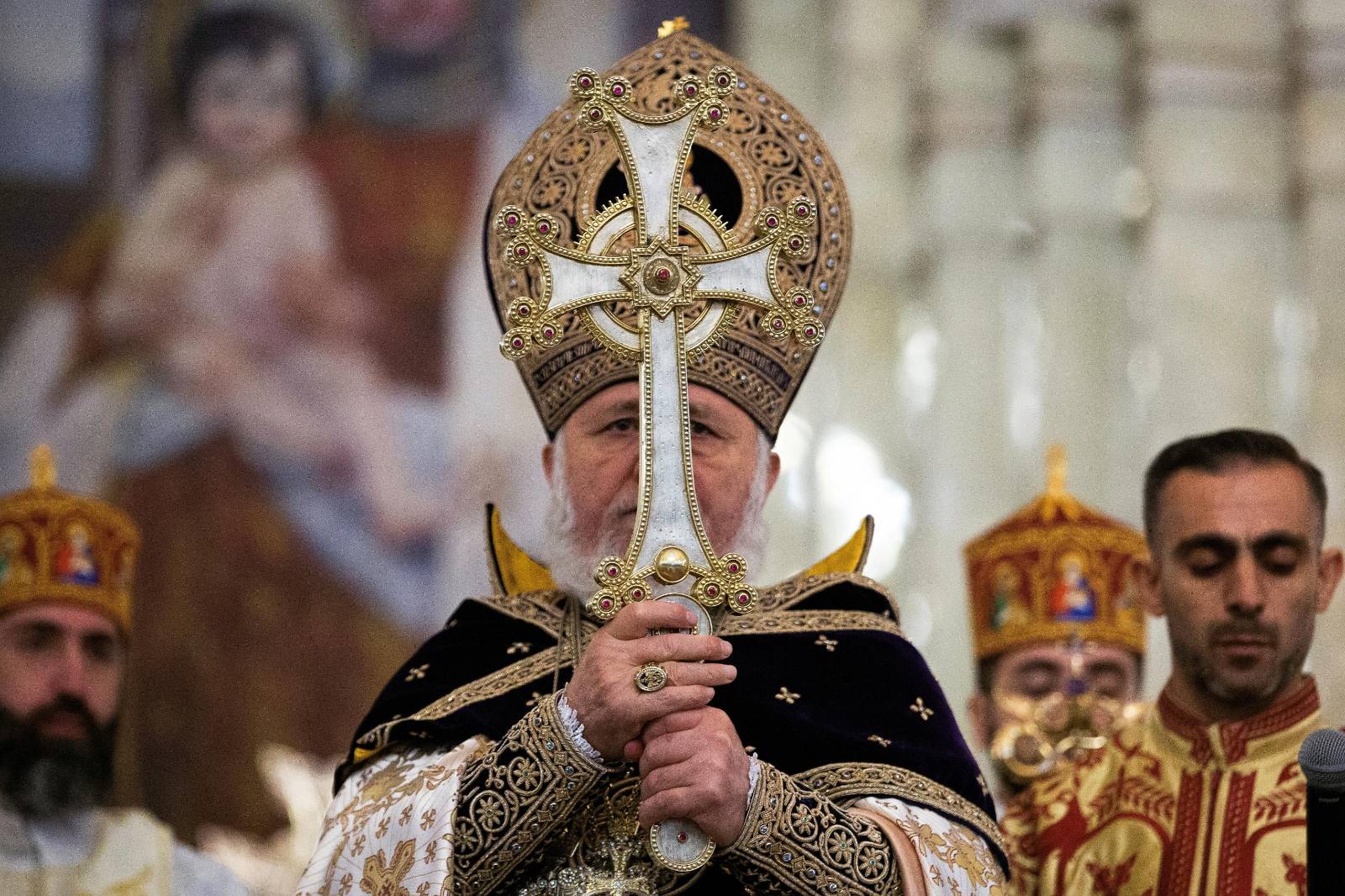
Armenia has begun a trial against Catholicos of All Armenians Karekin II and six senior members of the clergy. The proceedings are taking place amid a protracted conflict between Prime Minister Nikol Pashinyan and the Armenian Apostolic Church, as well as his efforts to deepen ties with the European Union while maintaining Armenia’s commitments within the Eurasian Economic Union (EAEU).
The head of the Armenian Apostolic Church and the other defendants are accused of failing to comply with a civil court ruling. However, the first hearing ended almost immediately after the presiding judge recused himself.
The case concerns Bishop Gevorg Saroyan, who was previously defrocked by the church. A civil court temporarily reinstated him, but prosecutors allege that the leadership of the Armenian Apostolic Church failed to comply with the ruling.
If convicted, Karekin II and the other defendants could face up to two years in prison.
The judge said he could not continue hearing the case because he had previously received his lawyer’s license from an attorney who now represents the head of the church. It is not yet known when the proceedings will resume.
The case represents the most serious legal challenge to the leadership of the Armenian Apostolic Church amid its long-running dispute with Pashinyan’s government.
Pashinyan has repeatedly called for Karekin II, who has led the church since 1999, to resign. The Catholicos, in turn, has sharply criticized the prime minister’s policies, including his approach to relations with Azerbaijan.
Following his re-election in June, Pashinyan accused the church of allegedly acting in the interests of foreign powers, primarily Russia. The prime minister has provided no evidence to support those claims. Karekin II and other church representatives have rejected the accusations.
Opposition politicians, church representatives and human rights activists have described the prosecution of the Catholicos as politically motivated.
Anna Melikyan, a lawyer with the Armenian organization Protection of Rights Without Borders, said the proceedings violated the constitutional independence of the Armenian Apostolic Church.
“This is clear interference by the executive branch in the affairs of the church,” she said, adding that politically sensitive trials raise further questions about the independence of Armenia’s judicial system.
The conflict between the church and the government intensified after some members of the clergy openly backed calls for Pashinyan’s resignation.
Two years ago, Archbishop Bagrat Galstanyan led street protests against territorial concessions to Azerbaijan. He is now under house arrest and awaiting trial.
Karekin II himself has also supported calls for the prime minister to step down.
Tigran Grigoryan, director of the Yerevan-based Regional Center for Democracy and Security, said Pashinyan had begun to view the church as a political threat and as an institution capable of bringing the opposition together.
According to Grigoryan, the case against the clergy fits into a broader pattern of selective justice in which leading opposition politicians are arrested and some of their assets transferred to state control.
The increased pressure on the church coincides with another major element of Pashinyan’s policy: efforts to reorient Armenia’s foreign policy while retaining its membership in the Eurasian Economic Union. Pashinyan has steadily deepened ties with the European Union while seeking to reassure EAEU partners, particularly Russia, that this course does not amount to abandoning Armenia’s commitments to the bloc.
Russia’s Foreign Ministry recently again questioned the Armenian government’s willingness to maintain full cooperation with Moscow.
Responding to such statements, Pashinyan said at a meeting of the Eurasian Intergovernmental Council in Kyrgyzstan that Armenia’s current cooperation with the European Union was not incompatible with its obligations under the EAEU.
“There are currently no legal, economic or political obligations in Armenia’s relations with the EU that contradict our status and relations within the EAEU,” the prime minister said.
Pashinyan again stressed that Yerevan views closer ties with Europe as a long-term prospect, but said that closer integration with the EU would not automatically mean Armenia’s withdrawal from the Eurasian Economic Union.
“We understand that simultaneous membership in the EAEU and the EU is impossible, but the adoption of a law to launch the EU accession process means that Armenia has the possibility of becoming a member of the European Union,” he said.
He added that even if Armenia were ready to join the EU in the future, that would not automatically make it an EU member. Such a move would require the consent of EU member states and Armenian citizens.
“The issue cannot be put to the Armenian people without prior institutional work. Even after that, an official application for EU membership would have to be submitted, followed by obtaining candidate status,” Pashinyan said.
According to the prime minister, Armenia believes that “the EAEU should not be viewed as a space of restrictions.”
“We believe that cooperation between EAEU countries and third-country partners should not be viewed as a zero-sum game. Armenia supports compliance with the fundamental principles of the EAEU treaty, equal rights for its members and the further development of practical, mutually beneficial cooperation,” Pashinyan said.
He also rejected the notion that Armenia derives only one-sided benefits from its EAEU membership.
“Armenia contributed about $319 million to the EAEU’s common pool of import customs duties in 2025, while approximately $175 million was allocated to Armenia. In other words, Armenia contributed significantly more to the common budget than it received, which directly demonstrates our responsible approach and good-faith fulfillment of our obligations within the EAEU,” the prime minister said.
According to Pashinyan, imports from EAEU countries amounted to about $5 billion in 2025, while Armenian exports totaled around $3.2 billion. He said the figures demonstrate that Armenia remains not only a member of the EAEU common market but also one of its major consumers.