The Georgian Foreign Ministry responded to the EU Ambassador's statement: "We do not need to encourage polarization of society"
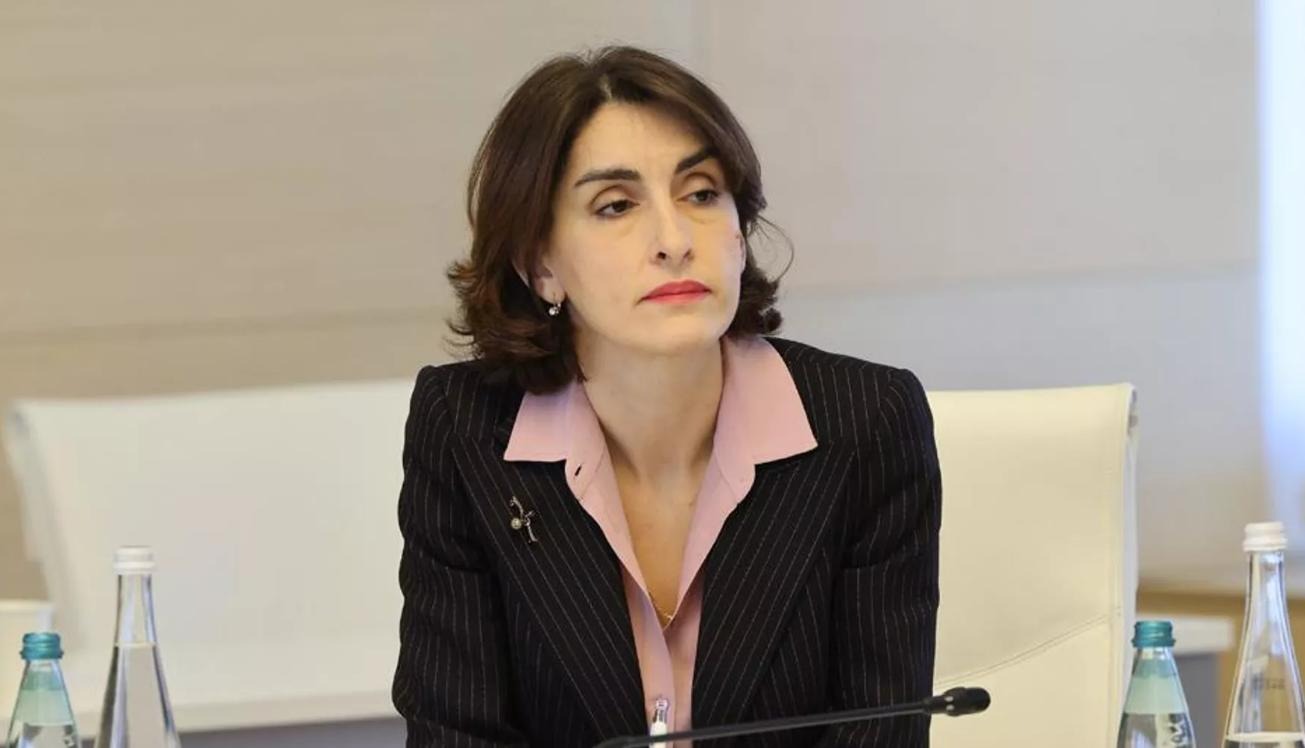
Georgian Foreign Minister Maka Bochorishvili met with EU Ambassador Pavel Gerchinsky, who was summoned for an audience following his statement in Brussels. Unlike her counterpart, who left the meeting without comment, the minister shared the meeting's results with journalists.
Maka Bochorishvili harshly criticized the statements made by the head of the EU diplomatic mission in Georgia. She stated that despite attempts to clarify the situation, the content of the statements and the actions of the European side remain unchanged and raise questions in Tbilisi. She emphasized that the emerging picture is "unacceptable."
Bochorishvili stated that the Georgian authorities understand the current situation in the country and the risks it faces better than anyone else.
"No one better than us—neither Georgians nor the government elected by the Georgian people—understands the crossroads this country finds itself at. The will of the Georgian people is expressed in the choice of Georgia's leadership. The government represents the will of the people for whom [the EU] cares so much. Accordingly, it is the government that best understands the crossroads Georgia stands at, how important risk prevention is for the country's security, and how much we need stability. We do not need encouragement for the polarization of society and a radical agenda. We also do not need a dark past or similar threats," the minister stated.
Responding to a question about which specific statements by the European diplomat could be perceived as a threat, the Foreign Minister emphasized that any actions and statements that could exacerbate internal polarization are unacceptable.
"The statements, actions, and steps being taken by Brussels, the attitude we observe toward the Georgian government, are unacceptable and aimed at polarizing society. "Anything that fuels polarization in our society is unacceptable, just as encouraging a radical agenda is unacceptable," she noted.
The minister also emphasized that Tbilisi expects respect from the EU and considers itself a bona fide partner that has not taken steps that could harm the Union's interests. However, she added that current signals from Brussels do not meet these expectations.
"Accordingly, we also expect the EU to treat Georgia with the respect it deserves—within the framework of a bona fide partnership. We are not seeing this now, and this explains the steps we are seeing. If we want to return relations to normal, mutual respect is essential, and at a minimum, these relations must be based on trust, which such statements undermine," Maka Bochorishvili concluded.
As a reminder, Pavel Gerchinsky recently spoke in Brussels about Georgia's prospects for a European future, which was received critically by Tbilisi. The diplomat stated that the country "stands at a crossroads" and that "the decisions made in the coming weeks and months will determine whether Georgia will become part of the European family of countries based on democracy, the rule of law, and human rights, or, unfortunately, return to its dark past." He urged Georgian society not to lose sight of its European perspective.
"My main message to the Georgian people is: don't lose hope. We cannot allow Georgia and its wonderful, warm, and hospitable people to return to the dark times of violence, civil war, poverty, hardship, and corruption. This is not the future they deserve. As soon as the authorities express a willingness to cooperate with us, we will do everything to help Georgia become an EU member," said Pavel Gerchinsky.
Georgian Prime Minister Irakli Kobakhidze criticized the ambassador for mentioning the risks of destabilization in the country and deemed it appropriate to summon him to the Georgian Foreign Ministry.
"When the EU ambassador threatens the Georgian people with civil war and impoverishment, it is simply unthinkable," he said.