No congratulations, but an invitation: Pashinyan heads to Russia on July 7

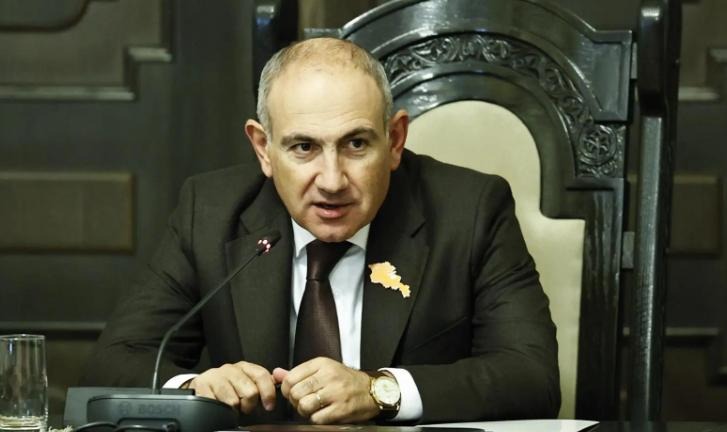
Armenian Prime Minister Nikol Pashinyan will visit Russia on July 7. He is listed among the invited speakers at the Innoprom international industrial exhibition, which is taking place in Yekaterinburg.

According to media reports, the Armenian leader will participate in the forum's main session alongside Russian Prime Minister Mikhail Mishustin.

The two prime ministers held a telephone conversation on July 1. This marked the first publicly known contact between Pashinyan and the Russian leadership following Armenia's parliamentary elections in June. Reports indicated that the Armenian side initiated the call.

In nearly identical statements released by Armenia and Russia, it was noted that the parties discussed "current issues regarding Russian-Armenian cooperation in the trade-economic, scientific-technological, and cultural-humanitarian spheres."

It is worth noting that, contrary to established practice, the Russian leadership did not congratulate Nikol Pashinyan on his party's victory in the June parliamentary elections. Although Moscow made no official statement refusing to recognize the election results, a number of high-ranking Russian officials expressed critical views on the outcome. For instance, Sergey Naryshkin, Director of Russia's Foreign Intelligence Service (SVR), stated that the elections were difficult and that the results were "questionable in a certain sense."

Prior to the vote, Russian President Vladimir Putin had expressed interest in the participation of political forces advocating for the development of allied relations with Russia. A few days before the election, the Russian ambassador to Armenia was recalled to Moscow for consultations before subsequently returning to Yerevan.

Amidst ongoing tensions between the two countries, Russia also imposed a series of restrictions on the import of certain Armenian goods. In Yerevan and European political circles, these measures were viewed as an attempt to exert economic pressure on the Armenian authorities. At the same time, the EU is opening the European market to specific categories of Armenian goods, thereby facilitating the diversification of Yerevan’s foreign economic ties.
Последние новости
Stavropol Region Resident Sentenced to Correctional Labor for Desecrating Soviet Soldiers' Mass Grave
Society
Stavropol Region Resident Sentenced to Correctional Labor for Desecrating Soviet Soldiers' Mass Grave
14 August 2026

A court in the Stavropol Region sentenced a 40-year-old resident of the village of Staroizobilnenskaya to ten months of correctional labor for desecrating a mass grave of Soviet soldiers.

AI-generated personas supported
Politics
AI-generated personas supported "Georgian Dream": researchers identify 230 suspicious Facebook accounts
14 August 2026

A network of 230 Facebook accounts featuring photos likely generated by neural networks has been discovered in Georgia. These accounts were used to create the appearance of widespread support for the ruling "Georgian Dream" party and its chairman, Irakli Kobakhidze. Researchers from the "Myth Detector" platform reached this conclusion.

17 Ukrainians living for over a year in a basement at the Georgia-Russia border evacuated due to mudslide threat
Human rights
17 Ukrainians living for over a year in a basement at the Georgia-Russia border evacuated due to mudslide threat
14 August 2026

Seventeen Ukrainian citizens, who had been staying for more than a year in the basement of the Georgian "Daryali" checkpoint on the Russian border, were evacuated on August 13 due to the threat of a natural disaster. Following the evacuation, they were not taken away from the border crossing area entirely; instead, they were placed in a truck and transported a few hundred meters to the grounds of a nearby monastery.

The war in Abkhazia, which claimed around 10,000 lives, began 34 years ago
History
The war in Abkhazia, which claimed around 10,000 lives, began 34 years ago
14 August 2026

On August 14, 1992, hostilities broke out in Abkhazia; the conflict lasted over a year and became one of the most severe in Georgia's modern history. On that day, Georgian units entered the self-proclaimed Autonomous Republic of Abkhazia, crossing from the direction of the Inguri River. Tbilisi justified the deployment of the National Guard by citing the need to protect railway links. However, the advancing Georgian column encountered armed resistance from Abkhaz forces.