Chechnya’s Ombudsman Warns Residents Against Certain Comments and Reposts Due to Liability for Extremism and Terrorism
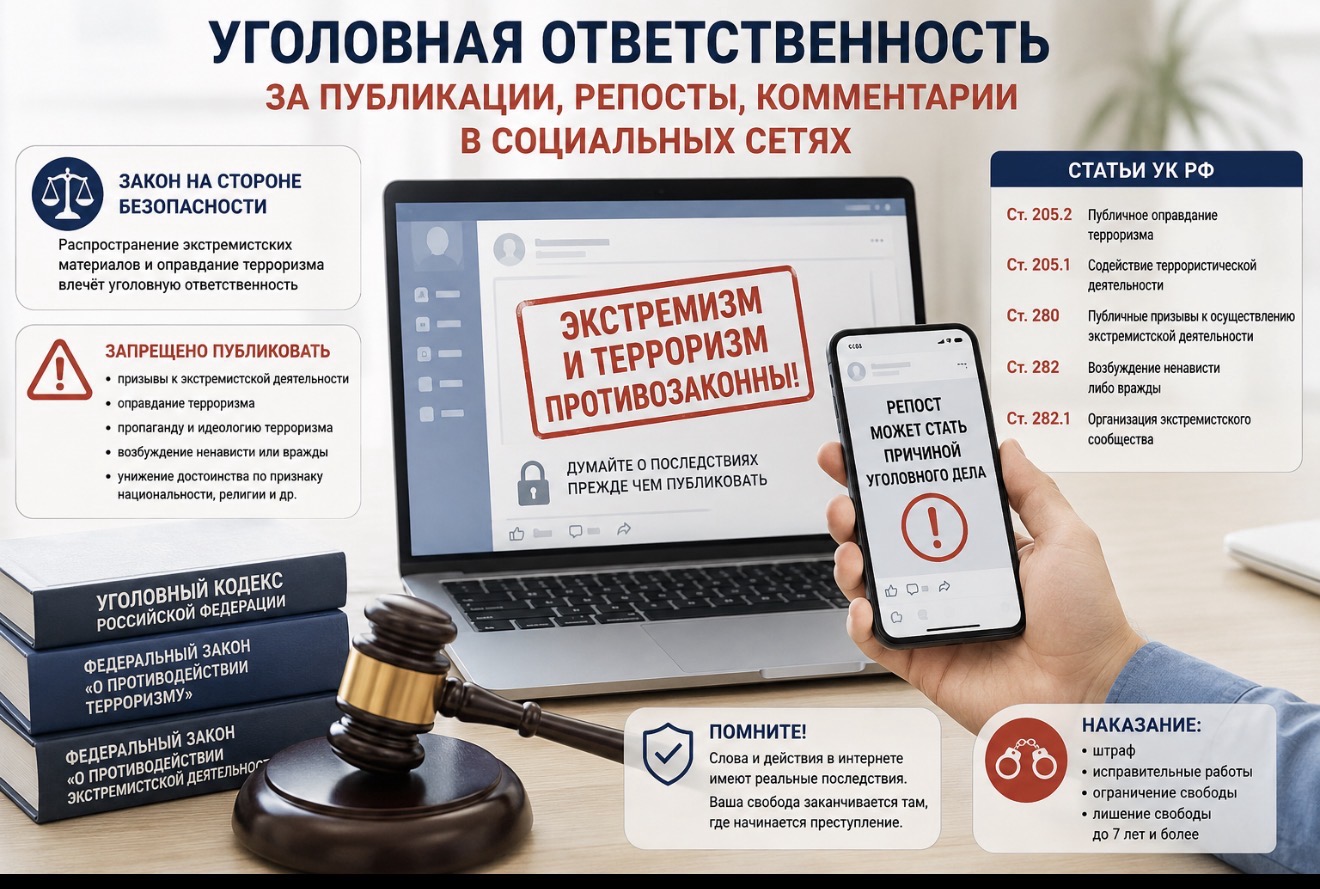
Mansur Soltaev, the Commissioner for Human Rights in Chechnya, has urged the republic's residents to exercise caution on social media and refrain from sharing materials of a terrorist or extremist nature. He noted that even reposting content without adding one's own commentary could lead to legal consequences.
"In my line of work, I frequently encounter people who have faced administrative or criminal charges over their comments. I feel compelled to warn you once again against making rash statements on social media. Do not disseminate materials that incite violence or call for terrorist or extremist acts, nor materials that justify or glorify terrorism. Be careful with reposts: even sharing content without a comment can be interpreted as an expression of support. Remember, words and comments have long-lasting consequences," Soltaev wrote on his Telegram channel.
In his statement, the ombudsman also listed the articles of Russian law under which users can be held liable for online posts. These include provisions regarding extremism, terrorism, defamation, and the incitement of hatred, as well as laws concerning the offense of religious sentiments and insults directed at government officials.
He reminded the public that the dissemination of extremist and terrorist materials is governed by federal law and that posting unlawful content online can result in criminal, administrative, or civil liability. Furthermore, Soltaev urged people to avoid using insults, threats, or derogatory language online against individuals or groups based on nationality, religion, or other characteristics.
Criminal cases of this nature are regularly initiated not only in Chechnya but also in other regions of the North Caucasus. The most common charges involve the public justification of terrorism, incitement to extremist activity, and the incitement of hatred. According to an annual report by OVD-Info, in 2024, Article 205.2 of the Russian Criminal Code ("public justification of terrorism") became, for the first time, the most common charge used to initiate criminal cases based on public statements. The study’s authors identified at least 114 such cases over the course of the year.
Human rights defenders and lawyers cited by Radio Liberty note that the article regarding the public justification of terrorism has become one of the harshest tools for prosecuting individuals for public statements. It does not allow for a suspended sentence, and the accused are immediately placed on Rosfinmonitoring’s list of terrorists and extremists, which significantly limits the possibility of a more lenient penalty.