Papuashvili Urges EU to Change Rhetoric to Normalize Relations with Georgia
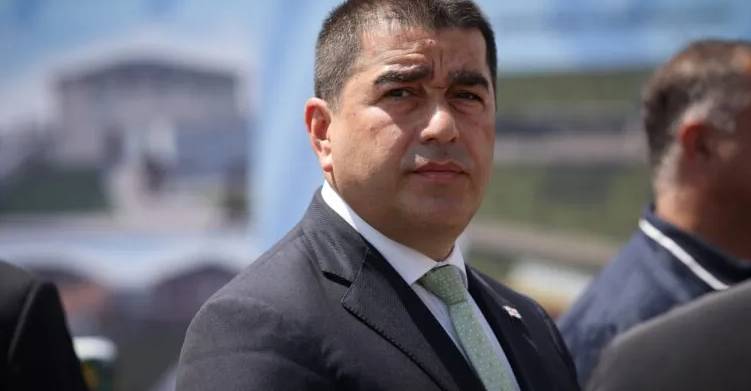
Georgian Parliament Speaker Shalva Papuashvili criticized a statement by the EU’s Permanent Representative to the UN, Michele Cervone d’Urso, who spoke of "arbitrary detentions and escalating repression" in the country. According to Papuashvili, "statements by EU officials once again stand in stark contradiction not only to the facts but also to the values and principles recognized by the EU itself—something that demands a response."
Papuashvili stated that in 2024, Georgian authorities and society successfully withstood an attempt to destabilize the country. He claims that protest actions were partially funded from abroad, including through European funds. He also accused Brussels of effectively supporting actions that, in his view, led to an attempt to overthrow the government on October 4 of last year.
"It has long been obvious to everyone that violent actions against the Georgian authorities were partially funded by EU money, including the campaign that justified and encouraged the use of Molotov cocktails. Moreover, it was precisely after a virtual 'green light' from Brussels that a failed attempt to overthrow the government took place on October 4 of last year," the politician emphasized.
Separately, the Speaker rejected allegations of election fraud and the unlawful dispersal of peaceful protests. He stated that violent acts committed during the unrest were investigated by law enforcement agencies and that those responsible were held accountable.
"A lie does not become the truth simply because Brussels stubbornly repeats it," Papuashvili said.
He also noted that a person who commits a crime does not become a victim merely because EU representatives attempt to assign them that status. According to the Speaker, Brussels' current policy toward Tbilisi has reached an impasse. He likened the situation to that of "a soldier who has not learned that the war is over and continues to plan combat operations."
Papuashvili urged European authorities to reconsider their approach to relations with Georgia.
"If EU officials want to normalize relations with Georgia, they should cease aggressive rhetoric toward the country, stop fueling the narrative of a failed revolutionary scenario, and return to the fundamental principles of diplomacy: respect for facts, Georgia's sovereignty, and the democratic choice of the Georgian people," Shalva Papuashvili concluded.