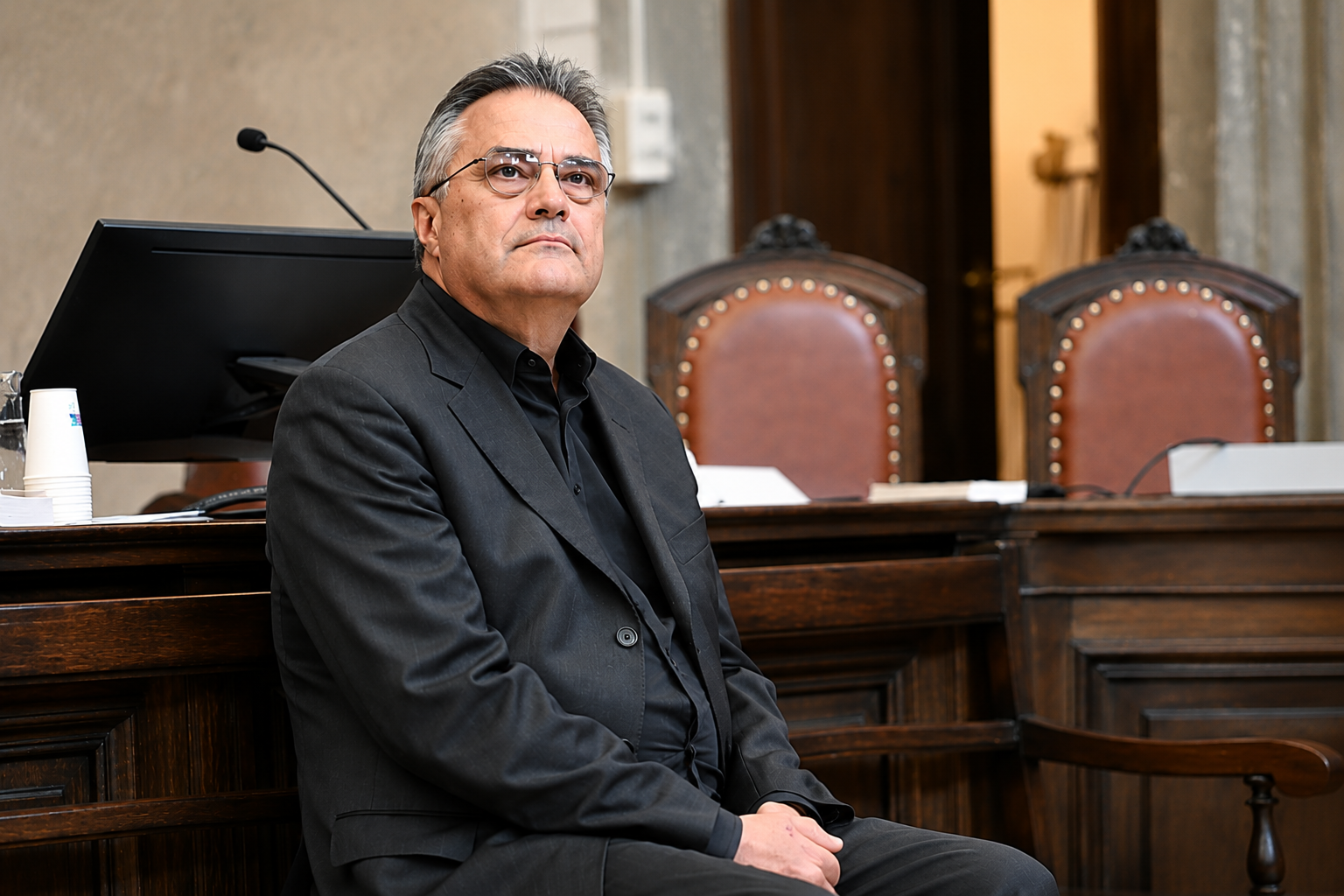
Following Khangoshvili's murder, the FSB received a "debriefing" from a European intelligence officer
On May 20, a Viennese court found Egisto Ott, a former employee of the Austrian counterintelligence agency BVT, guilty of espionage for Russia, abuse of power, and corruption. But the main point of this story is not just another European scandal involving Russian agents. Ott's case is directly linked to operations against Chechen emigrants and the murder of Zelimkhan Khangoshvili in Berlin.
The key episode concerns the murder of Zelimkhan Khangoshvili, a member of the Chechen resistance from Georgia, who was shot dead in August 2019 in a park in central Berlin. The killer rode up to him on a bicycle and shot him several times at point-blank range in broad daylight. A German court later concluded that Russian state agencies were behind the murder, and that the perpetrator was Vadim Krasikov, an officer of the Russian intelligence services. In 2024, Krasikov was returned to Russia as part of a large-scale prisoner exchange between Moscow and the West.
According to the Austrian investigation, after the assassination, Ott prepared an analytical analysis of the operation for the Russian side, listing the mistakes made during the assassination. In other words, this wasn't simply a matter of passing information to Moscow, but of assisting in improving operations to eliminate political opponents abroad.
For the Chechen diaspora in Europe, this is confirmation of what has long been said: Russian intelligence services view emigrants not as former citizens, but as objects of constant persecution—even beyond Russia's borders. And the problem turned out to be deeper than previously thought. As Ott's case demonstrates, Moscow, according to the investigation, was able to gain access not only to data on refugees and opposition figures, but also to European security mechanisms themselves.
Investigators allege that Ott, without official justification, requested information on individuals of interest to Russian structures: journalists, dissidents, former intelligence officers, and political exiles. Among the elements of the case is the transfer of the phone numbers of high-ranking officials in the Austrian Interior Ministry, as well as classified materials from an EU member state, for which, according to investigators, he received 20,000 euros.
The investigation also focuses on journalist Hristo Grozev, who participated in the investigation of Khangoshvili's murder and other operations by Russian intelligence agencies. According to media reports, Marsalek's circle discussed the possibility of his kidnapping or murder, and Ott allegedly helped obtain information about his address.
Ott worked for many years within the Austrian security system and had access to classified European databases. Investigators believe he collaborated with Jan Marsalek, a former Wirecard executive whom Western intelligence agencies believe has ties to Russian intelligence agencies and who is currently hiding in Moscow.