Robbery, robbery and extortion during the “cleansing” of Starye Atagi and self-defense of villagers
December 26, 2001
***
The village of Starye Atagi was blocked by a large amount of military equipment. The Russian military began a “cleansing operation” that lasted until December 30. The head of the village administration, Vakha Gadaev, reminded the leaders of the operation about the need to comply with the order of the Prosecutor General of the Russian Federation No. 46, but control over the actions of the military was practically impossible. There were 15 thousand people living in the village. There were 10 police officers working in the city, but the military outnumbered them ten times, and all the police officers were not called from home.
From the very beginning of the “cleansing”, there was an obvious military prosecutor (he introduced himself as the head of the administration as “Major Oleg”), and two days later the prosecutor of the Grozny district arrived. However, the presence of prosecutors did not prevent the military from admitting illegal actions: robbery, robbery and extortion.
On December 26 and 27, artillery fire was conducted through the village. People are in constant tension and could not sleep.
During daylight hours, military and police officers carefully checked the passport details of residents. Having found males from fifteen to fifty-five years old among the group, they immediately announced that they were taking them for inspection. But as soon as the relatives began to beg them not to do this, they said, sometimes in hints, sometimes in plain text, that it was a small amount of money, about a thousand rubles. “over the head” can resolve the misunderstanding. Women were cheaper - five hundred rubles.
At night, the military broke into houses and chose whatever they liked. The Atagino residents did not have the opportunity to report to their commanders as they were robbers; it was impossible to reach them: movement within the village of the city was prohibited. However, ten people submitted applications for sentencing to the head of the administration, who handed them over to the military prosecutor.
In the house where the Magomadov family lived, a “violation of moral standards” was recorded. Angela Magomadova was not registered with her husband, in whose house she lived. The inspectors saw this as a flagrant violation of moral standards and Russian legislation. Angela was told that she and her partner needed to be dealt with elsewhere. The mother of the “cohabitant” begged to spare her son and daughter-in-law, the six-month-old baby of the “criminals” was screaming in the cradle at that time, and strict uncles in camouflage uniforms finally took pity and turned a blind eye to such a blatant violation of the legislation of the Russian Federation on family and marriage, if they were compensated mental anguish by craftsmen in thousands of rubles. After some haggling they agreed on two thousand.
Outright gun robberies occurred mostly on the first night. In the past, villagers managed to organize and for the first time moved to acts of mass collective disobedience and self-defense. Already on the second night, armed with pitchforks, axes and sticks, they took to the streets and spent three nights around the fire. Thousands of Atagin men, women and even children took part in the night watches. When the guards appeared on the street, a crowd immediately gathered near the house they approached. The robbers have no choice but to retreat.
On December 28, the general in charge of the “cleanup” (apparently Nikolai Bogdanovsky) expressed the opinion of the head of the administration that all men would be taken outside the village, where their passports would be checked against a computer database of wanted persons. However, people refused to carry out this order. The village administration and local police suggested placing a computer in the square near the Mosque. The military, seeing how the residents feel about each other, agree. There were about two hundred employees checking near the mosque; there was no computer; the military checked the list printed on sheets of paper. All verified releases, not a single person was detained, not a single one had any complaints. The administration asked to make some marks in the checked passports so that people would not be taken away a second time, as happened more than once, but the inspectors did not do this.
On Nagornye Street, the women got into a fight with the military and fought off three young men whom I wanted to pick up. It was at this place that on January 14, 2001, the Russian war shot into the crowd who were trying to prevent the removal of a sick fellow villager. One of them died then, several were injured.
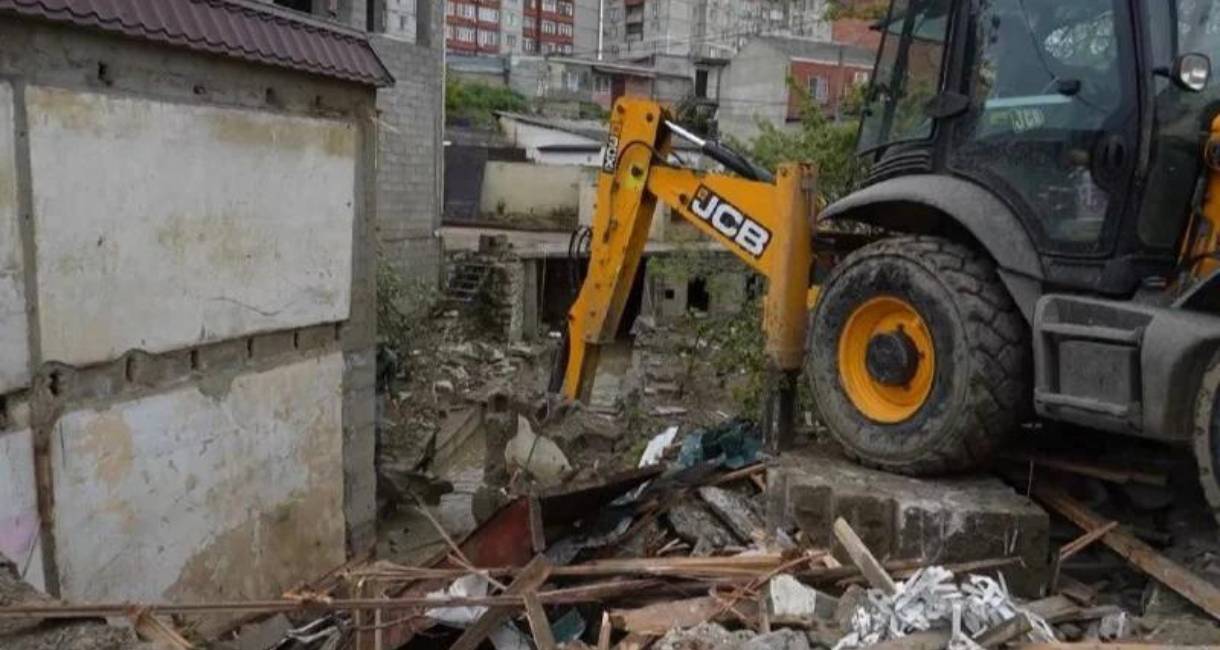
On the evening of December 30, the last day of the “cleansing”, the military broke into the house of Adam Matsiev (49 Tsentralnaya St.) and discovered an unauthorized search. Upon completion of the search, the residents were asked to leave the house, as it was obligated to destroy it (by blowing it up). Apparently, the reason for such military actions could be the fact that one of the leaders of Adam was armed with armed resistance. During the “cleansing” in the village of Starye Atagi from September 26 to October 6, military personnel were discovered in the yard of Adam Matsiev’s son, a cache (cache) and hidden military militants were discovered (the militants were killed in a short battle). The owner of the house was detained, but soon he was free and turned to the Old Atagi.