Russia Sets Record for Convictions Under "Terrorism" Charges
In 2025, Russian courts set a new record for the number of convictions under "terrorism" charges. A total of 1,776 sentences were handed down during the year—an all-time high since the inception of Russia's modern Criminal Code. Under Articles 205–205.5 of the Criminal Code, 2,078 individuals were convicted—more than double the figure from the previous year, when 1,021 people received guilty verdicts. These findings come from a study conducted by the human rights project "First Department" (Pervy Otdel) and analysts at Parubets Analytics.
The study is based on court records, official agency statements, and open-source publications. The authors note that the Judicial Department of the Supreme Court of Russia has not yet released official statistics for 2025; consequently, their conclusions rely on an independently compiled dataset. According to the researchers' calculations, Russian courts handed down an average of more than seven "terrorism-related" sentences per day throughout the year. The peak occurred in September, with 200 guilty verdicts announced in that month alone.
Almost one in two convicted individuals faced charges under Article 205.2 of the Criminal Code ("Public calls for terrorist activity, justification of terrorism, or terrorist propaganda"). In total, 889 defendants were charged under this article, and 588 were convicted solely on this count, without charges for other terrorist offenses.
The study's authors believe this article has become the primary tool for prosecuting individuals over online posts, comments, and other public statements. The researchers also documented a continued trend of combining "terrorism" charges with other serious criminal offenses. At least 166 people were convicted simultaneously on "terrorism" charges and charges of high treason, espionage, or confidential cooperation with a foreign state. In total, researchers identified a combination of "terrorism" charges with charges of high treason, espionage, or sabotage in the cases of 184 convicted individuals.
Rostov-on-Don remains a major hub for the adjudication of "terrorism" cases.
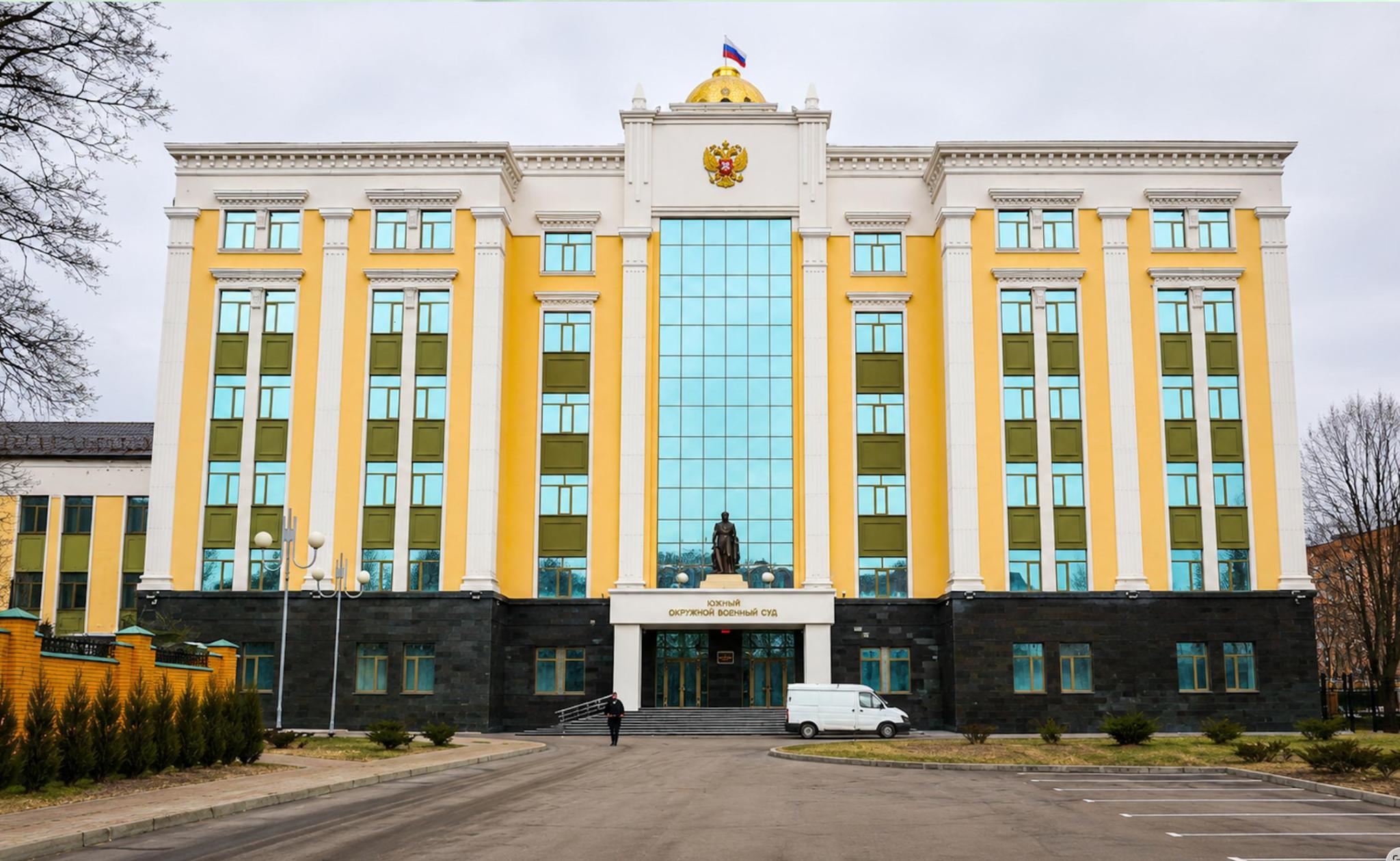
The Southern District Military Court, located in Rostov-on-Don, holds a significant place in the study.
According to published data, in 2025, this court handed down 473 verdicts convicting 549 people, ranking second only to the 2nd Western District Military Court, which issued 606 verdicts.
Notably, information regarding 366 of the 549 convicted individuals (66.7%) was withheld from official court records.
Together, the 2nd Western and Southern District Military Courts issued 1,079 verdicts, accounting for more than 60% of all rulings on "terrorism" charges in Russia. When the Central District Military Court is also included, these three judicial bodies account for nearly three-quarters of all such proceedings in the country.
The study indicates that these specific courts have become the primary venues for hearing criminal cases linked to the war in Ukraine.
In 2025 alone, the Southern District Military Court handed down verdicts against at least 244 Ukrainian citizens charged with "terrorism" offenses.
The study's authors note that, even before the full-scale war began, the Rostov court was the principal venue for terrorism cases in the North Caucasus. This court is the successor to the North Caucasus District Military Court. For many years, the court has presided over high-profile criminal cases involving the armed underground, attacks on law enforcement officers, and the activities of banned armed groups in the North Caucasus republics.
Following the outbreak of the full-scale war, these proceedings were joined by hundreds of criminal cases against Ukrainian military personnel and residents of occupied territories. Additionally, the court is hearing cases involving residents of Russian border regions accused of sabotage. This has significantly increased the court's caseload.
One in three individuals convicted under "terrorism" statutes is a Ukrainian citizen.
According to the study, at least 630 Ukrainian citizens were convicted under "terrorism" statutes in 2025. This represents approximately 30% of all those convicted—virtually one in three.
This figure encompasses not only prisoners of war but also civilians, residents of occupied territories, and individuals accused of plotting sabotage, aiding terrorist activities, or justifying terrorism.
Researchers note, however, that the actual number of such cases may be higher. As indirect evidence, they cite data from Rosfinmonitoring, which added at least 780 Ukrainian citizens to its list of terrorists and extremists during 2025.
Courts are becoming increasingly closed off.
Researchers also identify the growing lack of transparency within the judicial system as another trend.
Official court records lack information regarding the identities of 1,383 out of the 2,078 convicted individuals.
The 2nd Western District Military Court, the 1st Eastern District Military Court, and the Northern Fleet Military Court proved to be the least transparent, withholding information about defendants in every single case.
At the Southern District Military Court, information is missing for approximately two-thirds of those convicted. Furthermore, the study’s authors state that in the spring of 2026, the court administration began withholding the names of defendants even in the archived records of completed trials.
The majority of known sentences involve at least 15 years of imprisonment.
Researchers were able to determine the specific sentences for 809 individuals.
Of these, 15 received life sentences—eight of whom were convicted in connection with the Crimean Bridge explosion.
The median prison term was 15 years, and more than half of the defendants with known sentences received terms ranging from 15 years to life imprisonment.
The study’s authors conclude that the severity of sentences under "terrorism" charges has effectively come to match the terms handed down in high treason cases.
Additionally, the authors estimate that nearly 45% of all those convicted under "terrorism" charges show signs of politically motivated prosecution.
Human rights advocates attribute this to the broad application of the statute on justifying terrorism and the use of counter-terrorism legislation to prosecute individuals for online posts and public statements.
According to the study's authors, the record figures for 2025 indicate a continued expansion in the use of counter-terrorism legislation for criminal prosecution.