A march in memory of the victims of the Caucasian War is banned again.
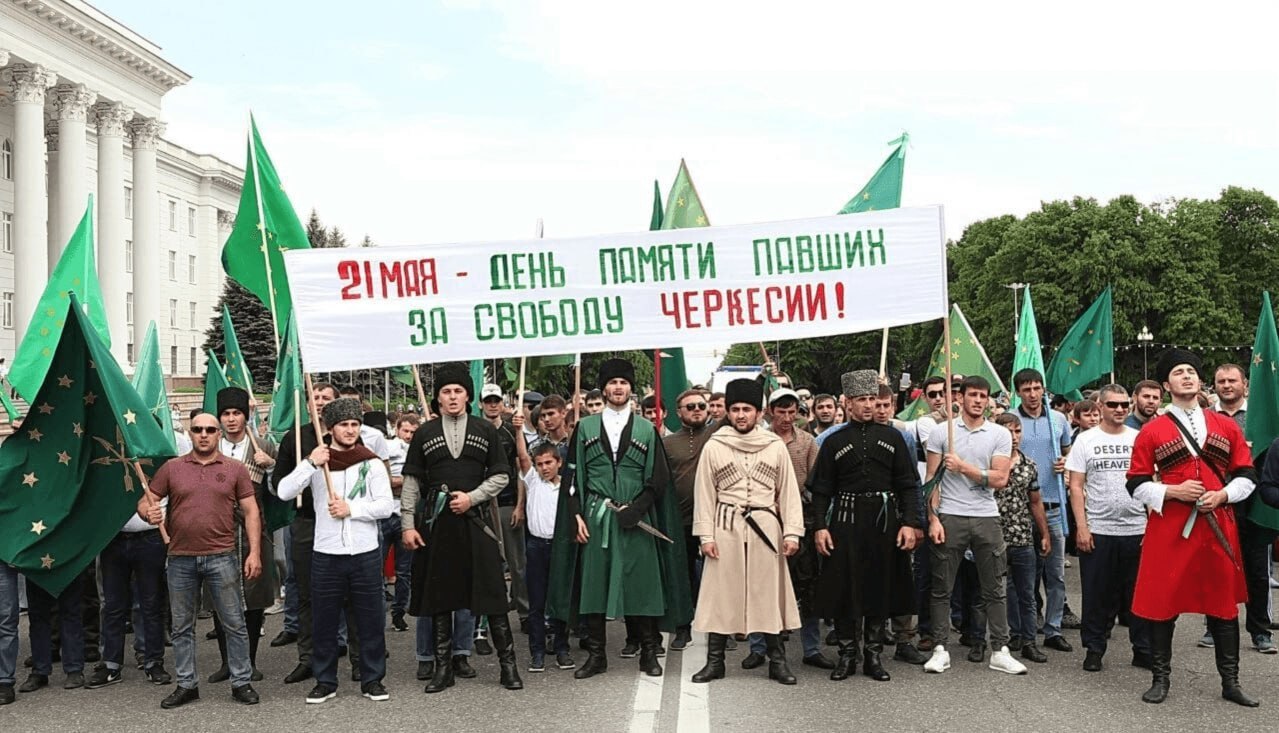
Authorities in Kabardino-Balkaria have once again denied permission for a memorial march to be held on May 21—Remembrance Day for the Adyghe (Circassians), victims of the Caucasian War. According to the regional human rights center, a week before the memorial day, local residents began being summoned to police stations to receive warnings against breaking the law while participating in public events.
Human rights activists consider these measures unjustified and view them as an attempt to preemptively pressure citizens intending to honor the memory of their ancestors. They argue that this is not a political action, but a long-standing mourning tradition that has been held peacefully and orderly for decades.
Public marches and memorial events for Adyghe Remembrance Day have effectively ceased to be held since 2020. The initial restrictions were due to the coronavirus pandemic and the anti-COVID-19 measures. Later, the authorities began citing the "undesirability" of holding mass gatherings amid the Russian-Ukrainian conflict.
A published appeal by the Kabardino-Balkarian Human Rights Center states that the situation surrounding the commemorative date "has reached a critical point."
"The persecution and pressure on citizens for their intention to honor the memory of their ancestors has become systemic, planned, and ongoing. Moreover, over the many years of mourning processions, not a single case of riots or other unlawful actions has been recorded. Participants have never disturbed public order or clashed with law enforcement. The procession has always been entirely peaceful and orderly," the authors of the appeal note.
Human rights activists emphasize that commemorative events on May 21 are held annually in many countries around the world where members of the Adyghe (Circassian) diaspora reside. These include Turkey, Syria, Jordan, Germany, the United States, France, Israel, and other countries.
"In many countries, people have the opportunity to freely commemorate the victims of the Caucasian War. But only in Nalchik, the historical homeland of the Adyghe, do bans, warnings, detentions, and administrative pressure recur year after year," reads the appeal to the head of Kabardino-Balkaria, Kazbek Kokov.
The topic of commemorative events on May 21 remains one of the most sensitive for Adyghe society. For many members of the nation, this date is associated not only with historical memory but also with issues of preserving national identity, culture, and the right to openly express collective grief.
As a reminder, last year in Nalchik, police detained at least eight participants in a commemorative event dedicated to the anniversary of the expulsion of the Circassians.
The Caucasian War of 1817–1864 is the general name for the military campaigns of the Russian Empire in the North Caucasus, which were accompanied by prolonged conflict with the mountain peoples of the region. After the war, a significant portion of the Adyghe population was forced to flee their historical homeland. The mass migration of Circassians to the Ottoman Empire became one of the greatest tragedies in the history of the people and remains a vital part of the collective memory of Adyghe people worldwide.