Aliyev’s Visit to Berlin: Talks on Energy Supplies and Revealing the Secret Meeting Between German and Russian Representatives in Baku
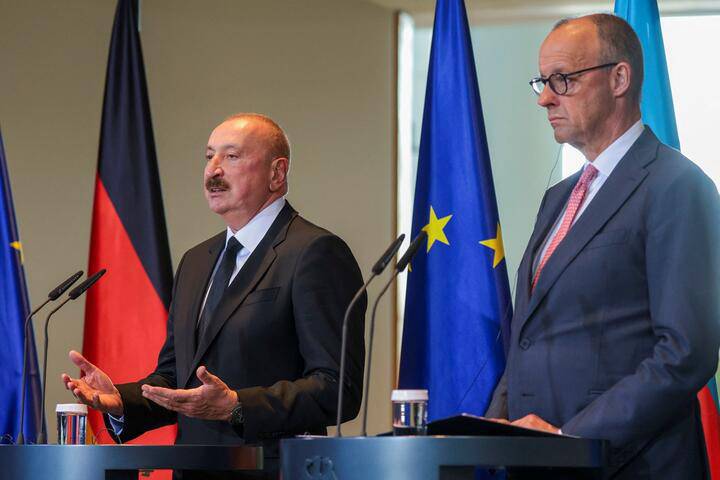
Ilham Aliyev arrived in Berlin for an official visit at the invitation of Chancellor Friedrich Merz. During the visit, he held talks with German President Frank-Walter Steinmeier and the Chancellor. Energy was a key topic of the discussions. The parties also addressed transport corridors, economic cooperation, and the peace process between Azerbaijan and Armenia.
Following the meeting, Merz stated that Germany is serious about expanding relations with Azerbaijan and aims to work with the country to diversify energy supplies—primarily oil and gas—via the Southern Gas Corridor, bypassing Russia. The parties signed a joint declaration on strategic partnership and agreed to establish a German-Azerbaijani economic council. For his part, Aliyev indicated that Baku is ready to increase gas and oil supplies to Europe, provided European banks resume financing oil, gas, and infrastructure projects. He noted that Russia is no longer able to supply its partners with previous export volumes.
However, at the same press conference, Aliyev publicly disclosed something Russia and Germany had preferred to keep quiet: former high-ranking officials from both countries had been meeting in his capital for several days. They were discussing—nothing less than—how to end the war in Ukraine.
According to Aliyev, the German delegation arrived in Baku on July 12 and stayed until the 14th. On that same day, former Russian Prime Minister Viktor Zubkov and the head of the Presidential Council for Human Rights, Valery Fadeyev, arrived from Moscow. One of the foreign guests departed the following day, while the other left a day later. Aliyev never disclosed the names of the German negotiators, noting that he could only draw conclusions about the meeting based on flight data. Neither Moscow nor Berlin informed Baku, even though the events took place on its territory.
"I cannot comment on the details, as we were not present at the meeting. However, flight data allows me to state that a secret meeting in Baku did indeed take place. If this meeting was intended to help end the war between Russia and Ukraine, we can only welcome it," the Azerbaijani leader stated.
Chancellor Merz, standing beside Aliyev, responded briefly: his government had no involvement in the meeting and knew nothing about it.
Almost simultaneously, media outlets—first *The Times*, followed by Bloomberg—began publishing the names of the participants in the Russian-German meeting in Baku. The German side reportedly included Ronald Pofalla, former Chief of the Chancellery under Angela Merkel, and Matthias Platzeck, former chairman of the German Social Democrats and former head of Brandenburg. The Russian side included Zubkov—now Chairman of the Board of Directors at Gazprom—and Fadeyev, who is under EU sanctions.
And by all appearances, these are far from the first such contacts. Even before Aliyev’s statement, journalists from *Die Zeit* and the ARD television network had discovered that Zubkov had been secretly meeting with retired German officials since 2024—usually in Baku, though one meeting took place in Abu Dhabi. He is also joined by Alexey Gromyko, Director of the Institute of Europe at the Russian Academy of Sciences. One German expert commenting on the investigation put it bluntly: sitting down with Zubkov and Fadeyev means allowing oneself to be manipulated by the Kremlin, given that Putin’s war aims in Ukraine remain unchanged—meaning there is nothing of substance to discuss.
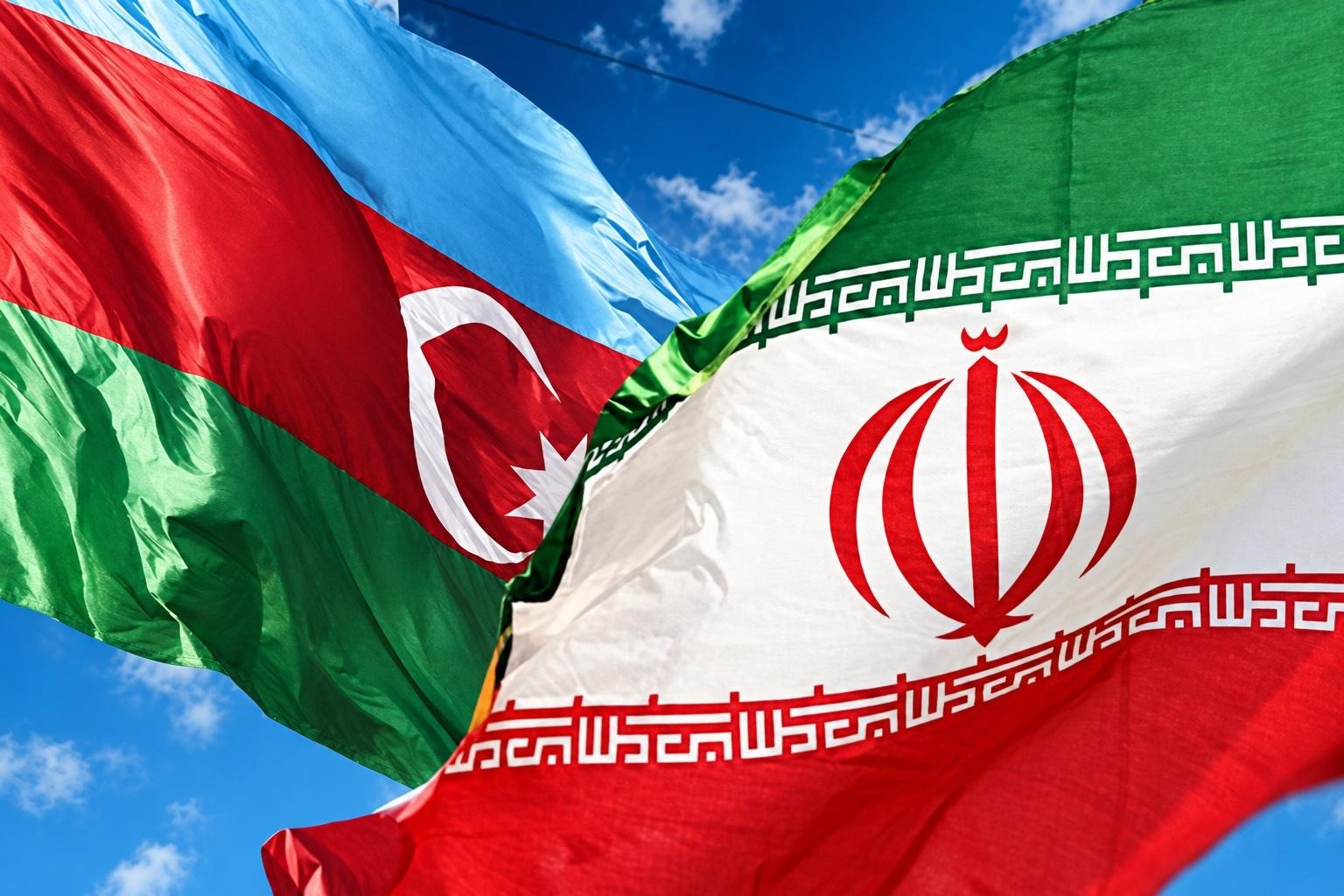
The two countries have begun to overcome the crisis in Russian-Azerbaijani relations—which had lasted over a year and stemmed from the downing of an AZAL aircraft over Grozny. The visit of the Azerbaijani Foreign Minister to Moscow last week signals a desire on both sides to resolve the conflict and mend relations to the extent that serves each country's interests. Nevertheless, they maintain differing—and at times diametrically opposed—positions on many issues. Notably, the Kremlin recently described Aliyev’s stance on Ukraine’s territorial integrity as "misguided." The Azerbaijani president himself, like his Russian counterpart, maintains that relations with Russia have fully normalized. Against this backdrop, it is highly unusual that negotiations between representatives of other nations—in this case, Russia and Germany—took place on Azerbaijani soil without the knowledge of its leadership.
Naturally, in this context, the idea of raising the issue of human rights violations, political persecution, and repression in Azerbaijan no longer even crosses anyone's mind. Yet, until quite recently, this topic was a central fixture on the agenda of talks and meetings between European Union and Azerbaijani representatives. Today, however, it has receded into the background—if not vanished from the political agenda entirely—because, as observers note, Europe’s drive to shed its energy dependence on Russia as quickly as possible outweighs all other priorities. This is especially true given that Azerbaijan is virtually the only country capable of significantly offsetting the loss of Russian energy supplies.