A general reputed to be a murderer in Chechnya has spoken out against renaming settlements in the republic
The State Duma has adopted in its first reading a package of bills renaming three settlements in Chechnya. According to the proposal, Sernovodskoye will become Sernovodsk, Shelkovskaya will become Terek, and Naurskaya will become Nevre.
The explanatory documents note that the new names reflect geographical features. For example, Sernovodskoye is proposed to be called Sernovodsk due to the presence of sulfur springs and the Sernovodsk-Kavkazsky resort within its territory. Shelkovskaya will become Terek due to the river on which the town is located. And the name Nevre for Naurskaya means "north" in Chechen.
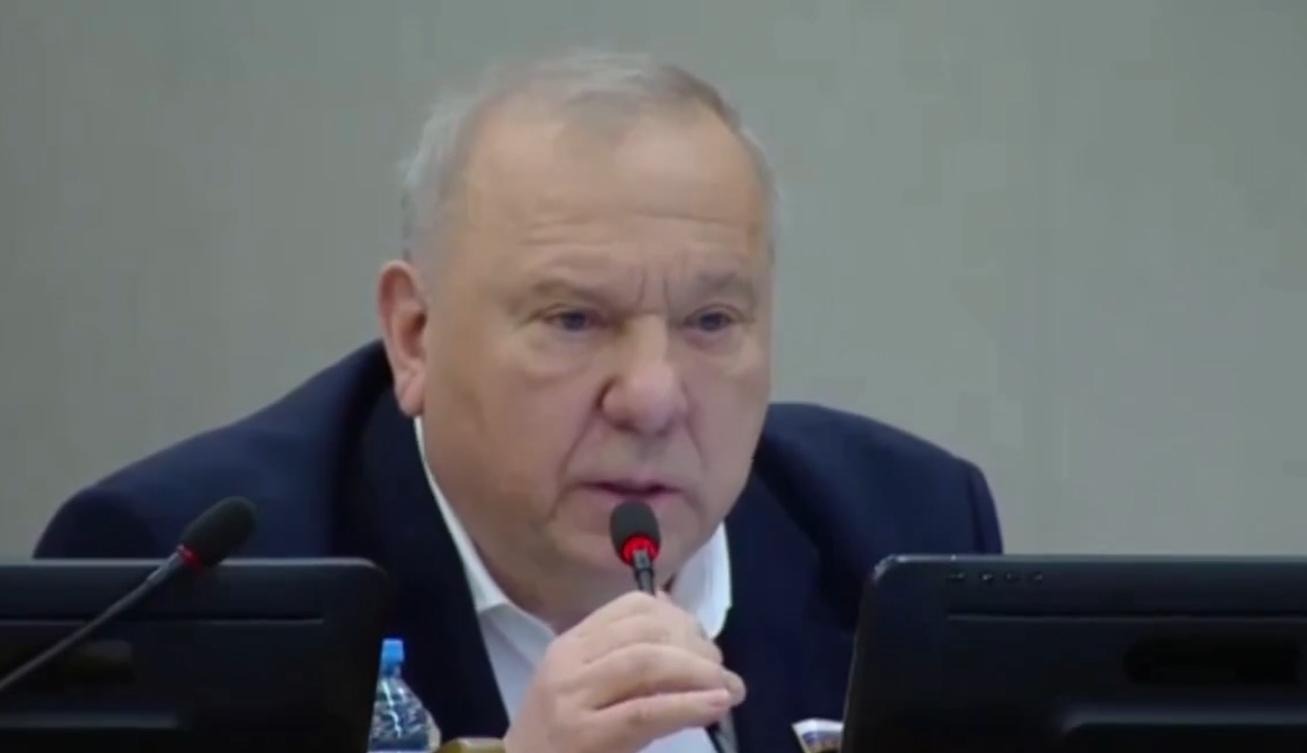
The discussion of the legislative initiative was loud and even scandalous due to the hysterical reaction of Vladimir Shamanov, a notorious Russian general in Chechnya who now also sits in the State Duma.
"They're proposing to rename Cossack villages that have historical names. Not only did they kick out the Russian-speaking population, but now they're erasing their names," the general-deputy lamented at a Duma session. "This is the history of our state. What are you doing, I ask you?!" he angrily demanded, his voice mockingly commanding, and theatrically tapped the microphone.
Shamsail Saraliev, a State Duma deputy from Chechnya, clarified that the Turkic name "Naur," from which the current name Naurskaya derives, means "lake, marshy area." According to him, "the semantic load of such a name is currently incompatible with an urban-type settlement with the prospect of further development."
Deputy Sergei Obukhov echoed Shamanov, arguing that renaming, for example, Naurskaya, founded by Cossacks in the 17th century, erases the memory of its founders.
Anatoly Wasserman joined them.
"I'm absolutely not against renaming Sernovodskoye to Sernovodsk, but I think any resident of Tula, Kaluga, Yasinovataya, or Moscow would be surprised to hear arguments about the feminine ending being unacceptable for a city," he launched into a grammatical thicket, clearly ignorant of the history and etymology of the town's name.
The Chechen Republic will finance the name change, Saraliev countered.
"The costs are insignificant; the republic's budget can handle it," he assured.
Shamanov gained notoriety during both Russian-Chechen wars for the brutality of the 58th Army units under his command, which were particularly brutal toward civilians, violated the rights of the local population, and committed looting. The international human rights organization Human Rights Watch declared that Shamanov should be brought to trial for the mass murder of the republic's civilian population. In Chechnya, he is called nothing less than a "murderer" and a "war criminal." It was under his command that Colonel Yuri Budanov, who, along with his subordinates, kidnapped 18-year-old Elsa Kungayeva, a resident of the village of Tangi-Chu, from her home in an armored personnel carrier in March 2000, subsequently took her to his unit, raped, and murdered her. Shamanov, however, defended the killer in every way, calling him a "true officer" and "a treasure of Russia." And only because the military commander was on vacation at the time his subordinate committed the monstrous crime, as Novaya Gazeta journalist Anna Politkovskaya wrote, was Budanov brought to justice.
Shamanov's claims about the alleged expulsion of Chechnya's Russian-speaking population in the early 1990s are part of the Russian propaganda narrative that the Russian authorities used as one of the pretexts for launching a military invasion of Chechnya in December 1994 and unleashing the First Russo-Chechen War.