Joseph Stalin's name has once again been immortalized in Dagestan
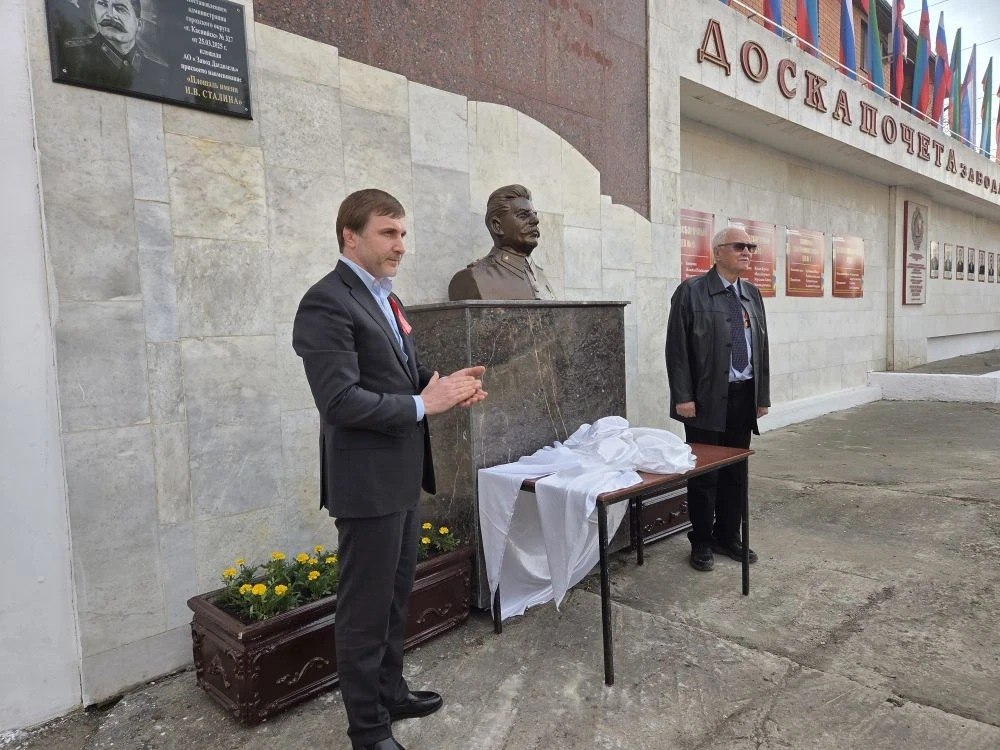
A ceremonial unveiling of a bust of Joseph Stalin took place at the Dagdizel Plant JSC in Kaspiysk. The event was timed to coincide with the May 9th holiday. In 2025, a memorial plaque in Stalin's honor was unveiled at the plant, and the plant square was named after him.
The event was attended by Deputy Head of Kaspiysk Gusein Unkilov, Minister of Industry and Trade of Dagestan Nizam Khalilov, Major General German Kirilenko, representatives of the plant's management and public organizations, veterans, and cadets.
Ruslan Kasumov, First Deputy General Director of Dagdizel Plant JSC, delivered a welcoming speech: "Last year, we took the first step—unveiling a memorial plaque on the plant square, which now bears Stalin's name." Today, we are continuing this work—installing a bust, completing the symbolic image of the historical era associated with the development of the country's industry and our enterprise."
Dagestan ranks second in Russia for the number of sites named after Joseph Stalin, behind North Ossetia. The rise of the cult of the tyrant, who destroyed hundreds of thousands and millions of lives, has provoked outrage among residents of Dagestan's neighboring republics. Under Stalin's rule, many peoples were subjected to total forced expulsion from their ancestral lands. In the 1940s, by his decree, many ethnic groups from the USSR were deported, including Chechens, Ingush, Karachays, Balkars, Crimean Tatars, Bashkirs, Koreans, Kalmyks, Germans, and Ingrian Finns.
The Law on the Rehabilitation of Repressed Peoples, adopted by the Supreme Soviet of the RSFSR in 1991, remained unimplemented, particularly in terms of territorial restoration. Moreover, even the Russian government, considered democratic between 1991 and 1999, failed to provide a clear political and legal assessment of Stalinism. Since the early 2000s, there has been a growing trend toward restoring Stalin's name: the number of objects named in his honor has increased.