Two Mosques Destroyed After the 1944 Deportation Restored in the Mountains of Ingushetia
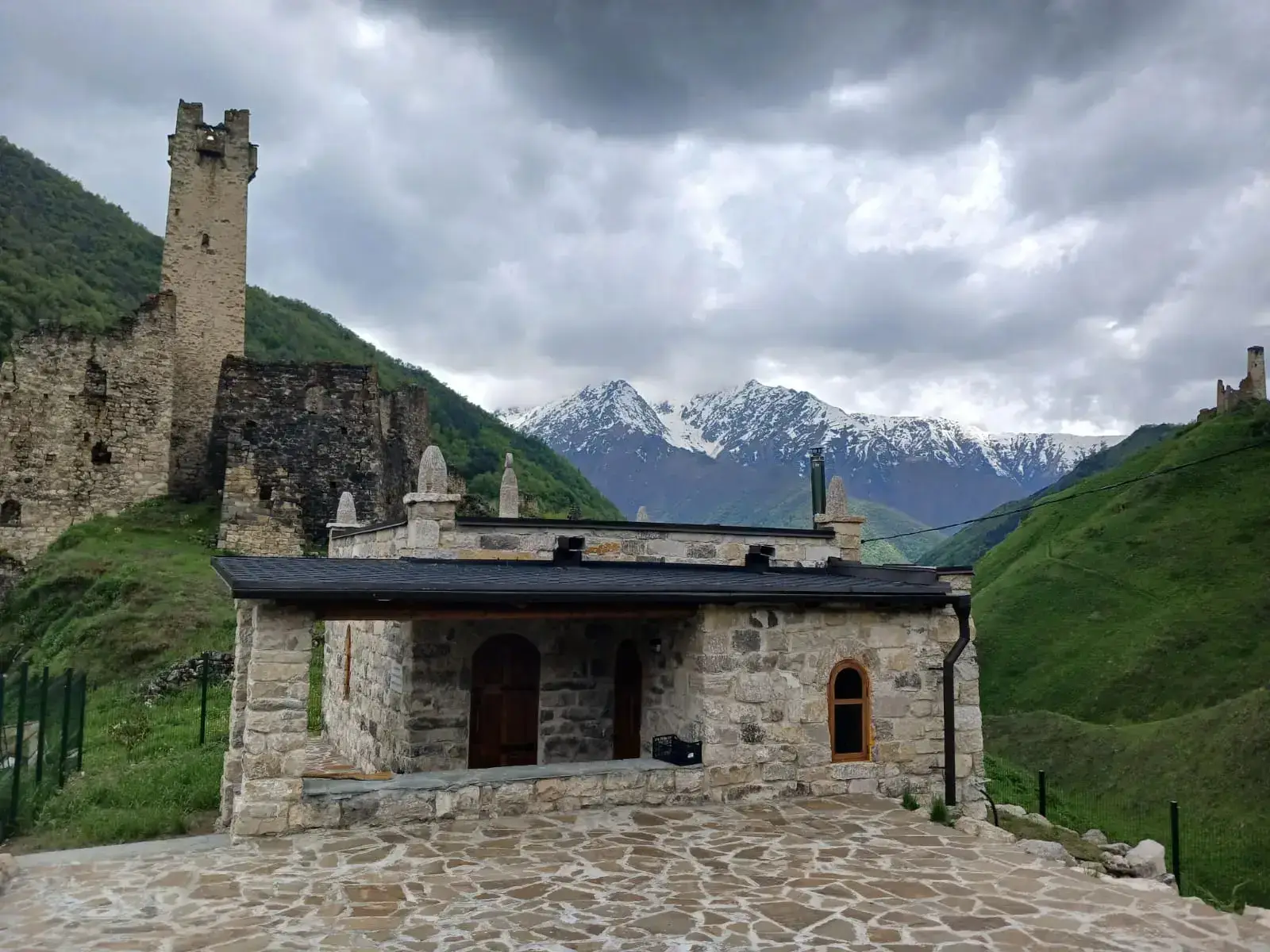
The restoration of two 19th-century stone mosques—destroyed following the deportation of the Ingush people in 1944—has been completed at the historic Tsori tower complex in Ingushetia’s Dzheyrakhsky District.
Umar Tsuroev, a representative of the Council of Elders of the Tsori clan society, told Interfax that one of the structures was a Friday mosque, while the other served as a congregational mosque. According to him, both were built in a traditional Arab style, with architecture reminiscent of the ancient mosques of Medina. While the foundation of one mosque remained intact, restorers had to virtually rebuild the second one from scratch.
The restoration work was carried out by members of the Tsori clan society. Tsuroev noted that all 84 families belonging to the association participated in the project. Landscaping and site improvement works are currently being finalized, and the mosques are scheduled to open to visitors in late July.
The mass deportation of Chechens and Ingush people to Central Asia began in February 1944 as part of Operation Lentil. Following the expulsion, many settlements in mountainous Ingushetia were abandoned, and a number of historic towers, mosques, and other monuments were destroyed or fell into disrepair.
In recent years, the republic has been gradually restoring sites of historical and cultural heritage. For instance, the restoration of the Furtoug tower complex in the Dzheyrakhsky District—one of Ingushetia’s most renowned medieval architectural monuments—was recently completed. Notably, the prominent Russian chemist Dmitry Mendeleev visited the site in 1886.