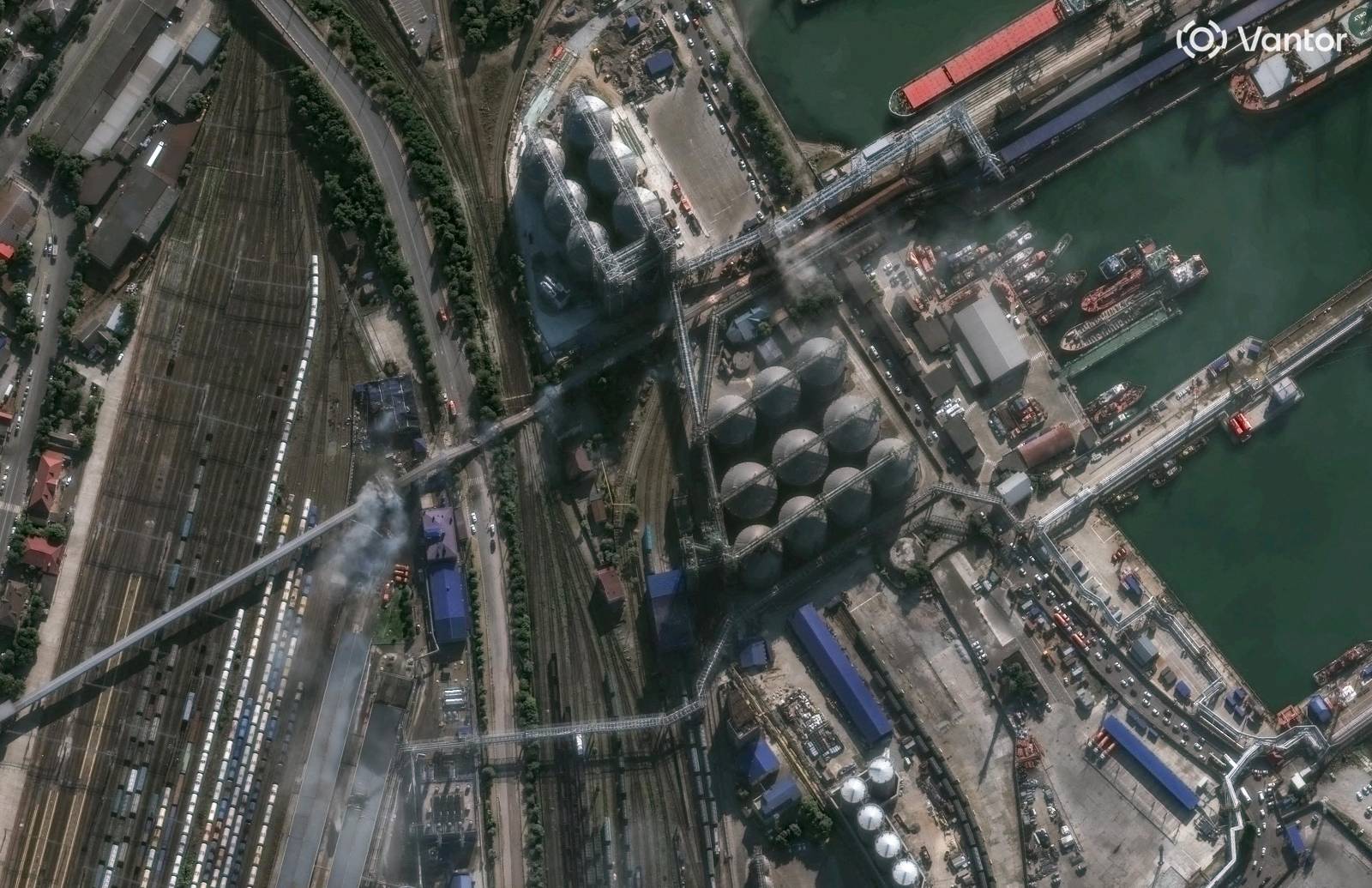
All Novorossiysk grain terminals halt operations after drone attack
All three grain terminals at the port of Novorossiysk have suspended operations following a drone attack on Aug. 12, with KSK, the largest grain terminal on Russia's Black Sea coast, becoming the latest facility to halt operations.
The terminal's operator, Delo Group, said on Aug. 13 that KSK had stopped unloading road and rail shipments, loading grain onto vessels and carrying out other operations.
"The decision was taken to ensure the safety of employees and infrastructure," the company said.
A day earlier, two other terminals at the Novorossiysk port — the Novorossiysk Grain Terminal and the Novorossiysk Grain Products Plant terminal — had also suspended operations. Their infrastructure was damaged in the drone attack.
The overnight strike therefore brought operations at all three major grain-handling facilities in Novorossiysk to a halt.
KSK is the largest grain terminal on Russia's Black Sea coast, with an annual capacity of 10.5 million tonnes of bulk cargo. According to its operator, the terminal handled 40.7% of grain exports through Novorossiysk in 2025.
The Novorossiysk Grain Terminal has an annual capacity of 8.5 million tonnes, while the Novorossiysk Grain Products Plant terminal can handle up to 7.1 million tonnes.
The suspension of all three facilities could significantly reduce Russia's grain exports through the Black Sea. Vladimir Petrichenko, chief executive of the ProZerno analytical company, described the situation as a serious blow to the market.
With Taman and Novorossiysk effectively removed from the list of major deep-water ports in Russia's southern export corridor, Tuapse is now the only major outlet remaining, Petrichenko said.
"For now, we can talk about grain exports of around 1.5 million tonnes a month. And for our farmers, this is not just bad — it is very bad," Petrichenko told BFM.
Andrei Sizov, head of the SovEcon agricultural consultancy, estimated the potential losses to Russian grain exports to be even greater. He said the closure of Novorossiysk could reduce the country's potential grain exports by 2 million to 3.5 million tonnes a month.
"When the Azov route was closed, 1 million to 2 million tonnes of grain a month were lost from exports. If Novorossiysk is closed, another 2 million to 3.5 million tonnes must be deducted from Russia's potential monthly grain exports," Sizov was quoted as saying by Agroexpert.
Amid the terminal shutdowns, Russian Railways also introduced restrictions on shipments, including grain, to the port of Novorossiysk from Aug. 13 to Aug. 19.
For farmers in southern Russia, the port disruptions come as grain purchase prices are falling while logistics and fuel costs are rising. Analysts warn that prolonged interruptions to exports could put additional pressure on agricultural producers and increase the risk of bankruptcies.