Boris Ebzeev: From a Dissenting Opinion on Chechnya to Putin’s Central Election Commission
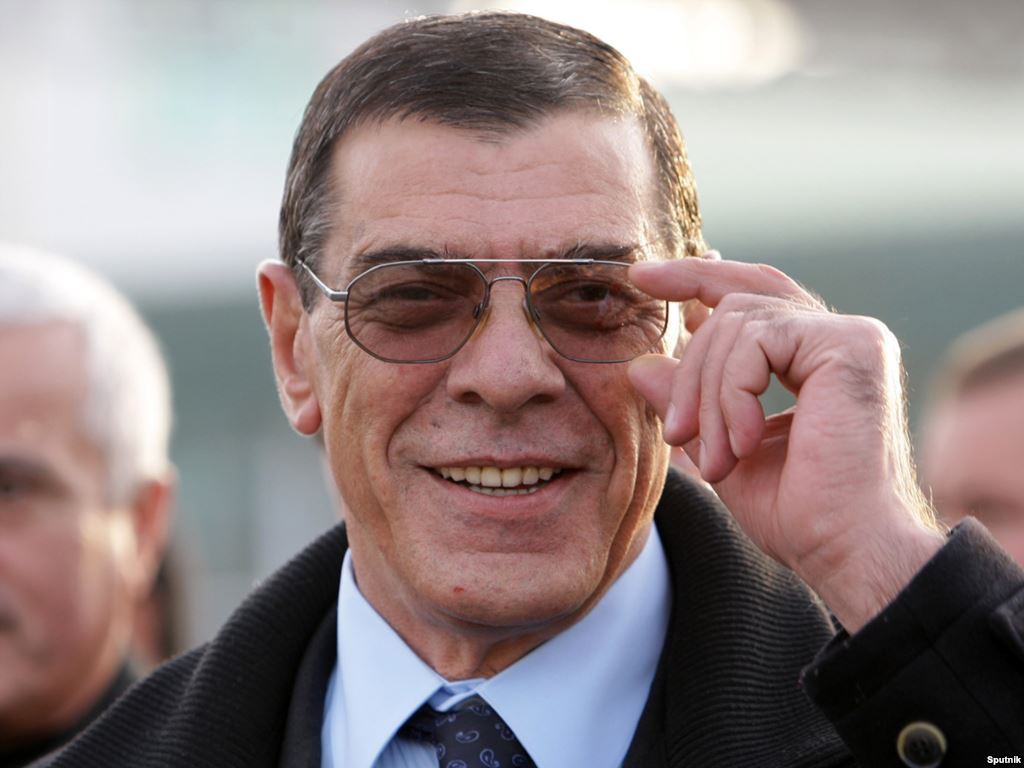
Boris Ebzeev, the former head of Karachay-Cherkessia, a Constitutional Court judge and a longtime member of Russia’s Central Election Commission, died this week at the age of 76. His political career spanned several different eras of Russian rule — from the establishment of constitutional justice in the early 1990s to Vladimir Putin’s political system of centralized power. The Russian-Chechen war holds a special place in his biography: in 1995, Ebzeev disagreed with the majority of the Constitutional Court, which ruled that the actions of the Russian authorities in Chechnya were lawful. Twenty-five years later, he was already a member of the Central Election Commission when Vladimir Putin was “resetting” the Constitution to allow himself to run for president again.
Boris Ebzeev was born on February 25, 1950, in the village of Dzhany-Dzher in the Frunze Region of the Kirghiz Soviet Socialist Republic. His family, like thousands of other Karachay families, ended up there following deportation. Ebzeev later graduated from the Saratov Law Institute and became a Doctor of Law and a professor. He was not simply a legal official: his professional career began during the collapse of the Soviet system and the creation of a new Russian state.
In 1991, Ebzeev became a judge of the Constitutional Court of the RSFSR. He took part in the 1993 Constitutional Conference and in drafting the Russian Constitution, which was adopted in December of that year. He remained on the court for almost 17 years, until September 2008.
A dissenting opinion on the Russian-Chechen war
In 1995, the Constitutional Court considered the constitutionality of presidential decrees related to Moscow’s actions in Chechnya. Among them was Boris Yeltsin’s decree “On Measures to Restore Constitutional Legality and Law and Order in the Chechen Republic” — one of the legal documents used by the Russian leadership to justify the deployment of troops and the war that followed.
The majority of the Constitutional Court found the acts to be consistent with the Constitution. Ebzeev disagreed with the ruling and issued a dissenting opinion.
He argued that the goals declared by the authorities could not, by themselves, justify the consequences of their implementation. In Ebzeev’s view, the court should have assessed not only the wording of the decrees, but also what their implementation had led to in practice.
For the Russian judiciary of the 1990s, this was a significant gesture. Ebzeev did not deny the state’s right “to restore constitutional order,” but raised the question of the “limits of what is permissible in exercising it.”
To some extent, this position echoed that of another native of Karachay-Cherkessia — the prominent Circassian Yuri Kalmykov, a distinguished Soviet and Russian lawyer who served as Russia’s justice minister.
When the Russian leadership decided at the end of 1994 to launch a military intervention in Chechnya, Kalmykov made determined and sustained efforts to oppose the decision. Having become convinced that he could not stop it, he resigned as justice minister and left the Security Council in protest.
Kalmykov and Ebzeev chose different forms of action. One left the government; the other remained a Constitutional Court judge but publicly recorded his disagreement with the majority’s decision on the “Chechen issue.”
Head of Karachay-Cherkessia
In 1999, Ebzeev himself attempted to enter regional politics: he ran in the election for president of Karachay-Cherkessia but was eliminated after the first round. Nine years later, the federal center itself brought him to power in the republic.
In July 2008, Dmitry Medvedev nominated him to the People’s Assembly of Karachay-Cherkessia. The parliament approved Ebzeev, and on September 4 he took office as president of Karachay-Cherkessia.
Ebzeev came to the republic not as a representative of a local political group, but as a federal lawyer with extensive experience on the Constitutional Court. For the Kremlin, this was an important advantage: after difficult years, the republic needed a leader who was not directly tied to local clan groups.
However, it was here that the limits of his independence became apparent.
One of Ebzeev’s first major personnel decisions was to appoint Vladimir Kaishev as chairman of the republican government. The decision met resistance from some local elites and prompted protests from Circassian civil society. Alexander Khloponin, the presidential envoy to the North Caucasus Federal District, intervened, after which Kaishev left the post.
Ebzeev was unable to defend his personnel decision against the federal center. His experience demonstrated how limited the room for independent political action was becoming for regional leaders within the emerging system of centralized power.
In May 2010, Fral Shebzukhov, an adviser to the president of Karachay-Cherkessia, was killed. Ebzeev said at the time that he did not believe the murder was domestic in nature or connected to business, and suggested that it may have had a political motive. Investigators later linked the case to the circle of Senator Rauf Arashukov.
Ebzeev himself spent less than three years at the head of the republic.
On February 26, 2011, Medvedev accepted his resignation. Officially, it was “at his own request.” Ebzeev left the post ahead of schedule, and Rashid Temrezov became acting head of Karachay-Cherkessia.
From Karachay-Cherkessia to the Central Election Commission
Leaving regional politics did not mean leaving the federal system. As early as March 2011, Ebzeev joined Russia’s Central Election Commission.
He remained on the commission for about 15 years, until March 2026. In 2016, Ebzeev joined the commission’s new membership. In 2020 — when Russia was carrying out the “reset” of the Constitution, described by the authorities as a constitutional reform — he had already been a member of the Central Election Commission for nearly a decade.
On December 25, 2017, the Central Election Commission considered the registration of an initiative group created to support opposition politician Alexei Navalny’s self-nomination for the 2018 presidential election. According to journalist and former editor-in-chief of the Ekho Moskvy radio station Alexei Venediktov, who recalled the episode after Ebzeev’s death, Ebzeev was the rapporteur on the issue. He presented the commission with a draft decision refusing to register the group, and the Central Election Commission supported the decision.
On July 3, 2020, during the vote on constitutional amendments, Ebzeev said that the 1993 Constitution had “fulfilled its tasks.”
Venediktov recalled Ebzeev as “always ironic, always a statist — neither a democrat nor a liberal.”
The journalist also recalled that Ebzeev often spoke about being born in exile: he returned home to Karachay-Cherkessia only at the age of seven.
“And when the seven-year-old boy would show through that ironic schemer, our conversations took on a substantive rather than opportunistic character,” he wrote.