Mass hunger strike of Chechen refugees in Ingushetia and new abductions in their homeland
July 6, 2001
***
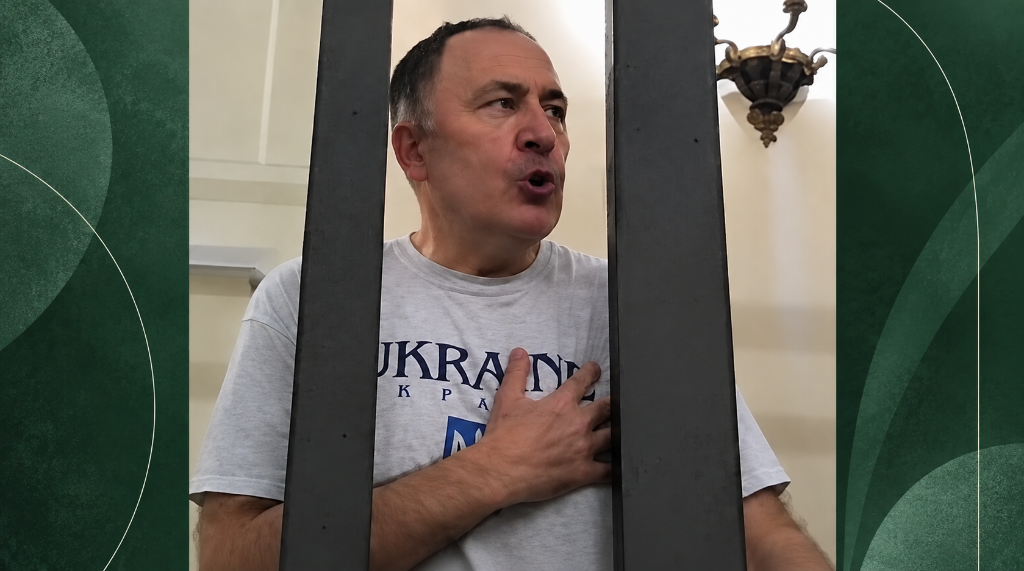
Alexander Mikhailovich Lyuboslavsky, editor-in-chief of the All-Russian magazine of regional human rights organizations "Protection of Human Rights and Freedoms" joined the hunger strike, started by the forced migrant from Chechnya Makhmud Abdulshaidov and then acquired a mass character. He arrived in Ingushetia on July 3 and on the same day went to the refugee camps located on the outskirts of the village of Ordzhonikidzevskaya. In a conversation with an employee of Memorial HRC, he spoke about the motives that influenced his decision:
“I share all the slogans of the hungry. And I came here as a sign of solidarity with people who demand peace for themselves, and as a sign of protest against the slander that is erected on the starving by the state structures of the Russian Federation. The statements and statements of officials that they are being paid for this are a provocation against justice, against the truth. This is a spontaneous protest of people driven to despair from hopelessness. The fact that the state ignores and curses the starving people testifies to the immorality of the current government. High-ranking government officials have surrounded everything that is happening in Chechnya with lies. I saw how on July 4 and 5 new refugees poured in here after another “cleansing operation” in Sernovodsk and Assinovskaya. These are not "mopping-up operations", these are punitive operations against the entire population, without division into the guilty and the innocent, where even a baby is qualified as a criminal. Under these conditions, the Russian government and the "new" administration of Chechnya decided to return all the refugees to the republic. This is a dangerous undertaking. Chechnya is already behind the Iron Curtain. Journalists and observers cannot work there freely. Their military for uniforms are transported around the republic and they show only what they want, and only in the way they want.
Now there is a process of squeezing and luring refugees back. They are promised to be paid compensation, but people who have returned can pay with their lives.
Refugees who left and are leaving the republic are sources of factual information. If the refugees can be "driven" back, the ring of information blockade will close. The world will know about what is happening in Chechnya only what the official propaganda press will report.
And the official press slanders the starving people. The hunger strike was declared with the demand for peace. Peace has been taken from people. The only real way to find a way to peace is through negotiations with Aslan Maskhadov, to stop hostilities and at the same time bring in UN peacekeeping troops. And then there are already negotiations on political issues, to engage in the restoration of the republic, and, possibly, to hold elections.
Putin does not want to accept the democratic principles of building relationships with the peoples and citizens of his state. He follows the path that the communists went before him. They want to make a militaristic state out of Russia, although there is another, more attractive alternative: to end wars, live in peace with everyone and conduct peacekeeping activities. We want Russia to develop as a state of law, and that the people who started the war go through an international court. This is the only way to end the war. Society should invest its forces not in war, but in mother and child, and then generations can be formed on the basis of other values.
New generations will grow up, more cultured, more moral than today's. And then you won’t have to keep so many militia and army to tame your people.”
From 14 to 24 June, more than 230 refugees went on hunger strike. At different times, ten of them were hospitalized with a diagnosis of exhaustion. Three children aged 10 to 16 were also placed in the Sunzha regional hospital of the Republic of Ingushetia, who had not eaten food for two weeks. On the evening of June 24, the leaders of the public organizations "Society of Russian-Chechen Friendship", "Sintar", the Chechen Committee of National Salvation, with the participation of the imams of the mosques of the tent camps "Satsita" and "Sputnik" held a rally in support of the demands of the hungry. At the same time, representatives of public organizations and the clergy called for an end to the action. First of all, they turned to the children, explaining that their participation in it does not comply with the canons of Islam.
As a result, 200 refugees came out of the hunger strike. 33 people refused to eat, later several more joined them. By the time Alexander Lyuboslavsky arrived, 39 people had taken part in the action. Among them is a paralyzed refugee from the Satsita camp, Malika Ezieva, a disabled person of the 1st group. In December 1999, in the Staropromyslovsky district of Grozny, she was wounded in the back by a shot from a Russian checkpoint.
Two teachers continued their hunger strike: Zhovzan Gazatmirzayeva had not taken food for 19 days, Elita Abdulshaidova - 16. Both claimed that their decision was conscious and they could not indifferently watch how people die day by day, how children remain orphans and purposefully the once flourishing republic is being destroyed. “This is genocide, we demand to stop it,” they told the few journalists who arrived at the place of the hunger strike.
***
A resident of the village of Dyshne-Vedeno, Said-Ali Said-Akhmedovich Ozdiyev, born in 1956, was detained by the officers of the Russian commandant's office and then disappeared. With three relatives who came to visit, he was in his house on Deniyev Street, when the area around was cordoned off by the military who arrived in several armored personnel carriers. They began to detain people. Said-Ali Ozdiyev tried to hide through the garden, but was discovered. Together with him, relatives were also taken to the commandant's office. The next day, everyone except him was released.
On the fact of the abduction, the district prosecutor's office opened a criminal case No. 73014 (Article 126, part 2 of the Criminal Code of the Russian Federation). This happened on February 26, 2002, and two months later, on April 26, the case was suspended “due to the impossibility of finding a person to be brought as an accused” (Article 195, paragraph 3 of the Code of Criminal Procedure of the RSFSR).
***
The prosecutor's office of the Nozhai-Yurt district opened a criminal case No. 35069 on the fact of the abduction (Article 126 part 1 of the Criminal Code of the Russian Federation) by unknown armed people of a resident of the village of Ishkhoy-Yurt S.S. Ulbiev, born in 1958. It happened on June 29, 2001. Subsequently, he was allegedly handed over to the OMON officers of the Orenburg region sent to the republic. Two months later, on September 6, the criminal case was suspended “due to the impossibility of finding persons to be brought in as defendants” (Article 195, paragraph 3 of the Code of Criminal Procedure of the RSFSR). The further fate of S. Ulbiev HRC "Memorial" is unknown.
From the book "People Live Here", Usam Baisaev, Dmitry Grushkin, 2006