Discovery of a mass grave in the Shali region, blockade of Urus-Martan
July 31, 2001
***
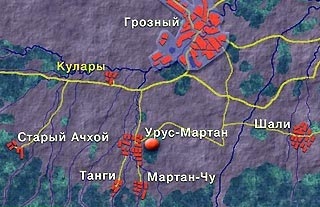
According to information that HRC Memorial could not verify, in the summer of 2001, a burial was discovered between the town of Shali and the village of Serzhen-Yurt, next to the canal, 200 meters from the Russian checkpoint. Up to 20 corpses of local residents were found in it, subjected to extrajudicial execution after being captured by the military. The fact of the existence of the burial place became public by chance: one of the newly called-up soldiers told about the burial place to a resident of Shali, who did not want to give his name.
***
In the morning, Urus-Martan was closed for the entry and exit of vehicles. Local residents lost the opportunity to travel to Grozny, Ingushetia, not to mention the nearby villages. The basis for the actual blockade, according to Russian policemen, was the order of military commandant Heydar Hajiyev. Only employees of the administrations of settlements and law enforcement agencies were allowed through the checkpoints. By nine o'clock in the direction of the village of Gekhi, a large number of cars had accumulated, the drivers and passengers of which could not pass through the post in both directions. Some of them then went home. But the most persistent continued to "watch" at the checkpoint, hoping for the cancellation of the order. However, traffic on the roads leading to and from Urus-Martan was not resumed until the end of the day.
On the morning of August 1, people came to the buildings of the military commandant's office and the district administration, who, for one reason or another, had to leave the city. The authorities began issuing them passes called "route sheets". There were many people who wanted to get them, and, probably, that is why the commandant's office decided to finally unblock the roads: at ten o'clock the passage was open.
From the book "People Live Here", Usam Baisaev, Dmitry Grushkin, 2006