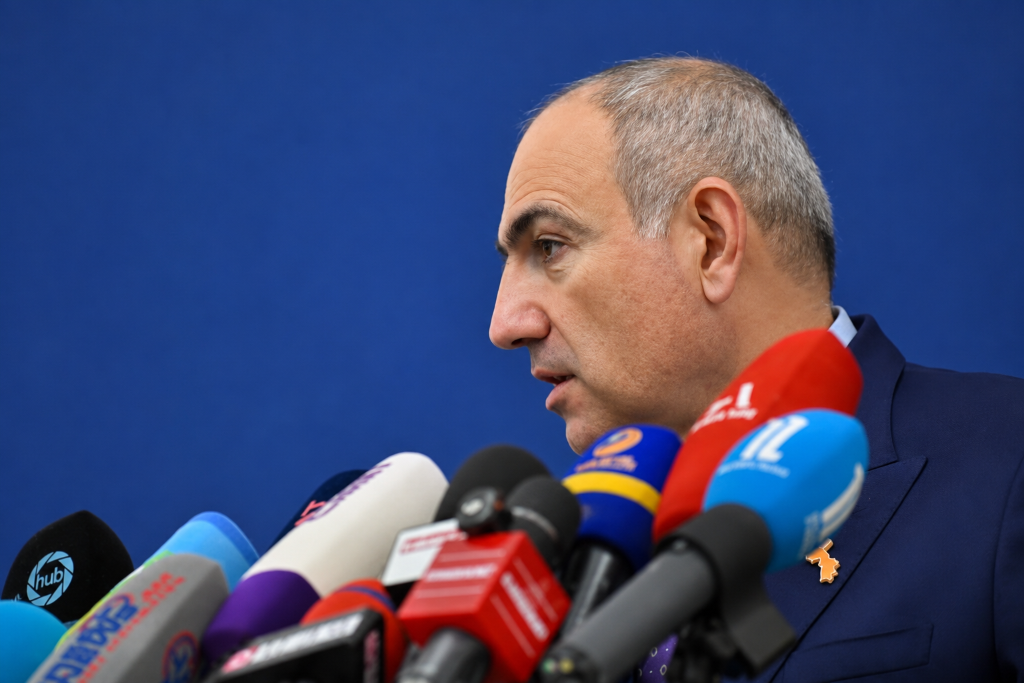
Pashinyan spoke in Armenian at the SCO summit; the Kremlin "did not understand" why

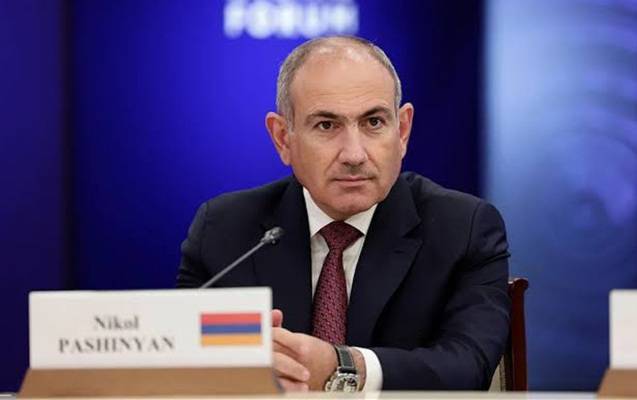
Armenian Prime Minister Nikol Pashinyan delivered a speech in Armenian at the expanded summit of the Shanghai Cooperation Organization (SCO) in Bishkek. The Kremlin described this as a "signal" regarding Armenia's sovereignty but admitted it "did not understand" why the statement could not have been made in Russian.

At the same time, Russian Presidential Press Secretary Dmitry Peskov emphasized that Moscow respects the Armenian prime minister's decision.

"Yes, it was a signal—to assert Armenia's sovereignty. Frankly speaking, we did not understand why this could not be stated in Russian... But it is the head of state's choice, and we respect it," Peskov said.

According to the Kremlin representative, however, a Russian translation of Pashinyan's speech was provided. Peskov noted that he was initially unsure whether simultaneous interpretation from Armenian would be available.

"I wondered where the earpiece was that I needed to put on to hear the Russian translation, and I also wondered if the Russian translation would actually take place—whether there was an Armenian-to-Russian interpreter. The translation did take place," he recounted.

Pashinyan was the only CIS leader to speak in a language other than Russian at the expanded SCO+ meeting. The presidents of Russia, Kyrgyzstan, Tajikistan, Azerbaijan, Belarus, Kazakhstan, and Uzbekistan all spoke in Russian. Representatives of other states used their national languages ​​or English.

The Armenian prime minister's speech came against the backdrop of Yerevan's ongoing reassessment of its relations with Moscow. As part of his government's agenda, Pashinyan had previously announced plans to prepare an application for Armenia to join the European Union.

He also met with Vladimir Putin on the sidelines of the summit. The Russian president invited Pashinyan to Moscow to discuss Armenia's relations with the European Union and the Eurasian Economic Union.
Последние новости
Pashinyan spoke in Armenian at the SCO summit; the Kremlin
Politics
Pashinyan spoke in Armenian at the SCO summit; the Kremlin "did not understand" why
6 September 2026

Armenian Prime Minister Nikol Pashinyan delivered a speech in Armenian at the expanded summit of the Shanghai Cooperation Organization (SCO) in Bishkek. The Kremlin described this as a "signal" regarding Armenia's sovereignty but admitted it "did not understand" why the statement could not have been made in Russian.

In Dagestan, the body of a drowned youth was found at a depth of 60 meters
Society
In Dagestan, the body of a drowned youth was found at a depth of 60 meters
6 September 2026

On September 6, rescuers discovered the body of a 20-year-old man who drowned on August 25 near the village of Shamilkala on the Irganay Reservoir in Dagestan. It is reported to be at a depth of approximately 60 meters. The body has not yet been recovered, as rescuers are awaiting additional equipment.

Rostov Region hit by drone attack: two high-rise buildings damaged, child injured
Politics
Rostov Region hit by drone attack: two high-rise buildings damaged, child injured
6 September 2026

On the night of September 6, Rostov Region, along with other Russian regions, was again attacked by Ukrainian drones. Specifically, a massive airstrike was reported on Rostov-on-Don. According to the Telegram channel Astra, drones circled over the city for over four hours, and gunfire and the sound of a helicopter were heard. Bataysk was also hit. The Telegram monitoring channels Supernova+ and Exilenova+ published photos and videos from eyewitnesses.

Expert Explains Why Moscow and Yerevan Take Incompatible Positions on a Referendum on Armenia’s EU Membership
Politics
Expert Explains Why Moscow and Yerevan Take Incompatible Positions on a Referendum on Armenia’s EU Membership
5 September 2026

The meeting between Vladimir Putin and Nikol Pashinyan in Bishkek, as expected, failed to resolve the central contradiction in relations between Moscow and Yerevan: whether Armenia is prepared to make a final choice between Eurasian and European integration. According to Sergey Markedonov, a leading researcher at MGIMO’s Institute for International Studies, Moscow and Yerevan hold fundamentally different positions on whether Armenia should hold a referendum that could determine the country’s future foreign policy course.