Chechnya bids farewell to mother of political analyst Mairbek Vachagaev
13 September 2026
Russian terror of the civilian population and large-scale protests
June 14, 2001 ***
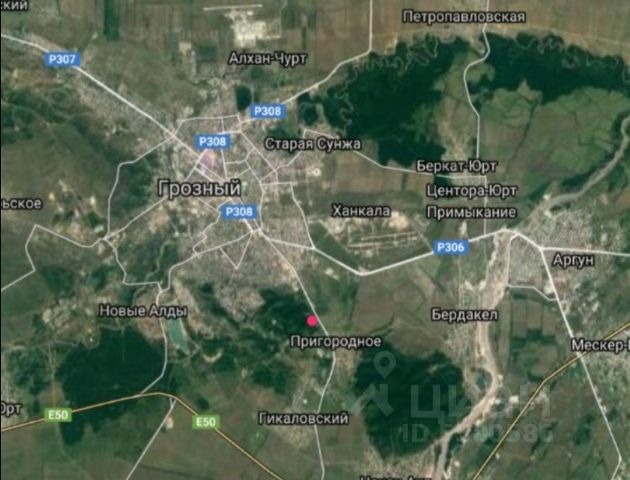
At 8:00 am, not far from the village of Prigorodnoye, Grozny District, Russian sappers fired from a grenade launcher at 67-year-old Shadid Zakriev. The old man, who had left the house to mow the grass, was standing by his motorcycle sharpening his scythe. The military were checking the Grozny-Shatoy highway for explosive devices and could not help but see that he did not pose any threat, but they opened fire. As a result of a grenade explosion, Shadid Zakriev, who lived on Zarechnaya Street, had both of his legs blown off. On the way to the hospital, he died.
***
At 8.30 on the outskirts of the village of Khatuni, Vedeno district, the Russian military deliberately killed five people. At 350-400 meters from the checkpoint, they fired from a grenade launcher at an Audi car heading for the nearby village of Elistanzhi. Shamil Zhalaevich Ortsuev, born in 1964, Shavadi Mukhadaevich Mukhmadov, born in 1968, and Zavali (Zavli) Khozhaevich Akhmaev, born in 1977, who were in the cabin, died immediately. The car was thrown into a ditch.
The same military officers stopped a GAZ-3110 car carrying Akhmed Abdulaevich Abdulaev, born in 1973, and Umar-Ali Akhmedovich Tsokaev, born in 1974. After forcing these people to come out and lie face down on the road, they shot them with machine guns. Together with the corpses of those killed, they burned both cars. When this crime was committed, the road between the settlements of Khatuni and Elistanzhi was blocked for the passage of vehicles. The locals were told by the military that "firing exercises" were allegedly being conducted in the area.
Umar-Ali Tsokaev, Akhmed Abdulaev, Shamil Ortsuev and Shavadi Mukhmadov were returning home after the release of Zavali (Zavli) Akhmaev, who had been taken away the day before to the location of the Russian military group on the outskirts of the village of Khatuni. All of them were residents of Elistanzha.
On the same day, the Russian military abducted Khusein Gapaev, born in 1974, from this settlement. Later, they killed him and demanded a ransom from his relatives for the delivery of the corpse, equal to the cost of five machine guns. Whether this auction took place is unknown. But the villagers said that once the Russian military, accusing them of links with militants, tried to take away Khusein Gapaev's sister, and then broke into the house next to the village mosque where he lived many times.
***
At 11 o'clock in the tent camp "Satsita" in st. Ordzhonikidze Republic of Ingushetia hosted a rally of thousands of Chechen refugees. It adopted a resolution demanding an end to the killing of the civilian population of Chechnya. The protesters called for an end to the "criminal practice of taking hostages during the so-called cleansing operations." They noted that a system of human trafficking has been established and is functioning on the territory of Chechnya by Russian servicemen. The bodies of the killed residents of the republic are handed over to their relatives only after the payment of a ransom. The protesters demanded that the international community put pressure on Russia so that "the massacre in Chechnya would be stopped."
In the context of increased terror against the civilian population of the republic in the city of Grozny on June 15, it was planned to hold a protest rally. The mothers of the missing young people, activists of human rights organizations and all those who "wish to convey to the world community the truth about the genocide of the Chechen people perpetrated by the Russian military" agreed to take part in it.
Dozens of people spoke at the rally, who stated that the daily shelling of settlements, murders and kidnappings, arbitrary arrests, rape and torture used in places of detention, as well as extortion of money and robbery of property of local residents are an integral part of the "counter-terrorist operation." Under these conditions, they stressed, there can be no question of the return of refugees to Chechnya.
Based on the foregoing, the participants of the gathering adopted a resolution (its style has been fully preserved):
“The gathering of refugees and internally displaced persons, representatives of public organizations and regions of Chechnya, having considered the situation in the republic and the situation of refugees, decided:
1. Once again demand that Russian President V. Putin immediately stop hostilities in Chechnya.
2. To begin immediately negotiations between the presidents of Chechnya A. Maskhadov and Russia V. Putin.
3. Allow representatives of international human rights organizations and independent journalists to enter Chechnya.
4. Appeal to international organizations, the UN, the OSCE and the Council of Europe, so that they, given their influence and authority in the world, put pressure on Russia to end the war and establish peace on the territory of Chechnya and settle Russian-Chechen relations by political means.
5. Reaffirm the resolve of the refugees to oppose the decision of the Russian government to forcibly return refugees to Chechnya until peace is established there.
6. Express sincere and deep condolences to the family and relatives of human rights activist Viktor Popkov on his death and demand that
leadership and law enforcement agencies of Russia to find and punish his killers.
7. Conduct an international examination of the situation in Chechnya and, on the basis of international law, determine the rights of its citizens, as well as the duties of the military, employees of the FSB, the GRU, the Ministry of Justice and the Ministry of Internal Affairs of the Russian Federation to strictly observe them.
8. To express sincere gratitude to the group of believers of various faiths who continue their hunger strike in Geneva near the Palace of Nations in order to find a political solution to the conflict in Chechnya.
9. Appeal to the leaders of the North Caucasian republics, heads of territories and regions of the South of Russia with a request to intensify their activities to establish peace on Chechen soil, stabilize and remove hotbeds of tension in the entire North Caucasus region.
10. Express great gratitude to international humanitarian organizations, the people and President of the Republic of Ingushetia Ruslan Aushev for attention and compassion for the needs of the Chechen people.
11. Appeal to US President George W. Bush, as the leader of a state that plays a key role in world politics and respects the principles of democracy in its politics, so that he calls on Russian President V. Putin to start a peaceful dialogue with the legitimately elected President of Republic A .Maskhadov in accordance with the norms of international law.
12. Appeal to the heads of seven leading states so that at the upcoming summit they would influence Russian President V. Putin in resolving the military conflict and creating a mechanism for the speedy implementation of the latest peace initiatives of Chechen President A. Maskhadov.
13. Apply to the UNHCR with a request to establish their contacts with the social movement of refugees "Chechen Committee of National Salvation";
14. Condemn the statement of the commander of the North Caucasian Military District V. Troshev on extrajudicial executions of captured Chechen commanders and fighters of the people's militia and the conduct of "cleansing operations" on the territory of the Republic of Ingushetia.
15. To support the statement of the deputy of the State Duma of the Russian Federation Aslambek Aslakhanov on resigning from his deputy powers and urge him to do it immediately.”
In the evening of the same day, members of the Sintar public organization joined the indefinite hunger strike announced at the end of May by Mahmud Abdulshaidov. His demands coincided with the goals declared in the resolution of the refugee rally described above: stop the war in Chechnya, withdraw Russian troops from the republic and start a negotiation process between Presidents V. Putin and A. Maskhadov.
The tent in which the starving people were camped was set up in a wasteland between the towns of Chechen refugees Sputnik and Satsita. On the first day of the action, four people were accommodated in it: 67-year-old Akhyad Umaev, 46-year-old Musa Kaurnakaev, his peer Koka Khachukaeva and 12-year-old daughter Khasana Mezhidova. Later they were joined by Berlant Muradova, Raisa Abdurakhmanova, Zara Duriyeva, Isa Madaev and others.
The following week, the stock gained momentum. As a result, by June 21, more than 200 people from among the Chechen refugees in Ingushetia, members of public and human rights organizations took part in the hunger strike.
***
At about 11 o'clock at the location of the village police station in the village of Berkat-Yurt, Grozny (rural) district, Russian military men, who arrived in two armored personnel carriers and a UAZ car, detained and took away M.K. Askhabov, born in 1983, in an unknown direction.
As an eyewitness of the incident, Salavdi Zaidov, said, the kidnapped is a native of this settlement and does not know Russian. His relatives turned to the authorities. The military also had to respond to the alarm raised by them. From Art. Goryacheistochnenskaya was visited by a lieutenant colonel who did not identify himself (apparently from the military commandant's office of the Grozny region). There were sappers with him.
After listening to the witnesses of the young man's detention, he complained that the abductions were being carried out by unknown armed men, allegedly driving around in two armored personnel carriers. The lieutenant colonel said that they could not be caught for a long time.
However, according to the further actions of the military, the local residents realized that they knew where the kidnapped was. Together they examined the surroundings of Berkat-Yurt, Tsentor-Yurt, as well as the station of Petropavlovskaya (Chech. - the village of Churt-Tog1i). At the last of the named settlements, not far from the mill, burnt fragments of the bodies of two people were soon found.
Unknown persons (there was not the slightest possibility to identify the corpses) were mined and lay under concrete slabs. They were buried in the cemetery of the village of Novy Tsentoroy (Tsentora-Yurt), in the same place where eight corpses were buried earlier, delivered from the 124th laboratory of medical and forensic identification of the RF Ministry of Defense in Rostov-on-Don.
After some time, M. Askhabov was also found. The abductors threw him out at the turn to the village of Berdakel (Komsomolskoye) of the Grozny (rural) district. He was severely beaten and cut with knives. According to eyewitnesses, the military tortured him with electric shocks and burned him with cigarette butts. Traces of the beating were witnessed by an invitee from the village of Goryacheistochne nskoy forensic medical expert.
***
In the morning, five people were killed near an oil well near the village of Pobedinskoye, Grozny District, by the Russian military — four employees of private security and an elderly man who had come to this place to mow hay in a UAZ car with a trailer:
1. Ramzan Amirovich Basaev, born in 1971, lived in the village of Dolinsky, Groznensky (rural) district;
2. Ibragim Adievich Shuipov, born in 1955, resident of the village of Kerla-Yurt, Grozny (rural) district;
3. Adam Isaevich Muzaev, born in 1965, had a permanent residence permit in the village of Sernovodsk, Sunzhensky district;
4. Said-Magomed Shidiev, born in 1956, lived in the village of Raduzhnoye, Grozny (rural) district;
5. Iznaur Dudurkaev, born in 1934, lived in the village of Pobedinskoye, Grozny (rural) district.
The soldiers were wearing masks. They drove up to the oil well in an armored personnel carrier and forced the people who were on duty on it to line up. Then they shot from machine guns. Employees of private security and an old man who happened to be nearby not only offered no resistance, but also did not try to hide. All died almost immediately. Witnesses to the crime, who for security reasons did not want to give their names, claim that the military nevertheless fired control shots in the heads of some of them.
After shooting people at the oil well, the military climbed onto the armor of an armored personnel carrier and drove to the nearest hill (witnesses said that two or three of them left from there in a UAZ car that belonged to the murdered Iznaur Dudurkaev). Here they came across residents of the village of Dolinsky, Aburashid Magomedovich Daliyev, born in 1960, and his son, Idris Aburshidovich Daliyev, born in 1986, who also mowed hay and became unwitting witnesses to the crime. They also killed them. When examining the bodies, it turned out that both were first stabbed with pitchforks and only then shot dead.
On the same morning, on the same morning, not far from Pobedinsky, in a field that once belonged to the 15th molsovkhoz of the Grozny (rural) district, residents of the village of Samashki, Achkhoy-Martan district, Khamad Maisumov, born in 1969, and Usam Khasanovich Dzhautkhanov, born in 1967
Young men were engaged in harvesting hay. They went to work in a three-axle KamAZ owned by Usam Dzhautkhanov. According to relatives, the owner of the car managed to hide behind a hillock and from there saw how the military drove up and called Khamad Maisumov, asked him something, and then shot him in the chest. Unable to withstand the massacre of his partner, Usam came out of hiding and was immediately struck down by a burst of machine gun fire. One of the bullets hit him in the heart. The military fired control shots in the heads of both.
Vakha Baysarov, born in 1969, a resident of Pobedinsky, drove up to the scene of the tragedy in his own car. He introduced himself as an employee of Akhmad Kadyrov's administration and demanded that the military explain what was going on. The servicemen shot him several times in the stomach and face, and then, having planted explosives in the engine compartment of the KamAZ truck and blew it up, they drove off towards the Sunzhensky ridge.
Usam Dzhautkhanov is the father of four children aged 1.5 to 11. His family came from Kazakhstan in 1991. He himself returned to Chechnya even later - at the beginning of the first war. When people arrived at the scene, he was already dead.
Khamad Maisumov, who received a severe head and lung injury, died on the way to hospital No. 9 in Grozny. Vakha Baysarov, with the help of employees of the military commandant's office of the Grozny (rural) district, was taken by helicopter to a military hospital in Khankala. Despite severe injuries, he survived.
Employees of the pro-Russian militia of Chechnya from the local department of internal affairs, together with employees of the district commandant's office, detained the military who had committed massacres. They were found on the Sunzha Ridge, where, resting from "military labors", they drank. They tried to resist, but were disarmed and arrested. However, a day later, Sergei Yastrzhembsky, an aide to the President of the Russian Federation, commenting on the events near the village of Pobedinskoye, told reporters that the dead were oil thieves and therefore "it is still necessary to prove the illegality of the use of weapons by the military." Nobody began to prove anything, the killers were simply released. The prosecutor's office closed the criminal case "due to the absence of corpus delicti in their actions."
***
On June 15, during the funeral of Aburashid Magomedovich Daliev and his son Idris, Russian military arrived in the village of Dolinsky. They seized two underage residents of this settlement and demanded a ransom of 5,000 rubles for their release. The money was given away, but this did not calm the extortionists. They took away from the relatives of the killed sheep, prepared for the funeral, bought vodka and went to the nearest forest belt. There they beat boys aged 12 and 13 who were tending calves.
The same soldiers then beat Tovmirza Gunashev, an elderly man, who was cutting hay in a meadow not far from the forest belt. Threatening with murder, they demanded payment for the cut grass.
At 6.00 Russian military stationed on the territory of the former car garage of the state farm named after. Michurin to the east of the village of Goiskoye, Urus-Martan District, opened massive fire from small arms towards residential buildings.
No provocative actions were taken from the settlement. And not only on this day. During the few months that a military unit was stationed near the village, it was never fired upon. There was not a single casualty among the military that could be attributed to local residents. Despite this, for example, on the night of April 29, long before the events described, they already opened fire on Goisky from the side of the former auto garage ...
This time, the shooting began at a time when residents were driving cattle out to pasture. The streets were crowded, but fortunately no one was hurt. Hearing the first shots, everyone began to hide. Serious damage was caused to rural buildings: the roofs, walls and windows of some houses were destroyed. So, for example, a machine-gun bullet flew into the window of the Itslayevs' house, who live on Ostrovsky Street. There were people in the room, and it was only by a lucky chance that none of them were hurt.
Shortly after the shelling, a helicopter flew into the village. He landed at the garrison, and then quickly flew away. About an hour later, several armored vehicles drove up to Goisky. And two infantry fighting vehicles drove into a wheat field. The crops suffered significant damage.
The military began a “cleansing operation” in the southern part of the village. The officers who commanded the operation told the head of the administration of the settlement that the shelling was a response to similar actions of local residents. According to them, a soldier was wounded, who allegedly was later taken out by helicopter.
The villagers found their explanation for the incident. On the evening of the previous day, they witnessed a fight between the Russian military. It is alleged that the conscript was beaten by a contract soldier. A few hours later, shots were fired at the location of the unit. Perhaps it was then that one of the military was wounded and the command of the unit tried to write off the wound of a subordinate who became a victim of hazing on mythical militants.
In addition, on June 13, the day before the events, the military was preparing to move. They rolled up tents, loaded their belongings into trucks, and so on. They repeatedly told local residents that they did not want to move to a new place. Probably because it is calm in the vicinity of Goysky and there are good living conditions here. The villagers believe that the main reason for the shelling was the unwillingness of the military to leave their habitable place. Be that as it may, subsequently the command of the Russian troops in Chechnya canceled the order to redeploy this unit.
In the evening, 72-year-old Suliman (Magomedovich) Chintaev, who lived on Kuibyshev Street in the city of Urus-Martan, was killed in front of his house. Three criminals first passed in front of him on a motorcycle with a sidecar, then turned around and shot him on the way back.
The next day, the attackers' motorcycle was found near a cemetery on the eastern outskirts of the city. On suspicion of committing this crime, eight or nine people were detained and taken to the police department.
According to the statements of law enforcement officers of the Urus-Martan district, the killers of Suliman Chintaev are known to them.
From the book "People Live Here", Usam Baisaev, Dmitry Grushkin, 2006
Последние новости