Court in Makhachkala designates ‘Majlis of the Peoples of Dagestan’ as a terrorist organisation
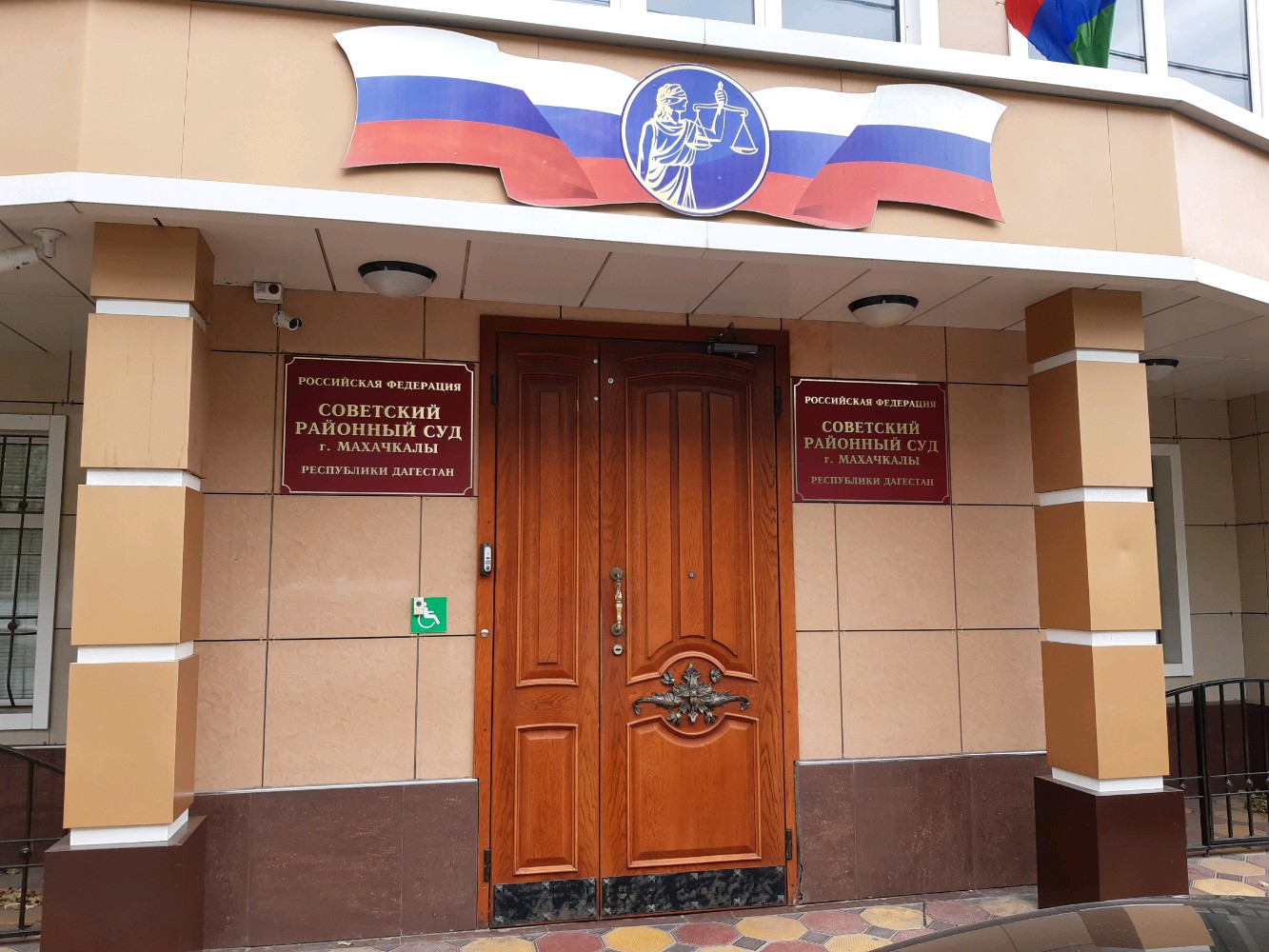
The Sovetsky District Court in Makhachkala has granted an application by Dagestan’s prosecutor’s office to designate the international public movement ‘Majlis of the Peoples of Dagestan’ (MPD) as a terrorist organisation. The movement was established in Turkey by Dagestani Islamic preachers Israil Akhmednabiev and Abdullah Magomedov, better known as Abu Umar Sasitlinsky and Abdula Kosteksky, respectively. The ruling provides for a ban on the activities of the movement, its branches and affiliated organisations in Russia, according to the joint press service of Dagestan’s courts.
According to court documents, the movement was founded in November 2023. Prosecutors allege that its members promote separatist ideas aimed at the “violent dismantling of Russian statehood in the republics of the North Caucasus”.
The application also alleges the existence of an extensive network of MPD branches operating under various names in Russia, Turkey, Norway, Sweden and other countries.
Court documents identify Akhmednabiev as the movement’s leader and coordinator. A native of the village of Bammatyurt in Dagestan’s Khasavyurt district, he has been placed on Russia’s Federal Financial Monitoring Service (Rosfinmonitoring) list of terrorists and extremists. Magomedov, according to the joint press service of Dagestan’s courts, has been internationally wanted since 2015 on terrorism-related charges.
“Their unlawful activities are disguised as public awareness, charitable and educational projects. To ensure the safety of its members, the movement’s organisational structure is not officially disclosed, and its activities are not publicly declared,” the courts’ press service said in a statement.
The Russian authorities first opened criminal cases against Akhmednabiev in 2014, when the preacher left Russia. That year, Russia’s Investigative Committee launched two criminal cases against him on charges of publicly inciting terrorist activity, justifying and financing terrorism, and inciting hatred and enmity. Akhmednabiev denied allegations that he had financed terrorist organisations.
In 2015, the Russian authorities placed the preacher on an international wanted list. On December 1, 2016, the same Sovetsky District Court in Makhachkala issued a warrant for his arrest.
On June 13, 2019, another criminal case was opened in Dagestan involving 11 individuals, including Akhmednabiev, Abdulmumin Gadzhiev, a journalist with the independent Dagestani newspaper Chernovik, Abubakar Rizvanov and Kemal Tambiev. Investigators alleged that Akhmednabiev had organised the financing of terrorist organisations. The Memorial Human Rights Centre recognised Gadzhiev as a political prisoner.
On July 15, 2021, at the request of the Russian authorities, Interpol issued a Red Notice for Akhmednabiev, seeking his location and arrest with a view to possible extradition.
However, on March 28, 2023, Interpol’s Commission for the Control of Files (CCF) decided to remove the preacher from its international wanted list. The final decision by Interpol’s General Secretariat was made on April 12 that year, according to the Chechen human rights organisation Vayfond.
According to the commission’s decision, obtained by the Memorial Human Rights Centre, the information provided by the Russian authorities was insufficient to establish Akhmednabiev’s involvement in the alleged offences. The commission also noted that the charges relied on testimony from witnesses whose identities had been withheld and stressed that evidence obtained under torture was inadmissible.
The commission concluded that the case had a political or religious motivation and that Russia’s request was incompatible with Article 3 of Interpol’s Constitution, which prohibits the organisation from undertaking activities of a political, military, religious or racial character.
On April 2, 2026, Dagestan’s Supreme Court convicted Akhmednabiev in absentia in connection with the mass disturbances at Makhachkala’s Uytash Airport on October 29, 2023.
The preacher was found guilty of organising mass riots, organising the incitement of hatred or enmity, and organising the financing of extremist activities under Articles 212, 282 and 282.3 of the Russian Criminal Code, in conjunction with Part 3 of Article 33. The courts’ press service noted that Akhmednabiev had been sentenced to 16 years in prison.
Other defendants in the case included former Russian State Duma member Ilya Ponomarev and Abakar Abakarov, the founder of the Morning Dagestan Telegram channel, who was killed in Turkey in October 2025.
Despite Interpol’s April 2023 decision, the statement issued by Dagestan’s prosecutor’s office announcing the April 2, 2026 conviction in absentia again described Akhmednabiev as being internationally wanted. Prosecutors did not specify which organisation or mechanism was being used to pursue him internationally.
According to the courts’ press service, “the decision to designate the ‘Majlis of the Peoples of Dagestan’ as a terrorist organisation has not yet entered into legal force and may be appealed”.