“You are not cannon fodder to die in the name of the Kremlin’s ambitions”

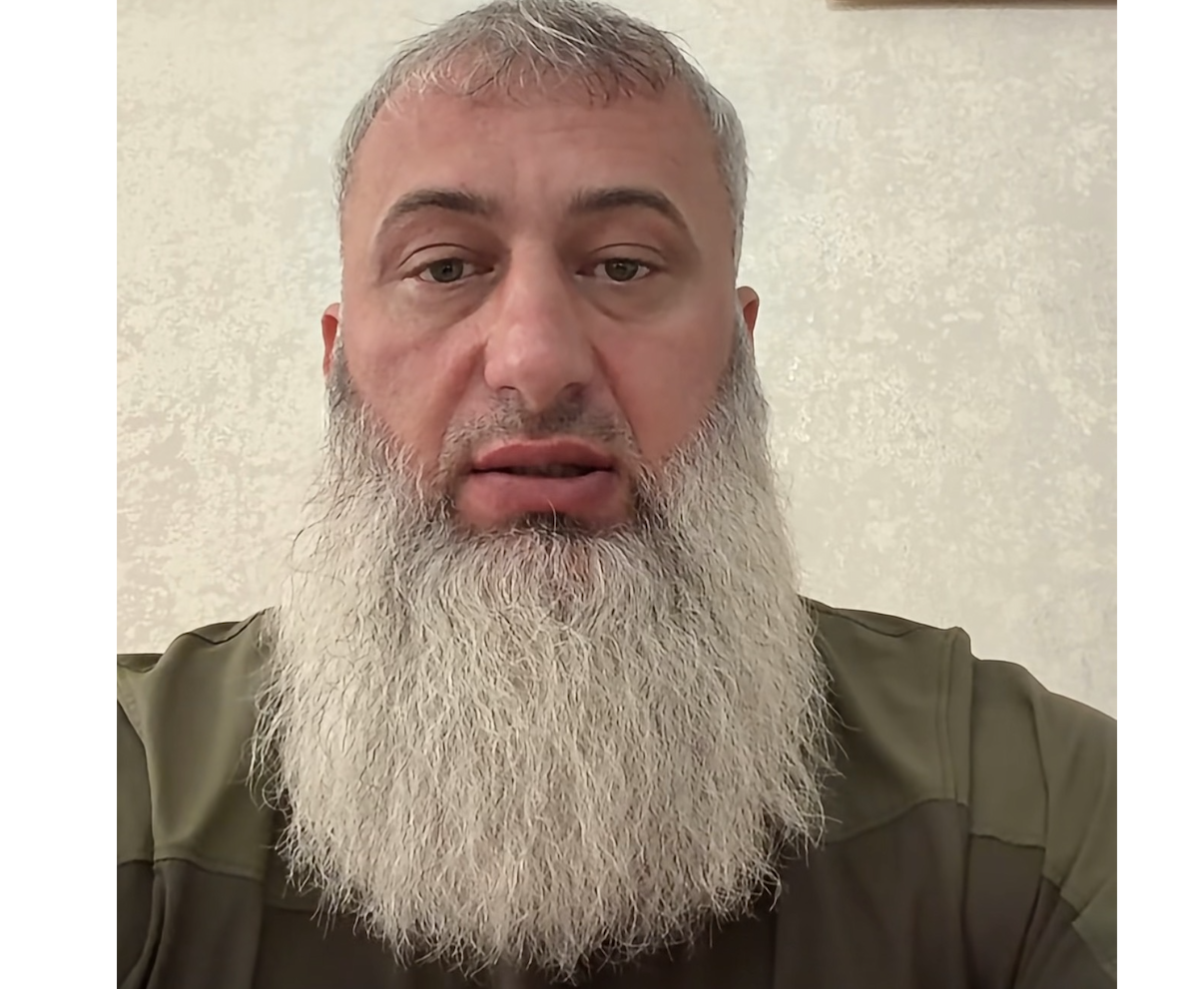
On September 22, the former mufti of Ukraine Said Ismagilov, who resigned as a clergyman after Russia’s invasion of Ukraine and volunteered to join the Armed Forces of Ukraine, addressed the Muslims of Russia in connection with the “grave” announced by the Kremlin:
- Do you need it? Do you want to fight for the Kremlin's imperial ambitions? Do you want to remain disabled for Putin, to lose arms, legs and heads on our Ukrainian soil? We will protect her,” Ismagilov said.
He is convinced that mobilized Russians, including Muslim soldiers, have two options. Run away at all costs, evade mobilization, so that they are not sent to Ukraine as cannon fodder. “Well, if this misfortune happens to you, come out with your hands up, we will take you prisoner. We guarantee you a good attitude, hot tea and the opportunity to perform namaz. Remember that you are Chechens, Ingush, Dagestanis, Tatars, Bashkirs. Remember that you are not cannon fodder to die for the sake of the Kremlin’s ambitions.”
On September 28, Ukrainian President Vladimir Zelensky addressed the indigenous peoples of Russia, including the Caucasus and Siberia. He stated that Dagestanis, Chechens, Ingush, Ossetians, Circassians and other ethnic groups who find themselves under the Russian flag should not die in “Russia’s vile and shameful war.”
“These and other nations, you know who are sending you all to fight in Ukraine. The one who sends wants to make you “cargo 200”. What do you want? I am sure that you want to live, that you are tired of lies. I'm sure you know: we need to fight now! We see that you are resisting the criminal mobilization with which the Russian government wants to cover the failure of its personnel army and criminal orders,” Zelensky said.
According to him, it is necessary to defend our freedom now in the streets and squares, so that we don’t have to fight in the mountains and forests for the right to live when the next waves of mobilization begin.

Последние новости
Pashinyan spoke in Armenian at the SCO summit; the Kremlin
Politics
Pashinyan spoke in Armenian at the SCO summit; the Kremlin "did not understand" why
6 September 2026

Armenian Prime Minister Nikol Pashinyan delivered a speech in Armenian at the expanded summit of the Shanghai Cooperation Organization (SCO) in Bishkek. The Kremlin described this as a "signal" regarding Armenia's sovereignty but admitted it "did not understand" why the statement could not have been made in Russian.

In Dagestan, the body of a drowned youth was found at a depth of 60 meters
Society
In Dagestan, the body of a drowned youth was found at a depth of 60 meters
6 September 2026

On September 6, rescuers discovered the body of a 20-year-old man who drowned on August 25 near the village of Shamilkala on the Irganay Reservoir in Dagestan. It is reported to be at a depth of approximately 60 meters. The body has not yet been recovered, as rescuers are awaiting additional equipment.

Rostov Region hit by drone attack: two high-rise buildings damaged, child injured
Politics
Rostov Region hit by drone attack: two high-rise buildings damaged, child injured
6 September 2026

On the night of September 6, Rostov Region, along with other Russian regions, was again attacked by Ukrainian drones. Specifically, a massive airstrike was reported on Rostov-on-Don. According to the Telegram channel Astra, drones circled over the city for over four hours, and gunfire and the sound of a helicopter were heard. Bataysk was also hit. The Telegram monitoring channels Supernova+ and Exilenova+ published photos and videos from eyewitnesses.

Expert Explains Why Moscow and Yerevan Take Incompatible Positions on a Referendum on Armenia’s EU Membership
Politics
Expert Explains Why Moscow and Yerevan Take Incompatible Positions on a Referendum on Armenia’s EU Membership
5 September 2026

The meeting between Vladimir Putin and Nikol Pashinyan in Bishkek, as expected, failed to resolve the central contradiction in relations between Moscow and Yerevan: whether Armenia is prepared to make a final choice between Eurasian and European integration. According to Sergey Markedonov, a leading researcher at MGIMO’s Institute for International Studies, Moscow and Yerevan hold fundamentally different positions on whether Armenia should hold a referendum that could determine the country’s future foreign policy course.