Chechnya bids farewell to mother of political analyst Mairbek Vachagaev
13 September 2026
"Cleansings" in the villages of the Zavodskoy district of Grozny and other facts of the arbitrariness of the Russian security forces
June 29, 2001
***
In the morning, several dozen residents of the village of Tsotsin-Yurt, Kurchaloy district, blocked the road leading to Kurchaloy. They demanded the release of five fellow villagers detained on the evening of June 26, because, according to them, these people had never taken part in illegal actions. On a small roadblock set up on the road in front of the village, women hung posters calling for an end to the war, an end to the genocide of the Chechen people, and to start negotiations with President Aslan Maskhadov.
In the evening, threatening to use weapons, the Russian military forced the women to unblock the road.
***
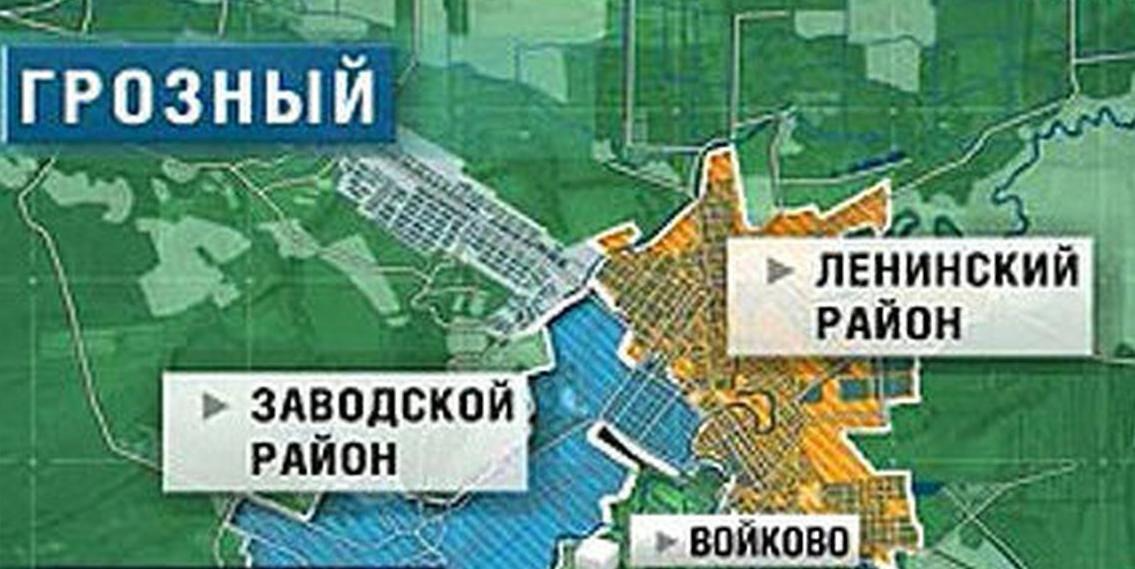
In the village of Chernorechye, the Zavodskoy district of Grozny, a “cleansing” operation took place. Preparations for this operation began the night before: the Russian military blocked the settlement with troops and armored vehicles, blocked roads, stopping both the movement of vehicles and the passage of pedestrians.
From early morning, the military searched the houses and detained the civilian population. All men, starting from the age of 14, were rounded up and taken in Urals and armored personnel carriers to the territory of a dispensary near the Grozny reservoir. Those who were delivered by motor vehicles were forced to lie on top of each other in several rows in the bodies, and then covered with a tarpaulin.
In total, more than 200 people were gathered in the dispensary. They were laid face down on the ground. Then they beat and interrogated everyone. Those who dared to object to the beatings were tortured with electric shocks. The people were released late in the evening.
In the village itself, meanwhile, the military robbed the houses of local residents - in the presence of the owners they took out everything that they liked. They seized not only televisions, video and audio equipment, but also food. What was not taken away was spoiled. For example, sacks of flour were ripped open with bayonet-knives. Askhab Yakubov, a professor at the Chechen State University (7, Zaporizhskaya St.), the military took away an electric current gas generator, as he was told, "for the needs of the army." At the same time, the owner unsuccessfully tried to show them the documents for the unit and a check indicating its purchase in the store.
The military insulted the inhabitants of the village, focusing on their nationality - "Chechmeks", "chocks", "rednecks", "blacks". They said: “You will not live here. We will wipe you off the face of the earth."
In the house of the director of school No. 39, Avalu Aidamirov, the military perpetrated a real pogrom: they broke all the glass, dishes and furniture. His 17-year-old son Ramzan Aidamirov, a first-year medical student, was taken away with a shirt wrapped around his head. At about 9 pm, badly beaten, he was nevertheless released.
At least ten residents of Chernorechye were brought, probably, to the commandant's office of the Zavodskoy district of Grozny. The inhabitants of the neighboring village of Novye Aldy were also brought there. The “cleansing” was carried out there too, and also with insults and beatings of people, robbery of property and unmotivated seizures.
Among the detainees was one woman, Elina Gabayeva, a nurse at the republican children's hospital. Together with her, two guards of this medical institution were taken away. Students of the Chechen State University Rizvan Askhabov, born in 1985, were captured. and Aslambek Beshaev, born in 1981
Trying to clarify the fate of relatives, the next day, dozens of women still continued to stand at the military commandant's office of the Zavodskoy district and the dispensary.
Magomed (last name withheld for security reasons):
“Me and my cousin Ruslan were taken out of bed at 7:30 in the morning (Rodnikovaya Street). Everything in the house was turned upside down. My brother and I were put in an armored personnel carrier and already there they began to beat, especially Ruslan, they beat him with machine gun butts. They poked me in the legs with the tip of a Finca knife and demanded that I move further, although it was clear to them that I had nowhere to move further in the cramped armored personnel carrier. It was an excuse to mock me. We were taken to a dispensary opposite the reservoir.
Cars were parked there, and cells were arranged in them, single and designed for 12 people. They tied our heads with our own T-shirts and put us together in one cell, which is called a glass. This cell, which barely fits one person. Then they took out my cousin. He was beaten very badly. He returned with a face black from beatings, a fist broke his tooth. They took him in and took me out.
They asked me why I had such a surname, like that of one militant, they demanded that I tell where the basements were, whether I stole people, they asked me what I know about drugs and those who import them, but most importantly, where are the militants. So we were taken out three times each. They kicked me in the kidneys, on the back, in the face, burned their shoulders and arms with burning cigarettes.
They took me out for the third time, laid me on the ground, attached two wires with metal rings to both hands - on the little finger of my right hand and on the thumb of my left hand - and began to shock me. The current was generated by a dynamo, the handle of which one of the soldiers quickly, quickly rotated. It was the most painful ordeal. They did the same with my brother. This torture continued for 15–20 minutes, with interruptions the current was connected again and again. They demanded information about the belligerents and consent to work with them, to cooperate.
At first I refused, but it was impossible to endure the electric shock. I would die if this continued any longer, and I gave my consent. Then they began to record all my words on a dictaphone, photographed me, wrote down all my data, gave me the call sign - "Green". They said: “If you wag, we will find you anyway. And then your parents will never find you again.”
The brother was recruited in the same way. The brother was told that he himself should approach them. I spent that night in the “glass”, and my brother in the common cell, where up to twelve people were packed. The next day we were taken to the commandant's office (VOVD) of the Zavodskoy district. There we were treated more normally, we were fingerprinted, interrogated and released.
Some of the detainees were sent to Khankala and Urus-Martan. One was never released. It was not the Chernorechensky guy.
They, the military, took out a lot of goods from people that day. We saw a Ural parked in the yard of the dispensary, loaded with carpets and even furniture.
People who were released during the day were beaten less, those who were kept until the evening were beaten very badly. One guy who tried to resist during the beatings was shot in the leg. He was in a large cell, which was very stuffy, and lost consciousness, and he was dragged out of the cell by the military. I don't know what happened to him next. More than ten people that I saw up close were beaten very badly.
Among the detainees were two young women aged 25-26, one of them was pregnant. They were released in the evening, but the pregnant woman had a miscarriage due to the stress experienced. She was arrested because she had a seal (or stamp) in her passport stating that she was a citizen of the Chechen Republic of Ichkeria.
These days, a lot of women gathered at the dispensary, worried about the fate of their detainees, more than 200 people. But the soldiers did not let them get close, insulted them with obscene words and fired over their heads.”
***
At 10.20 on Zhukovsky Street in Grozny, unidentified persons blew up a gray UAZ car with five military men on a landmine. Four of them, according to eyewitnesses, died.
On an armored personnel carrier and several UAZ vehicles, fighters of the OMON of the Chechen Republic and the Russian military immediately arrived there. Having cordoned off residential areas adjacent to the explosion site, they carried out a “cleansing” operation in them. The military blew up the doors of empty houses and inspected the premises. Indiscriminate shooting was carried out at outbuildings and the ruins of destroyed buildings.
At the building of the Chechen State University, where classes were going on at that time, a shot was fired from an underbarrel grenade launcher.
On the same day, a special operation was carried out to check the passport regime in the 3rd and 4th microdistricts of the city. Nobody was detained.
***
At about 5 p.m., a large group of employees of Russian law enforcement agencies (more than a hundred people), who arrived in two armored personnel carriers, two infantry fighting vehicles and eight vehicles with smeared numbers, broke into the building of the district hospital in the village of Starye Atagi, Grozny district. At the same time, the “siloviki” continuously and randomly fired from machine guns and machine guns.
The hospital suffered significant damage. All medical workers and patients of the hospital, including two women in labor and four women with newborn children, were driven out into the street. Perhaps the law enforcement officers were looking for something, but when asked to introduce themselves and explain their behavior, they answered only with obscenities and threats. Many of them were drunk.
When they left, they took with them medical equipment and medicines worth a large sum.
Employees of the village police department, located a hundred meters from the hospital and staffed by seconded fighters of the OMON of St. Petersburg, did not even attempt to intervene and stop the arbitrariness. Later, they stated that they did not know to which power structure the unit that had perpetrated the pogrom belonged.
From the book "People Live Here", Usam Baisaev, Dmitry Grushkin, 2006
Последние новости