Georgian Prime Minister Expresses Readiness to Discuss Foreign Agent Law with a Small Caveat
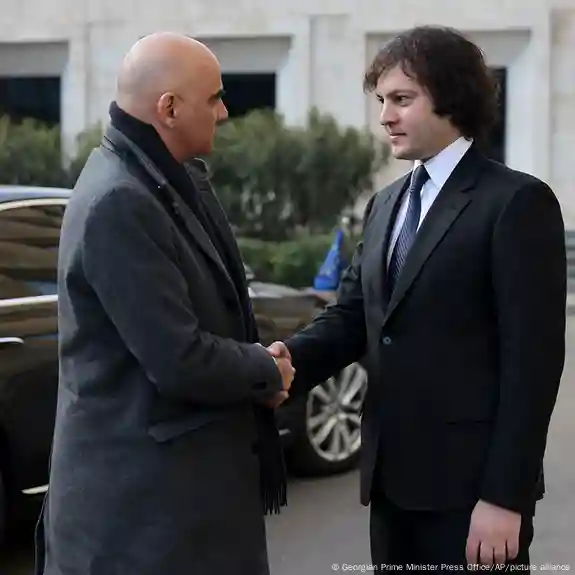
At a meeting with Council of Europe Secretary General Alain Berset, the Georgian government once again confirmed its openness to discussing the law on foreign agents. This was stated by Georgian Prime Minister Irakli Kobakhidze.
"We discussed legislation, including the law on "transparency". We have always been open to discussion. I repeat once again, if someone proves to us that there is something negative in this law, we are, of course, ready to discuss this issue, including cooperation with the relevant structures of the Council of Europe," Kobakhidze outlined the government's position.
Council of Europe Secretary General Alain Berset, in turn, spoke at a press conference about meetings with representatives of the Georgian authorities and opposition. According to him, the Georgian authorities promised to amend the law on foreign influence. An international working group will be created for this purpose, Berset said.
The Secretary General of the Council of Europe noted that this process could also affect other Georgian laws on equality, anti-discrimination measures, electoral law, and the penitentiary system. In particular, he expressed concern about the law "against LGBT propaganda", which, in his opinion, is incompatible with European standards.
Recall that the Georgian law "On Transparency of Foreign Influence", also known as the law on foreign agents, came into force on August 1, causing a wave of mass protests in the country and becoming one of the reasons for the introduction of sanctions. Many citizens considered it pro-Russian, infringing on freedom of speech, assembly, and rights. At the moment, more than 150 high-ranking officials have fallen under international sanctions, including members of the government and their deputies, members of the ruling party, judges, heads of municipalities, pro-government businessmen, and propagandists.